
The higher offer isn’t always the better return. The cost of scrapping a car vs selling it has no single fixed figure: a private sale may bring in more, while a scrap or salvage offer reflects the car’s metal and reusable parts. Selling parts individually can add value, but it takes time and effort.
It’s reasonable to want a good return without spending weeks managing listings, buyer messages or dismantling work. The right choice depends on your car’s condition, demand for its parts and how much time you’re willing to spend. A damaged or non-running car can still have salvage value, even if selling it as a complete vehicle is impractical.
This guide compares selling a complete car, scrapping it and selling its parts, then explains what affects value and how each option works in Australia. You’ll see when a private sale may be worth the extra effort, when scrapping is more practical and what to consider before deciding.
Key Takeaways
- Compare the likely return from selling the whole car with the time and work involved in removing and selling parts.
- Assess how your car’s condition, weight, make and model, and demand for reusable parts can affect its value.
- Understand why a written-off vehicle may still have salvage value beyond its scrap metal.
- Weigh repair costs and sale effort against scrapping when a car is damaged, incomplete or no longer running.
- Learn what information supports a useful quote and what steps are involved in arranging removal.
Is It Better to Sell Auto Parts or Scrap the Whole Car?
Selling parts can bring in more overall, but each item takes time to remove and sell. A whole-car scrap offer is simpler to assess because it covers the vehicle in one transaction.
There’s no standard amount Australian wreckers pay for every scrap car. An offer depends on details such as the vehicle’s weight, condition, make, model and usable parts. A used or damaged car also has no set private-sale price: its condition, demand and buyer interest all matter.
Scrap Quotes and Estimated Car Worth
An online estimate can provide a starting point, while a scrap quote reflects the specific vehicle and removal arrangements. Give buyers accurate details about the make, model, year, running condition, damage and missing parts. Compare payment, collection and paperwork terms, not just the headline figure, and confirm the agreed terms before arranging removal.
Scrap Proceeds Versus Private-Sale Proceeds
A private sale may bring in more than scrapping a complete car, especially if it runs and attracts buyers. But listings, messages, inspections and negotiations take time. For a damaged car, describe its faults clearly and weigh the likely proceeds against the work involved. Offers depend on condition and demand, so there’s no fixed Australian private-sale amount.
Scrap Value Versus Salvage Value
Scrap value mainly reflects the vehicle’s metal and recycling potential. Salvage value also accounts for usable components that buyers can recover or reuse. That total involved 18 hours of labour, plus storage and online listings.
Use this comparison to weigh money against effort:
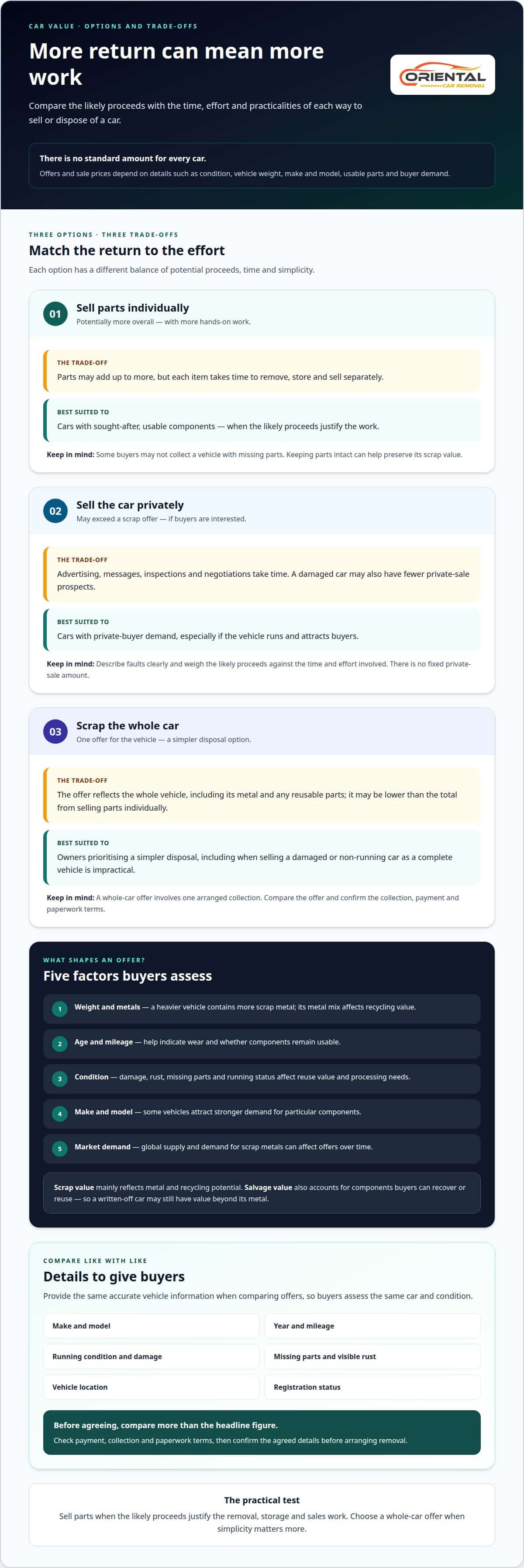
| Option | Potential proceeds | Time and work | Best suited to |
|---|---|---|---|
| Sell parts individually | Parts may add up to more | Removal, storage and separate sales | Cars with sought-after usable components |
| Scrap the whole car | One offer for the vehicle | One arranged collection | Owners prioritising a simpler disposal |
| Sell privately | May exceed a scrap offer | Advertising and buyer negotiations | Cars with private-buyer demand |
Sell parts when the likely proceeds justify the work; choose a whole-car offer when simplicity matters more.
Keeping parts intact can preserve a car’s scrap value, and some buyers won’t collect vehicles with missing parts. Compare whole-car offers using the same vehicle details, then confirm collection, payment and paperwork before agreeing. A higher total from selling parts is worthwhile only if it outweighs the time, storage and work involved.
Factors affecting scrap car value
A scrap offer reflects the vehicle’s materials, condition and demand for reusable components. Several factors affect the amount, so two cars of similar age can attract different offers.
Vehicle Condition and Buyer Demand
Condition affects what buyers can reuse and how much processing the vehicle needs. A car with working electronics, intact panels and usable components may interest buyers looking for parts. Severe damage or missing components changes what can be recovered. Demand also shifts with market conditions and global supply and demand for scrap metals, so interest in the same vehicle can change over time.
Resale Options and Sale Value
Resale options depend on whether a vehicle appeals to private buyers, trade-in buyers or wreckers. A car in very good condition with few issues may attract a stronger trade-in offer, while a damaged vehicle may have fewer private-sale prospects. Make and model also influence interest. Weigh the expected sale value against the time, effort and repairs needed before choosing.
Key factors that shape scrap-car offers include:
- Weight and metals: A heavier vehicle contains more scrap metal, while its metal mix affects recycling value.
- Age and mileage: These help indicate wear and whether components remain usable.
- Condition: Damage, rust, missing parts and running status affect the vehicle’s reusable value and processing needs.
- Make and model: Some vehicles attract stronger demand for particular components.
- Market demand: Scrap-metal values fluctuate with global supply and demand, affecting offers.
For example, a heavy 4WD with intact components presents different value factors from a small car with extensive damage. Weight can support its metal value, while the condition and demand for its parts influence salvage interest. Neither factor alone determines the final offer. Buyers assess the vehicle as a whole, including its metal and recoverable components.
Private sales carry different risks from scrapping. You may spend weeks or months arranging viewings and negotiating, and buyers may focus on faults or repairs. Scrapping avoids the need to find a private buyer, but the offer still depends on the car’s condition and demand for its metal and parts. Compare the likely return with the time and effort each option requires.
To estimate value, gather the vehicle’s make, model, year, mileage, running condition and damage details. Note missing parts and visible rust, then provide the same information when comparing offers. Accurate details help buyers assess the same vehicle, rather than different versions of its condition. Include its location and registration status, as these help identify the vehicle being assessed.
Market conditions can change the value of metals, while rust or broken components can reduce reuse potential if a car sits unused. Base your decision on the vehicle’s present condition, not a previous estimate. To consider the next step for an unwanted vehicle, review vehicle removal options alongside its resale prospects.
Scrap value vs salvage value: What’s the difference?
Scrap value reflects a vehicle’s metal, while salvage value also includes components that may be reused. A written-off car can still have either kind of value.
Salvage Value of Written-Off Vehicles
Salvage value comes from parts or repair potential, not just the vehicle’s metal weight. A written-off car with usable components, such as electronics or a catalytic converter, may interest buyers looking for specific parts. A repairable write-off may be repaired and re-registered under certain conditions; a statutory write-off generally cannot be re-registered. This distinction affects the car’s resale options.
Scrap Value of Damaged and Non-Running Cars
A damaged or non-running vehicle can still have scrap value through its metal and remaining components. Its condition affects what can be recovered, while weight and current demand influence the metal value. Cars are around 75% scrap metal, so metal content forms a substantial part of their scrap value. Missing or badly damaged components can reduce the vehicle’s appeal for parts recovery.
Vehicle Condition and Resale Value
Condition helps distinguish a car with repair potential from one valued mainly for recycling. A vehicle with intact, usable components may retain salvage value even if it cannot be driven. Extensive damage, by contrast, can leave metal as the main source of value. Private resale depends on whether buyers see a practical use for the car; scrap value centres on its materials and recoverable parts.
Payment speed is another factor to weigh. A car removal arrangement may combine collection with cash payment, but the amount and timing depend on the agreed terms. Treat “instant” payment as a specific term to confirm before agreeing, rather than assuming every offer works the same way. Compare the payment method alongside the vehicle’s condition and removal arrangements.
Environmental handling also differs by option. A private buyer may continue using the vehicle or recover selected parts; recycling separates reusable components and metals from material for disposal. Consider what happens to the whole vehicle under each option, especially if it’s written off and no longer suitable for road use. The process determines whether its remaining value comes from repair, parts or metal.
To compare offers, record the write-off type, running condition, damage and missing components. Note usable parts, including electronics or a catalytic converter, without assuming every component adds value. Then compare the vehicle’s salvage potential with its metal value and the payment terms. This gives you a clearer basis for deciding whether repair, resale or scrapping best suits its actual condition.
When damaged or non-running cars are better scrapped
A car that won’t start can still have value in its metal and usable components. Scrapping can be practical when repairs, missing parts or damage make a private sale difficult.
Start with the fault, not just the repair estimate. Engine failure, collision damage or an electrical problem can reduce buyer interest and make a roadworthy sale harder. Compare likely sale proceeds with repair costs, towing, advertising and the time spent arranging inspections. If the car needs substantial work before a buyer can use it, selling it as-is or scrapping it may make more sense.
Non-running and incomplete vehicles can still be scrapped. Their value depends on what remains, including body panels, wheels, electronics and metal. Missing parts can affect an offer, so describe them clearly when requesting a quote. Say whether the car starts, rolls, has collision damage or has had components removed. Accurate details help buyers assess its actual condition.
A damaged car may still attract a private buyer if its make, model or remaining components suit their needs. But the buyer must accept its faults, and you may need to answer questions, arrange viewings and negotiate. A car with substantial body damage and an engine that won’t run is a different sale proposition from one with a single repairable issue. List known faults plainly to avoid disputes about its condition.
Use this quick comparison before deciding:
- Repair and sell: Consider this when the work is manageable and the repaired car has resale appeal.
- Sell as-is: This suits a vehicle with faults that a buyer is willing to take on.
- Scrap the car: Consider this when damage, an engine failure or missing parts leave few practical resale options.
Removal is another factor. A non-running car may need towing before a private buyer can inspect or collect it. Include that effort in your decision, alongside repairs and time spent handling enquiries. If you scrap your car, confirm collection arrangements before handover and remove personal belongings from the cabin and boot.
Registration is a separate task from deciding whether to sell or scrap a car. In Australia, owners are required to cancel registration when a car has been scrapped, and the process varies by state. Keep the sale or disposal details with your paperwork, then follow the registration process for the state where the vehicle is registered.
Make your choice using three factors: the car’s current condition, the repairs needed for resale and the effort involved in removal. If a repairable fault leaves useful resale value, selling may be worthwhile. If the car is damaged, incomplete or non-running and a private sale would involve substantial work, scrapping can offer a more direct way to dispose of it.
How scrapping and selling a car work
Scrapping transfers a vehicle for recovery, recycling or disposal; a private sale transfers it to a buyer. In Australia, private-sale expenses may include repairs, cleaning, advertising or transport, depending on your choices. The main difference is the process: a private sale involves finding and dealing with a buyer, while scrapping arranges removal and disposal.
Scrapping a Car
Start by gathering the vehicle’s make, model, year, location, registration status, running condition and damage details. Include any missing components. These details help a buyer assess the car as it stands. Be accurate: a vehicle that rolls but won’t start is different from one with major parts removed.
Before collection, remove personal belongings and have proof of ownership, such as registration papers or ID, available. Confirm the removal and payment terms before handover. Keep a record of the agreed arrangements and vehicle details with your paperwork.
- Describe the vehicle, its condition and any missing parts.
- Agree on collection, payment and paperwork arrangements.
- Remove belongings before the vehicle is collected.
This option avoids preparing the car for a private buyer’s inspection or advertising. Oriental Car Removal buys vehicles without requiring engine or body repairs. The vehicle can then be assessed for reusable components and scrap metal, rather than prepared for continued road use.
Selling a Car Privately
A private sale starts with an accurate listing, an asking price and replies to buyer enquiries. Include the car’s condition and known faults. Buyers may request an inspection or negotiate after viewing it. A private sale can take weeks or months if you’re willing to wait for a higher price, so allow time for messages, viewings and ownership paperwork.
Possible out-of-pocket expenses depend on the vehicle and your choices. Repairs, cleaning, advertising and transport can all require money or effort. If the car needs work, weigh those costs against the likely sale proceeds. Describe its faults clearly before an inspection so buyers understand its condition and can decide whether it suits them.
Registration steps vary across Australia. Owners are required to cancel registration when a vehicle has been scrapped, with the process depending on the state. After a private sale, follow the relevant state or territory process to record the transfer. Keep the sale or disposal details together so you can complete the applicable paperwork.
Choose the route that fits the car and the time you can spend arranging its transfer. If you want a simpler option for an unwanted vehicle, arrange scrap car removal.
Oriental Car Removal: Scrap Car Removal
Oriental Car Removal provides Scrap Car Removal for owners who have decided that selling parts or arranging a private sale isn’t the right fit. It buys unwanted vehicles through Cash for Cars in Perth and provides free car removal, simplifying the next step when a car is no longer practical to keep.
If you’re weighing a whole-car option against dismantling and selling components, consider whether the extra time and effort suit your situation. Oriental Car Removal can also help if you want to sell a truck. Share the vehicle details and its condition to start the conversation about removal.
Choose the next step that suits your car
Your decision about the cost of scrapping a car vs selling it should account for more than the likely offer. Consider how much time you want to spend organising a sale and whether you’d rather keep managing the vehicle or move on from it. Once you’ve chosen, have the car’s details and condition ready to discuss.
Oriental Car Removal offers instant cash for cars in Perth, cash for trucks and free car removal. If you’re ready to discuss your vehicle, contact the team to get a quote and arrange the next step.
A clear decision can make moving on from an unwanted vehicle more straightforward.
Frequently Asked Questions
What is scrapping?
Scrapping takes a vehicle out of use so its materials or components can be recovered, recycled or disposed of. A car may be dismantled, with usable parts separated from scrap metal. For example, a vehicle with a damaged body may still have components that can be reused. Unlike a private sale, scrapping doesn’t transfer the car to someone intending to keep driving it.
Final Thoughts: Which Option is Right for You?
The cost of scrapping a car vs selling it depends on more than the amount offered. Consider the car’s condition, the work needed to prepare it and how much time you can spend dealing with buyers. A running vehicle with resale appeal may suit a private sale. If you value a more direct transfer and disposal process, scrapping may better match your priorities.
Can I scrap a car that isn’t running or is missing parts?
Yes, a car can still be scrapped if it doesn’t run or has missing parts. Describe its condition accurately, including whether it rolls, whether the engine starts and which components are gone. For instance, a car missing its battery differs from one stripped of major components. Clear information helps a buyer assess the vehicle as it stands and plan its removal.
Does a Broken or Non-Running Car Still Have Value?
Yes, a broken car may retain value through its metal or usable components. A failed engine doesn’t automatically make intact doors, wheels or electronics worthless. The vehicle’s weight, condition and demand for its parts all influence its value. If the car has been sitting unused, note visible rust or damage, as these can affect which remaining components are suitable for recovery.
How Much Is a Written-Off Car Worth?
A written-off car has no single value that applies to every vehicle. Its condition, metal content and recoverable components affect its worth. The write-off type also matters: a repairable write-off may be repaired and re-registered under certain conditions, while a statutory write-off generally cannot be re-registered. A vehicle with parts in demand may retain salvage value beyond what its scrap metal alone would suggest.
What is the average scrap metal value of a car in Australia?
There isn’t one fixed scrap-metal value for every Australian car. Weight, metal content and current market demand influence the amount, while reusable components can also affect a whole-vehicle offer. A heavier vehicle and a smaller car contain different amounts of metal. An individual assessment is more useful than relying on a general average because it can account for the specific vehicle’s condition and materials.
What fees apply when scrapping a car in Australia, including towing and disposal?
Costs depend on the vehicle and the arrangements. Before agreeing, make sure the terms explain collection, disposal, paperwork and payment. Private selling can also involve expenses, depending on whether you choose to repair, clean, advertise or transport the car. Compare any costs and effort with the likely proceeds, so your decision reflects what you may actually keep rather than the headline offer alone.
How do scrap car prices compare with private sale and dealer trade-in offers?
The cost of scrapping a car vs selling it privately comes down to likely proceeds, time and effort. A private buyer may pay more for a vehicle they can use, but the sale can involve listings, inspections and negotiation. Dealer trade-in offers may be lower than the vehicle’s full value because dealers plan to resell. Scrap offers reflect the vehicle’s metal and salvageable components, not its road-use value.