Sell an Old Car in Perth for a Wrecker’s Offer

Sell an Old Car in Perth for a Wrecker’s Offer

The best price isn’t always the easiest sale. A private sale may bring more than a dealership offer, but you’ll need to advertise the car, handle enquiries and negotiate. If you want a simpler option for an unwanted or non-running vehicle, a wrecker can be the best place to sell an old car in Perth.

Weigh the offer against the time and effort involved. A wrecker may buy a car as-is, even if it won’t run, and some removal services include pickup. Offers depend on the vehicle and its condition, so amounts vary from car to car.

This guide explains how to compare selling options, what can affect a wrecker’s offer, and how pickup and Western Australian transfer paperwork work. It also covers an important step after the sale: notifying the Department of Transport, which helps protect you from legal or financial liabilities connected with the vehicle.

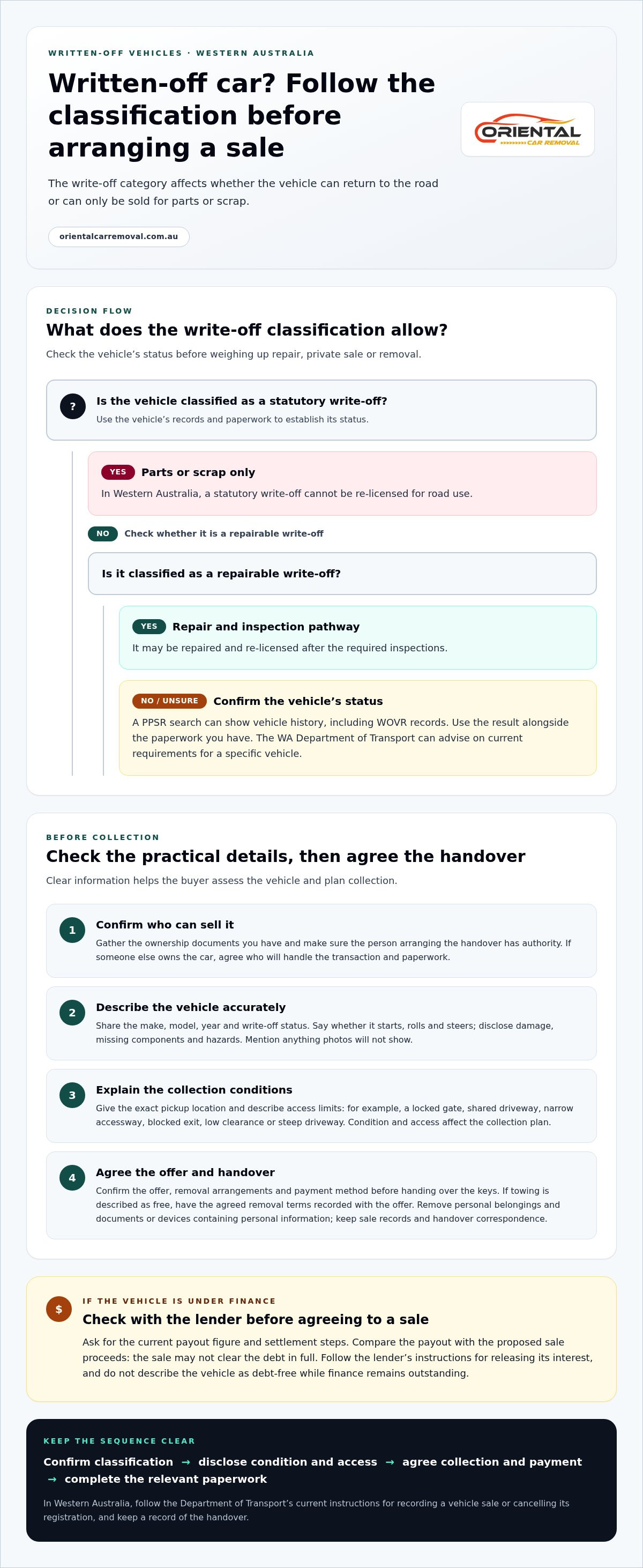
Written-Off Vehicle Sale Tips from Oriental Car Removal

  • Choose between a private sale, dealership or car removal service by weighing the potential return against the time and effort involved.
  • After a sale in Western Australia, notify the Department of Transport to help avoid legal or financial liabilities tied to the vehicle.
  • Compare a few wrecker quotes and share accurate details about the car, including whether it runs, to support a fair offer.
  • Ask how vehicle pickup and towing fit into the sale so you can factor removal into your decision.
  • Present clear information about your car and consider what matters most: a higher possible return or a simpler sale.

Where’s the best place to sell your car in Perth?

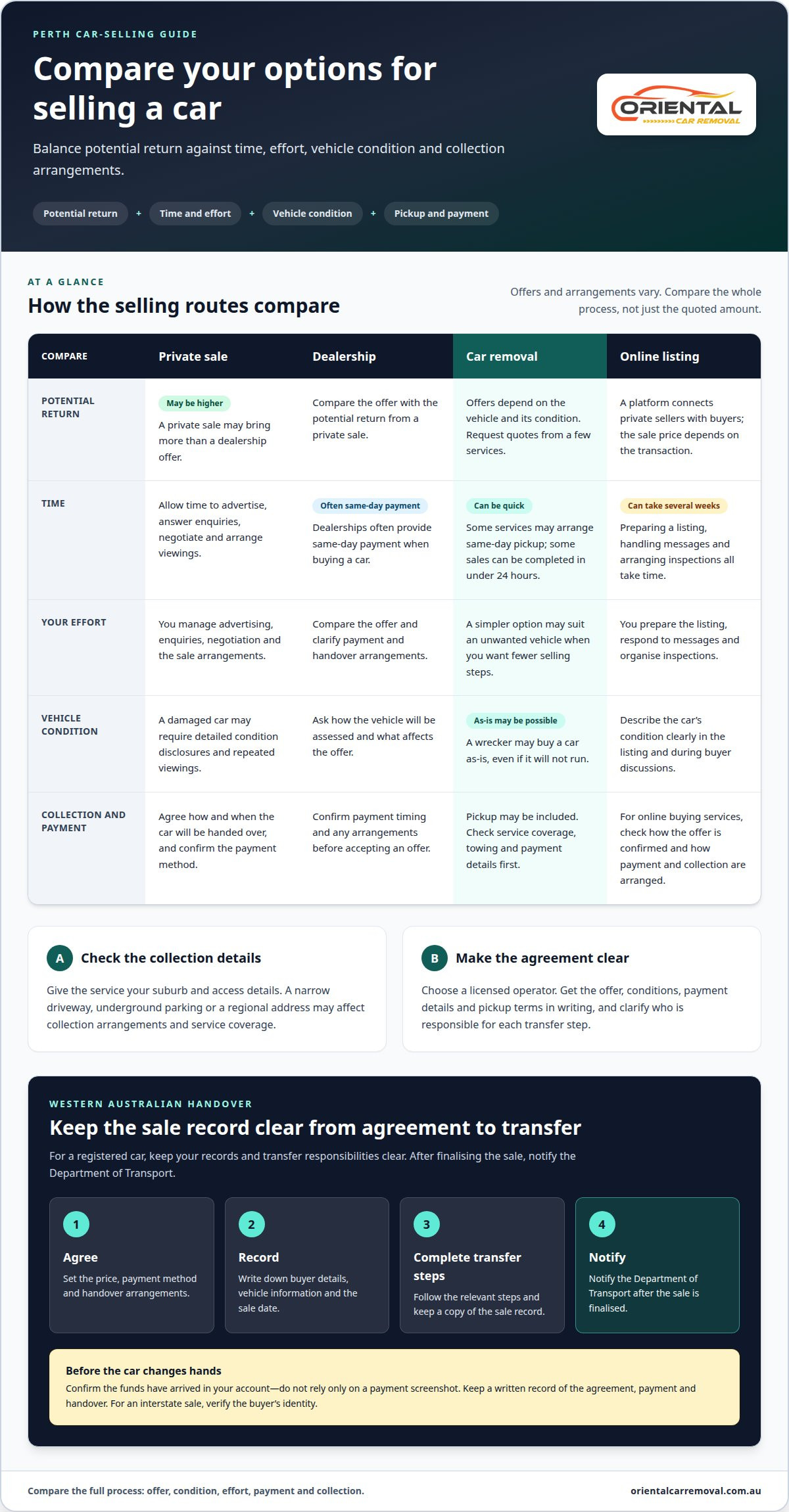
The best option depends on your priorities: potential sale price, speed, vehicle condition and how much hassle you’re prepared to accept. Compare the whole process, including pickup and payment arrangements, not just the offer.

Comparing Selling Options

A private sale may return more than a dealership, but you’ll handle advertising, enquiries and negotiation. Dealerships often provide same-day payment when buying a car. Car removal services may arrange same-day pickup, buy vehicles as-is and, in some cases, complete a sale in under 24 hours.

For example, a damaged car may suit an as-is buyer better than a private listing that requires detailed condition disclosures and repeated viewings. Decide whether a potentially higher return is worth the extra time, effort and steps.

Avoiding Selling Scams

To reduce scam risk, keep communication and sale terms clear. Confirm the buyer’s identity, agree on the price and payment method, and document the handover. Don’t release the car based only on a payment screenshot. Confirm that the funds have arrived in your account.

For an interstate sale, verify the buyer’s identity before completing the handover. Keep a written record of the agreed terms, payment and vehicle details to help prevent confusion.

Perth and Western Australian Service Coverage

Pickup coverage can vary between Perth suburbs and locations farther across Western Australia. Before choosing a removal service, provide the vehicle’s suburb and access details, such as a narrow driveway or underground parking.

That information helps establish whether the collection location fits the service area and what arrangements the pickup may need. A Perth address and a regional Western Australian address may involve different logistics.

Online Buying Services and Sales Platforms

Online platforms let private sellers advertise a car and connect with buyers. However, a sale can take several weeks, with time spent preparing the listing, answering messages and arranging inspections.

Online car-buying services offer a different process from public listings. Before deciding, compare how each service assesses the vehicle, confirms its offer, and arranges payment and collection.

Choosing a Car Removal Service

Choose a licensed car removal operator and make sure the business name, written offer and payment details are clear. Get the agreed terms in writing, including any conditions affecting the offer, vehicle condition or pickup location.

Before handing over the keys, confirm payment and keep a record of the transaction. Clear steps reduce uncertainty and help prevent disputes.

Ownership transfer and registration paperwork

For a registered car, keep the sale details and transfer steps clear from the outset. Once the sale is finalised, notify the Department of Transport to help avoid legal or financial liabilities connected with the vehicle.

The costs and arrangements depend on the sale route and any agreed advertising or transport services. Before accepting an offer, get the payment terms and any applicable charges in writing so you understand the transaction.

Steps for selling and transferring a car

Use a simple sequence to keep the paperwork organised:

  1. Agree on the sale terms, including the price, payment method and handover arrangements.
  2. Record the buyer’s details and the vehicle information alongside the date of sale.
  3. Complete the relevant transfer steps for the transaction and keep a copy of the sale record.
  4. Notify the Department of Transport after finalising the sale.

For example, if payment and collection happen on different days, record when each will occur. A clear written record helps prevent confusion about when the vehicle changes hands.

Paperwork to prepare

Gather the vehicle’s registration details and sale records before handover. Keep a written record of the agreed amount, buyer details, payment and collection. These details help you check what was agreed if questions arise later.

For an interstate sale, verify the buyer’s identity before completing the transaction. Keep a record of the identity check with your other paperwork. This practical safeguard is especially useful when the buyer and seller are in different states.

Who handles the paperwork?

In a private sale, the seller and buyer need to organise the sale records and transfer steps between them. Agree who will complete each action and keep evidence of the handover. Don’t assume the vehicle’s registration changes automatically when you pass over the keys.

Oriental Car Removal handles the paperwork and post-sale obligations as part of its vehicle purchasing service. Keep your own copy of the agreement and sale details, and make sure you understand any transfer steps that remain your responsibility.

Once the sale is final, notify the Department of Transport promptly and retain the transaction record. A written trail, from the agreed terms to the handover, makes the paperwork easier to follow and helps distinguish your responsibilities from the buyer’s.

Professional junk car buyers may provide free towing, handle Department of Transport paperwork and pay immediately when buying a car in Perth. Confirm which of these services applies to your transaction, and make sure the payment timing and paperwork responsibilities are clear before agreeing to the handover. Keep a record of what the buyer says they will manage, so you can distinguish those tasks from anything you still need to complete.

For an interstate car sale in Australia, verify the buyer’s identity before completing the transaction and keep the record with your sale documents. Whether the buyer is local or interstate, retain written details of the agreement and clarify who is responsible for each transfer step. Even when a business handles paperwork, understand which actions have been completed.

How Much Will a Wrecker Pay for My Car in Perth?

A wrecker’s offer depends on the vehicle’s details and condition, so there isn’t one figure that applies to every car. A non-running vehicle can still be sold to a wrecker in Perth. Request quotes from a few services before deciding, and give each buyer the same accurate description for a fair comparison.

What affects the offer?

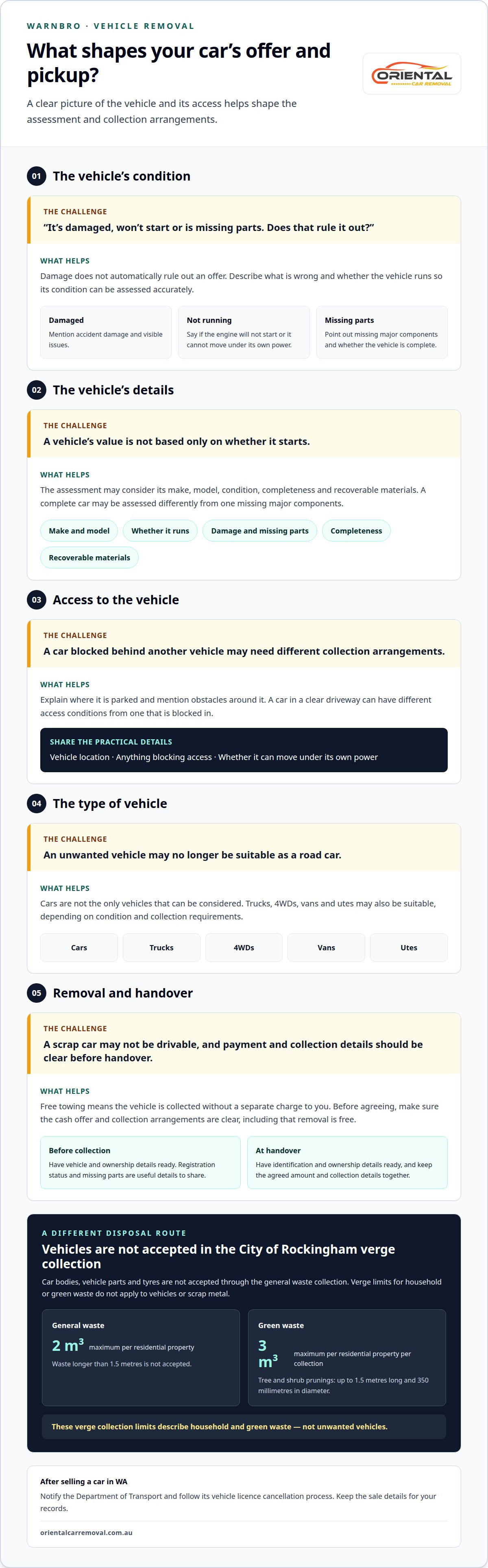
Start with the make, model, year and condition. Explain whether the car starts, whether it can be driven, and what damage or missing components it has. For example, describe a damaged front end rather than simply calling the vehicle “old”. Clear details help a buyer assess the car more accurately.

Be direct about faults. If the engine won’t start or the car has been in an accident, include that information when requesting an offer. Condition and usable components can affect a wrecker’s assessment. An offer for a complete car may differ from one for a vehicle with substantial damage or missing parts.

Getting and comparing quotes

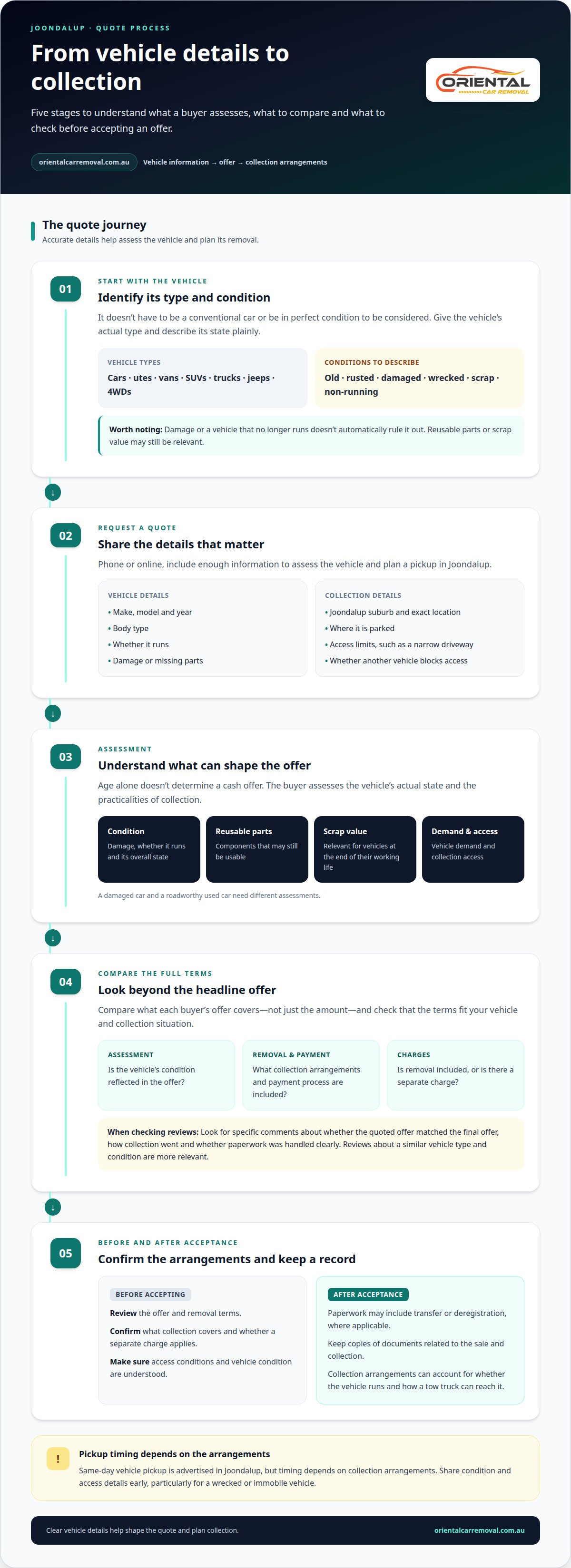
Contact a few Perth wreckers and give each the same details. Include the vehicle’s location, registration status, condition and whether it runs. If one buyer is told the car is drivable while another is told it won’t start, their offers won’t be useful to compare.

  • Share the same make, model and year with each buyer.
  • Describe damage, mechanical faults and missing components accurately.
  • State where the vehicle is located and whether it can be accessed.
  • Ask each buyer to set out the offer and collection arrangements in writing.

Compare the full written offer

Don’t judge an offer by its headline amount alone. Check the written terms for payment method, collection arrangements and any conditions that could change the offer. A clear offer should explain what the buyer will pay for the vehicle as described, rather than leave key details open in a verbal estimate.

If a buyer revises an offer after inspecting the car, compare the reason with the condition details you provided. The change may relate to a fault or missing part that wasn’t included in the original description. Ask for the revised terms in writing before accepting.

Choose the offer that fits

Compare the amount, clarity and collection process together. Different offers may come with different arrangements, so weigh the full terms against your priorities. Keep the offers until you’ve chosen, then confirm the final payment and collection details before handing over the vehicle. This makes the decision easier to follow and helps prevent misunderstandings.
Sell an Old Car in Perth for a Wrecker’s Offer

Free vehicle pickup and towing

Perth car removal services are worth comparing if you need a vehicle collected. Some offer free towing, and car removal services may arrange same-day pickups across the city. Ask how collection fits into the sale, especially if the car won’t start or can’t be driven.

What pickup and towing involve

A removal vehicle collects your car from an agreed location and transports it away. The collection plan depends on where the car is parked, whether it rolls and how the tow vehicle can access it. For example, a car in a tight apartment car park may need different arrangements from one parked in an open driveway.

Describe the location clearly when discussing a quote. Include the suburb, access restrictions and whether the vehicle is behind another car or on a sloping driveway. Accurate details help plan the collection and avoid delays caused by unexpected access problems.

Understanding free pickup

Oriental Car Removal includes free towing and removal. Share details about the vehicle and access so the collection arrangements are clear. If the vehicle is damaged, missing wheels or difficult to reach, mention this when discussing the offer and pickup.

Free towing and instant cash payment are both included in Oriental Car Removal’s service. Confirm the payment and handover arrangements, then keep the agreed terms with your sale records. Collection alone doesn’t confirm that the vehicle sale is complete.

How quickly can pickup happen?

Some Perth car removal services may arrange same-day pickup. A car removal service may also be able to complete a vehicle sale in under 24 hours. These are possible service timeframes, not a schedule that applies to every car or suburb.

Pickup timing depends on the location, vehicle access and collection arrangements. Share those details early and agree on a collection time before accepting the offer. If you need the car removed before a particular event, such as moving house, mention that when discussing the sale. Same-day pickup may be possible where logistics allow, but it isn’t guaranteed.

Prepare the car for collection

Before the tow vehicle arrives, remove personal belongings and make the car accessible. Check the boot, glove compartment and under the seats. If the car is blocked in, arrange access so the collection vehicle can reach it without moving someone else’s property.

Keep the keys and sale paperwork ready for handover. If the vehicle cannot roll or steer, describe that clearly when requesting an offer. Accurate details help plan the right pickup approach and reduce avoidable hassle on collection day.

How Can I Get The Best Price For My Car In Perth?

A fair quick-sale offer starts with accurate vehicle details and a clear understanding of your priorities. Consider the car’s weight, condition, usable components and collection arrangements before agreeing to sell.

Seeking a Fair Quick-Sale Price

Describe the car honestly, including its make, model, year, damage and whether it runs. A complete vehicle and one with missing parts are different sale propositions. Share the same details with each buyer so the offers are based on comparable information, not different assumptions about the car.

Speed also matters. Decide how quickly you need the vehicle collected, then weigh the offer against the time and work involved in a longer sale.

Reviewing Scrap Car Price Ranges

Scrap car offers in Perth vary by vehicle, so a single range won’t predict what yours will fetch. The offer depends on the individual car and its assessment. Weight, condition and usable components can all affect its value.

Vehicle weight can influence the amount of recoverable metal. A heavier vehicle may contain more scrap material than a small sedan, while damage or missing components can change its value. The final assessment considers the whole vehicle, not weight alone.

Negotiating the Sale Price

Use written offers as your starting point. If one is lower, ask which vehicle details shaped the assessment, such as condition, missing parts or pickup location. Correct any inaccurate information and request an updated offer based on the same description.

Keep negotiation factual. For example, point out a complete component or accurate detail that wasn’t included in the first assessment. Compare the revised amount with the written terms, including payment and collection arrangements, before accepting.

Before arranging a sale, prepare a short vehicle summary covering its condition, weight class, location and collection access. Consistent details help buyers assess the same car on the same basis. Keep the final offer in writing and make sure it reflects the vehicle as described.

For a quick sale, balance the offer against collection convenience and the car’s condition. A private sale may return more, but it involves advertising and managing enquiries. A wrecker’s offer can suit an unwanted or non-running car when a simpler sale matters more than a longer selling process.

Oriental Car Removal: SELL MY TRUCK

Oriental Car Removal buys unwanted cars and trucks through its cash-for-cars and cash-for-trucks services. If your vehicle is no longer useful, or you’d rather avoid arranging a private sale, this gives you a direct option to discuss selling it.

Free car removal is available, and the business handles towing and sale paperwork. Share accurate details about the vehicle’s condition and location so the offer and collection arrangements can be discussed clearly. For a truck you want to sell, use the SELL MY TRUCK service; for an unwanted car, ask about cash for cars.

If you’re ready to discuss selling your vehicle, contact Oriental Car Removal.

Make your next move with confidence

The best place to sell an old car in Perth depends on what matters most to you. Set your priority before accepting an offer: a straightforward handover, a potentially higher return or less time managing the sale. That gives you a clear way to assess your options without focusing only on headline figures.

Decide what outcome you want, then choose the sale route that fits. If you’re ready to sell an unwanted car or truck, contact Oriental Car Removal to discuss your vehicle and arrange a quote. Share its details and talk through the arrangements that suit your situation.

A clear decision makes it easier to move on from the old vehicle and focus on what comes next.

Frequently Asked Questions

What are the best places to sell an old car in Perth, WA?

The best option depends on whether you prioritise a potentially higher return or a simpler sale. Private listings suit sellers prepared to manage advertising and buyer enquiries; dealerships offer a trade-in route, while wreckers may consider damaged or non-running vehicles. For many owners, the best place to sell an old car in Perth is the option that matches the vehicle’s condition and the time available to sell it.

How do Perth wreckers and scrap yards value old or damaged cars?

Perth wreckers assess details such as the vehicle’s make, model, condition, weight and usable components. Damage, missing parts and whether the car runs can also affect an offer. For instance, two cars of the same model may receive different assessments if one is complete and the other has significant damage. Give each buyer an accurate description so their estimates relate to the same vehicle.

Is it better to sell an old car privately, trade it in or sell it to a car-buying service in Perth?

A private sale can suit you if you’re willing to handle the listing, enquiries and negotiations. A trade-in may be convenient when you’re buying another vehicle, while a car-buying service can suit an unwanted or damaged car. Consider your priorities, the car’s condition and how much sale administration you want to manage. A vehicle that won’t run, for example, may be harder to present to private buyers.

What paperwork is needed to sell a car in Western Australia?

Keep a written sale record with the vehicle details, buyer information, agreed terms, payment and handover date. For a registered vehicle, follow the transfer steps and notify the Department of Transport after finalising the sale. Retain copies of the transaction records. If a buyer is interstate, verify their identity before completing the handover and keep that information with your sale documents.

What steps should I take to prepare an old car for sale in Perth?

Before arranging a viewing or collection, remove personal belongings from the cabin, boot and storage compartments. Gather the keys and registration details, then note any known faults, damage or missing components. Make sure the vehicle and its access route are clear for inspection or pickup. For example, move items blocking a driveway and tell the buyer if the car is difficult to reach or cannot roll.

Cost of Scrapping a Car vs Selling: Choose Between Parts and Scrap

Cost of Scrapping a Car vs Selling: Choose Between Parts and Scrap

The higher offer isn’t always the better return. The cost of scrapping a car vs selling it has no single fixed figure: a private sale may bring in more, while a scrap or salvage offer reflects the car’s metal and reusable parts. Selling parts individually can add value, but it takes time and effort.

It’s reasonable to want a good return without spending weeks managing listings, buyer messages or dismantling work. The right choice depends on your car’s condition, demand for its parts and how much time you’re willing to spend. A damaged or non-running car can still have salvage value, even if selling it as a complete vehicle is impractical.

This guide compares selling a complete car, scrapping it and selling its parts, then explains what affects value and how each option works in Australia. You’ll see when a private sale may be worth the extra effort, when scrapping is more practical and what to consider before deciding.

Written-Off Vehicle Sale Tips from Oriental Car Removal

  • Compare the likely return from selling the whole car with the time and work involved in removing and selling parts.
  • Assess how your car’s condition, weight, make and model, and demand for reusable parts can affect its value.
  • Understand why a written-off vehicle may still have salvage value beyond its scrap metal.
  • Weigh repair costs and sale effort against scrapping when a car is damaged, incomplete or no longer running.
  • Learn what information supports a useful quote and what steps are involved in arranging removal.

Is It Better to Sell Auto Parts or Scrap the Whole Car?

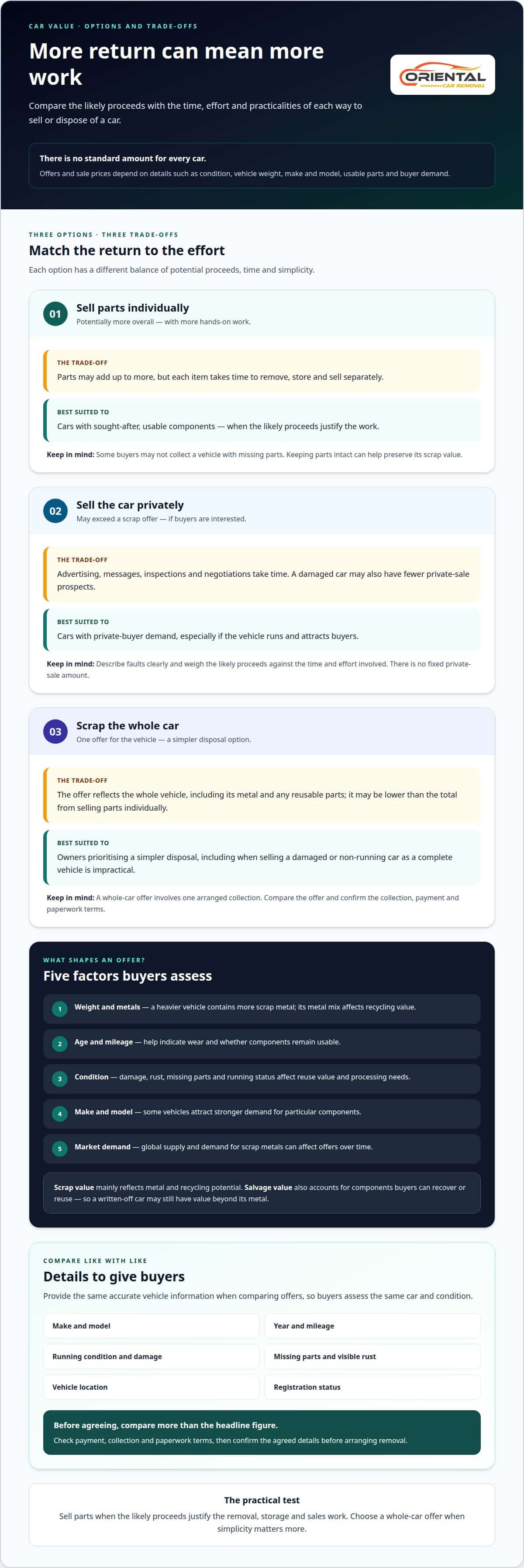
Selling parts can bring in more overall, but each item takes time to remove and sell. A whole-car scrap offer is simpler to assess because it covers the vehicle in one transaction.

There’s no standard amount Australian wreckers pay for every scrap car. An offer depends on details such as the vehicle’s weight, condition, make, model and usable parts. A used or damaged car also has no set private-sale price: its condition, demand and buyer interest all matter.

Scrap Quotes and Estimated Car Worth

An online estimate can provide a starting point, while a scrap quote reflects the specific vehicle and removal arrangements. Give buyers accurate details about the make, model, year, running condition, damage and missing parts. Compare payment, collection and paperwork terms, not just the headline figure, and confirm the agreed terms before arranging removal.

Scrap Proceeds Versus Private-Sale Proceeds

A private sale may bring in more than scrapping a complete car, especially if it runs and attracts buyers. But listings, messages, inspections and negotiations take time. For a damaged car, describe its faults clearly and weigh the likely proceeds against the work involved. Offers depend on condition and demand, so there’s no fixed Australian private-sale amount.

Scrap Value Versus Salvage Value

Scrap value mainly reflects the vehicle’s metal and recycling potential. Salvage value also accounts for usable components that buyers can recover or reuse. That total involved 18 hours of labour, plus storage and online listings.

Use this comparison to weigh money against effort:

Option Potential proceeds Time and work Best suited to
Sell parts individually Parts may add up to more Removal, storage and separate sales Cars with sought-after usable components
Scrap the whole car One offer for the vehicle One arranged collection Owners prioritising a simpler disposal
Sell privately May exceed a scrap offer Advertising and buyer negotiations Cars with private-buyer demand

Sell parts when the likely proceeds justify the work; choose a whole-car offer when simplicity matters more.

Keeping parts intact can preserve a car’s scrap value, and some buyers won’t collect vehicles with missing parts. Compare whole-car offers using the same vehicle details, then confirm collection, payment and paperwork before agreeing. A higher total from selling parts is worthwhile only if it outweighs the time, storage and work involved.

Factors affecting scrap car value

A scrap offer reflects the vehicle’s materials, condition and demand for reusable components. Several factors affect the amount, so two cars of similar age can attract different offers.

Vehicle Condition and Buyer Demand

Condition affects what buyers can reuse and how much processing the vehicle needs. A car with working electronics, intact panels and usable components may interest buyers looking for parts. Severe damage or missing components changes what can be recovered. Demand also shifts with market conditions and global supply and demand for scrap metals, so interest in the same vehicle can change over time.

Resale Options and Sale Value

Resale options depend on whether a vehicle appeals to private buyers, trade-in buyers or wreckers. A car in very good condition with few issues may attract a stronger trade-in offer, while a damaged vehicle may have fewer private-sale prospects. Make and model also influence interest. Weigh the expected sale value against the time, effort and repairs needed before choosing.

Key factors that shape scrap-car offers include:

  • Weight and metals: A heavier vehicle contains more scrap metal, while its metal mix affects recycling value.
  • Age and mileage: These help indicate wear and whether components remain usable.
  • Condition: Damage, rust, missing parts and running status affect the vehicle’s reusable value and processing needs.
  • Make and model: Some vehicles attract stronger demand for particular components.
  • Market demand: Scrap-metal values fluctuate with global supply and demand, affecting offers.

For example, a heavy 4WD with intact components presents different value factors from a small car with extensive damage. Weight can support its metal value, while the condition and demand for its parts influence salvage interest. Neither factor alone determines the final offer. Buyers assess the vehicle as a whole, including its metal and recoverable components.

Private sales carry different risks from scrapping. You may spend weeks or months arranging viewings and negotiating, and buyers may focus on faults or repairs. Scrapping avoids the need to find a private buyer, but the offer still depends on the car’s condition and demand for its metal and parts. Compare the likely return with the time and effort each option requires.

To estimate value, gather the vehicle’s make, model, year, mileage, running condition and damage details. Note missing parts and visible rust, then provide the same information when comparing offers. Accurate details help buyers assess the same vehicle, rather than different versions of its condition. Include its location and registration status, as these help identify the vehicle being assessed.

Market conditions can change the value of metals, while rust or broken components can reduce reuse potential if a car sits unused. Base your decision on the vehicle’s present condition, not a previous estimate. To consider the next step for an unwanted vehicle, review vehicle removal options alongside its resale prospects.

Scrap value vs salvage value: What’s the difference?

Scrap value reflects a vehicle’s metal, while salvage value also includes components that may be reused. A written-off car can still have either kind of value.

Salvage Value of Written-Off Vehicles

Salvage value comes from parts or repair potential, not just the vehicle’s metal weight. A written-off car with usable components, such as electronics or a catalytic converter, may interest buyers looking for specific parts. A repairable write-off may be repaired and re-registered under certain conditions; a statutory write-off generally cannot be re-registered. This distinction affects the car’s resale options.

Scrap Value of Damaged and Non-Running Cars

A damaged or non-running vehicle can still have scrap value through its metal and remaining components. Its condition affects what can be recovered, while weight and current demand influence the metal value. Cars are around 75% scrap metal, so metal content forms a substantial part of their scrap value. Missing or badly damaged components can reduce the vehicle’s appeal for parts recovery.

Vehicle Condition and Resale Value

Condition helps distinguish a car with repair potential from one valued mainly for recycling. A vehicle with intact, usable components may retain salvage value even if it cannot be driven. Extensive damage, by contrast, can leave metal as the main source of value. Private resale depends on whether buyers see a practical use for the car; scrap value centres on its materials and recoverable parts.

Payment speed is another factor to weigh. A car removal arrangement may combine collection with cash payment, but the amount and timing depend on the agreed terms. Treat “instant” payment as a specific term to confirm before agreeing, rather than assuming every offer works the same way. Compare the payment method alongside the vehicle’s condition and removal arrangements.

Environmental handling also differs by option. A private buyer may continue using the vehicle or recover selected parts; recycling separates reusable components and metals from material for disposal. Consider what happens to the whole vehicle under each option, especially if it’s written off and no longer suitable for road use. The process determines whether its remaining value comes from repair, parts or metal.

To compare offers, record the write-off type, running condition, damage and missing components. Note usable parts, including electronics or a catalytic converter, without assuming every component adds value. Then compare the vehicle’s salvage potential with its metal value and the payment terms. This gives you a clearer basis for deciding whether repair, resale or scrapping best suits its actual condition.

Cost of Scrapping a Car vs Selling: Choose Between Parts and Scrap

When damaged or non-running cars are better scrapped

A car that won’t start can still have value in its metal and usable components. Scrapping can be practical when repairs, missing parts or damage make a private sale difficult.

Start with the fault, not just the repair estimate. Engine failure, collision damage or an electrical problem can reduce buyer interest and make a roadworthy sale harder. Compare likely sale proceeds with repair costs, towing, advertising and the time spent arranging inspections. If the car needs substantial work before a buyer can use it, selling it as-is or scrapping it may make more sense.

Non-running and incomplete vehicles can still be scrapped. Their value depends on what remains, including body panels, wheels, electronics and metal. Missing parts can affect an offer, so describe them clearly when requesting a quote. Say whether the car starts, rolls, has collision damage or has had components removed. Accurate details help buyers assess its actual condition.

A damaged car may still attract a private buyer if its make, model or remaining components suit their needs. But the buyer must accept its faults, and you may need to answer questions, arrange viewings and negotiate. A car with substantial body damage and an engine that won’t run is a different sale proposition from one with a single repairable issue. List known faults plainly to avoid disputes about its condition.

Use this quick comparison before deciding:

  • Repair and sell: Consider this when the work is manageable and the repaired car has resale appeal.
  • Sell as-is: This suits a vehicle with faults that a buyer is willing to take on.
  • Scrap the car: Consider this when damage, an engine failure or missing parts leave few practical resale options.

Removal is another factor. A non-running car may need towing before a private buyer can inspect or collect it. Include that effort in your decision, alongside repairs and time spent handling enquiries. If you scrap your car, confirm collection arrangements before handover and remove personal belongings from the cabin and boot.

Registration is a separate task from deciding whether to sell or scrap a car. In Australia, owners are required to cancel registration when a car has been scrapped, and the process varies by state. Keep the sale or disposal details with your paperwork, then follow the registration process for the state where the vehicle is registered.

Make your choice using three factors: the car’s current condition, the repairs needed for resale and the effort involved in removal. If a repairable fault leaves useful resale value, selling may be worthwhile. If the car is damaged, incomplete or non-running and a private sale would involve substantial work, scrapping can offer a more direct way to dispose of it.

How scrapping and selling a car work

Scrapping transfers a vehicle for recovery, recycling or disposal; a private sale transfers it to a buyer. In Australia, private-sale expenses may include repairs, cleaning, advertising or transport, depending on your choices. The main difference is the process: a private sale involves finding and dealing with a buyer, while scrapping arranges removal and disposal.

Scrapping a Car

Start by gathering the vehicle’s make, model, year, location, registration status, running condition and damage details. Include any missing components. These details help a buyer assess the car as it stands. Be accurate: a vehicle that rolls but won’t start is different from one with major parts removed.

Before collection, remove personal belongings and have proof of ownership, such as registration papers or ID, available. Confirm the removal and payment terms before handover. Keep a record of the agreed arrangements and vehicle details with your paperwork.

  • Describe the vehicle, its condition and any missing parts.
  • Agree on collection, payment and paperwork arrangements.
  • Remove belongings before the vehicle is collected.

This option avoids preparing the car for a private buyer’s inspection or advertising. Oriental Car Removal buys vehicles without requiring engine or body repairs. The vehicle can then be assessed for reusable components and scrap metal, rather than prepared for continued road use.

Selling a Car Privately

A private sale starts with an accurate listing, an asking price and replies to buyer enquiries. Include the car’s condition and known faults. Buyers may request an inspection or negotiate after viewing it. A private sale can take weeks or months if you’re willing to wait for a higher price, so allow time for messages, viewings and ownership paperwork.

Possible out-of-pocket expenses depend on the vehicle and your choices. Repairs, cleaning, advertising and transport can all require money or effort. If the car needs work, weigh those costs against the likely sale proceeds. Describe its faults clearly before an inspection so buyers understand its condition and can decide whether it suits them.

Registration steps vary across Australia. Owners are required to cancel registration when a vehicle has been scrapped, with the process depending on the state. After a private sale, follow the relevant state or territory process to record the transfer. Keep the sale or disposal details together so you can complete the applicable paperwork.

Choose the route that fits the car and the time you can spend arranging its transfer. If you want a simpler option for an unwanted vehicle, arrange scrap car removal.

Oriental Car Removal: Scrap Car Removal

Oriental Car Removal provides Scrap Car Removal for owners who have decided that selling parts or arranging a private sale isn’t the right fit. It buys unwanted vehicles through Cash for Cars in Perth and provides free car removal, simplifying the next step when a car is no longer practical to keep.

If you’re weighing a whole-car option against dismantling and selling components, consider whether the extra time and effort suit your situation. Oriental Car Removal can also help if you want to sell a truck. Share the vehicle details and its condition to start the conversation about removal.

Choose the next step that suits your car

Your decision about the cost of scrapping a car vs selling it should account for more than the likely offer. Consider how much time you want to spend organising a sale and whether you’d rather keep managing the vehicle or move on from it. Once you’ve chosen, have the car’s details and condition ready to discuss.

Oriental Car Removal offers instant cash for cars in Perth, cash for trucks and free car removal. If you’re ready to discuss your vehicle, contact the team to get a quote and arrange the next step.

A clear decision can make moving on from an unwanted vehicle more straightforward.

Frequently Asked Questions

What is scrapping?

Scrapping takes a vehicle out of use so its materials or components can be recovered, recycled or disposed of. A car may be dismantled, with usable parts separated from scrap metal. For example, a vehicle with a damaged body may still have components that can be reused. Unlike a private sale, scrapping doesn’t transfer the car to someone intending to keep driving it.

Final Thoughts: Which Option is Right for You?

The cost of scrapping a car vs selling it depends on more than the amount offered. Consider the car’s condition, the work needed to prepare it and how much time you can spend dealing with buyers. A running vehicle with resale appeal may suit a private sale. If you value a more direct transfer and disposal process, scrapping may better match your priorities.

Can I scrap a car that isn’t running or is missing parts?

Yes, a car can still be scrapped if it doesn’t run or has missing parts. Describe its condition accurately, including whether it rolls, whether the engine starts and which components are gone. For instance, a car missing its battery differs from one stripped of major components. Clear information helps a buyer assess the vehicle as it stands and plan its removal.

Does a Broken or Non-Running Car Still Have Value?

Yes, a broken car may retain value through its metal or usable components. A failed engine doesn’t automatically make intact doors, wheels or electronics worthless. The vehicle’s weight, condition and demand for its parts all influence its value. If the car has been sitting unused, note visible rust or damage, as these can affect which remaining components are suitable for recovery.

How Much Is a Written-Off Car Worth?

A written-off car has no single value that applies to every vehicle. Its condition, metal content and recoverable components affect its worth. The write-off type also matters: a repairable write-off may be repaired and re-registered under certain conditions, while a statutory write-off generally cannot be re-registered. A vehicle with parts in demand may retain salvage value beyond what its scrap metal alone would suggest.

What is the average scrap metal value of a car in Australia?

There isn’t one fixed scrap-metal value for every Australian car. Weight, metal content and current market demand influence the amount, while reusable components can also affect a whole-vehicle offer. A heavier vehicle and a smaller car contain different amounts of metal. An individual assessment is more useful than relying on a general average because it can account for the specific vehicle’s condition and materials.

What fees apply when scrapping a car in Australia, including towing and disposal?

Costs depend on the vehicle and the arrangements. Before agreeing, make sure the terms explain collection, disposal, paperwork and payment. Private selling can also involve expenses, depending on whether you choose to repair, clean, advertise or transport the car. Compare any costs and effort with the likely proceeds, so your decision reflects what you may actually keep rather than the headline offer alone.

How do scrap car prices compare with private sale and dealer trade-in offers?

The cost of scrapping a car vs selling it privately comes down to likely proceeds, time and effort. A private buyer may pay more for a vehicle they can use, but the sale can involve listings, inspections and negotiation. Dealer trade-in offers may be lower than the vehicle’s full value because dealers plan to resell. Scrap offers reflect the vehicle’s metal and salvageable components, not its road-use value.

Eco Friendly Car Wreckers: What Happens to an End of Life Car

Eco Friendly Car Wreckers: What Happens to an End of Life Car

An unwanted car doesn’t have to become landfill. Eco friendly car wreckers in Success dismantle end-of-life vehicles, recover reusable parts and recyclable materials, and handle hazardous fluids through controlled processes. That gives an old car a more responsible next step than leaving it unused or disposing of it improperly.

It’s understandable to wonder what happens after a wrecker collects a vehicle, especially if it no longer runs or needs costly repairs. Responsible dismantling separates reusable components from recyclable materials and manages fluids, fuel and batteries carefully.

This guide explains how vehicle recycling works, how wreckers handle hazardous materials and reduce landfill waste, and what to consider when selling an unwanted car. It also covers how a vehicle’s condition and collection arrangements affect the process, helping you make an informed decision.

Written-Off Vehicle Sale Tips from Oriental Car Removal

  • Auto recycling separates reusable components and recyclable materials from an end-of-life vehicle, while fluids and other hazardous items need controlled handling.
  • Careful dismantling helps recover valuable materials and reduce the amount of vehicle waste sent to landfill.
  • A vehicle’s condition, salvageable components and removal arrangements can shape the process of selling it to a wrecker.
  • Understand the removal and payment arrangements before agreeing to sell, so you know what to expect when your unwanted vehicle is collected.
  • If you have an unwanted car, truck, 4WD or van in Perth, Oriental Car Removal offers cash for these vehicles and free car removal.

What is Auto Recycling?

Auto recycling involves dismantling an end-of-life vehicle to recover usable components and materials. In Western Australia, this can keep vehicle waste out of landfill and return metals to manufacturing.

Reusable Vehicle Components

Reusable vehicle components are parts removed from a car and assessed for reuse or refurbishment. Wreckers inspect items such as engines, transmissions, doors and windows, separating suitable parts from damaged or worn components. Reusing working parts can reduce demand for newly manufactured materials and help conserve resources.

After removing reusable parts, recyclers sort the remaining vehicle materials. Steel and aluminium can enter recycling streams, while fluids need controlled handling to prevent leaks. For example, batteries can be processed to recover lead and other reusable materials. Separating these materials helps recover value from different parts of the vehicle.

End-of-Life Recycling in Western Australia

End-of-life vehicle recycling in Western Australia means dismantling an unwanted car and routing reusable components and materials for recovery. Tens of thousands of vehicles reach the end of their life across the state each year. For owners, keeping the paperwork and ownership details together helps make the transfer and disposal process clearer.

Keep the vehicle’s registration details and evidence that you own it or have authority to dispose of it. Registration cancellation and number plate return are separate from dismantling, so follow the current instructions from the WA Department of Transport and retain transaction records. The documents and steps depend on the vehicle and the owner’s circumstances.

Eco-friendly car wreckers in Success dismantle vehicles carefully, recover reusable parts and recyclable metals, and manage fluids through controlled processes. To identify a responsible option, focus on how it handles each stage rather than relying on the word “green” alone.

Environmental Benefits of Vehicle Recycling

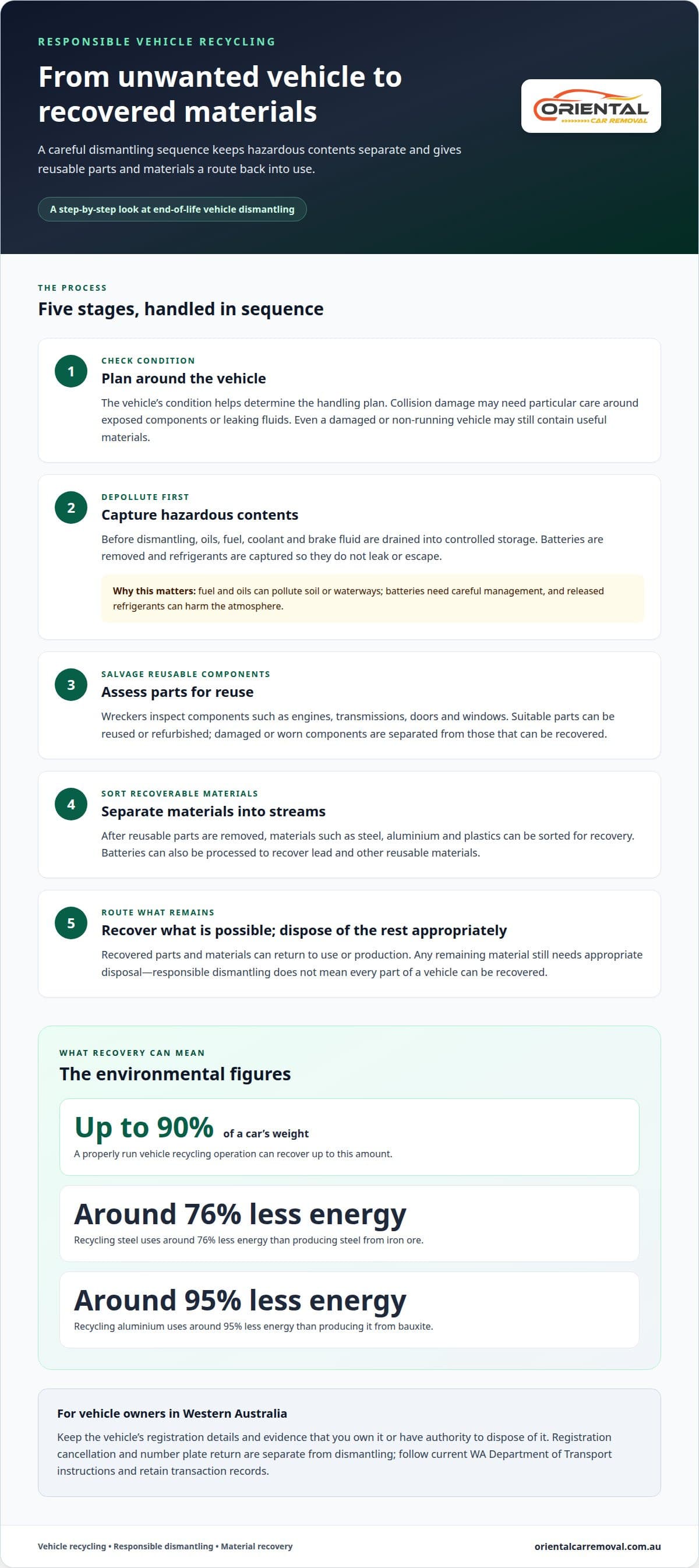
Sustainable dismantling reduces waste and can lower the need to mine and process virgin materials. Recycling steel uses around 76% less energy than producing steel from iron ore, while recycling aluminium uses around 95% less energy than producing it from bauxite. Recovered metals can therefore return to production with less energy-intensive processing.

A properly run vehicle recycling operation can recover up to 90% of a car’s weight. The remaining material still needs appropriate disposal. A responsible process also keeps oils, fuels and heavy metals out of the environment by directing them to controlled processing systems. For owners of 4WDs, 4WD wreckers are one relevant part of the vehicle recycling chain.

Choosing responsible disposal matters because abandoned or improperly handled vehicles can leave materials and fluids unmanaged. In Western Australia, recycling supports material recovery from end-of-life vehicles and reduces the amount of vehicle waste sent to landfill.

Safe dismantling and disposal of end-of-life vehicles

Safe vehicle dismantling separates reusable components, recyclable materials and hazardous contents, with appropriate handling for each.

Vehicle Depollution and Fluid Handling

Vehicle depollution removes hazardous materials before dismantling, helping prevent leaks and environmental contamination. Dismantlers drain oils, fuel, coolant and brake fluid into controlled storage rather than leaving them in the vehicle. They also remove batteries and capture refrigerants, which can escape if air-conditioning systems are opened carelessly. Keeping these materials separate allows them to be managed through appropriate processing or disposal channels.

After depollution, dismantlers work through the vehicle in a planned sequence. They identify components for salvage, then separate metals and other recyclable materials. A damaged vehicle may still contain reusable doors, windows or transmission components, while its fluids and battery need separate handling. This order reduces the risk of spills and keeps recoverable items separate from hazardous contents.

Fuel and oils can pollute soil or waterways if they leak. Batteries also contain materials that need careful management. Refrigerants must be captured because releasing these gases can harm the atmosphere. Responsible handling means collecting these substances instead of pouring them away, leaving them in the vehicle or allowing them to escape during dismantling.

Responsible Disposal of Old Vehicles

Responsible disposal sends an unwanted vehicle for dismantling and material recovery instead of abandonment or improper disposal. An old car can contain both salvageable components and hazardous contents. Even a damaged or non-running vehicle may have useful materials, so its condition alone doesn’t determine whether recovery is possible.

Wrecking can also recover economic value from a vehicle that’s no longer suitable for regular use. Reusable parts can return to use, while recovered metals can become inputs for new products. Owners can sell an unwanted vehicle directly to a wrecker without spending money on advertising or repairs. The vehicle’s condition and salvageable components determine what can be recovered.

For a vehicle beyond repair, responsible removal avoids leaving it to deteriorate on private land or in an unmanaged location. A wrecker can collect it for dismantling, separating parts, metals and hazardous contents. This connects disposal with recovery rather than treating the whole car as rubbish.

Before a vehicle is dismantled, its condition helps determine the handling plan. A car with collision damage may need particular care around exposed components or leaking fluids. An intact scrap vehicle presents different dismantling tasks, but still requires depollution before materials are separated. Explore responsible vehicle removal when an unwanted car needs a clear next step.

Reducing landfill waste

Vehicle recycling reduces landfill waste by separating materials that can return to use from those that need disposal. Steel, aluminium and plastics can be sorted into distinct recovery streams. This matters because some materials used to build cars can take decades or even centuries to break down naturally.

The process starts with dismantling, not crushing the whole vehicle as mixed waste. Reusable components are removed first, then metal and plastic materials are separated for recycling. This helps keep recoverable material out of landfill. Even a damaged car that can no longer be driven may contain materials suitable for recovery.

Sorting matters because different materials need different next steps. Metal can be processed as recycled feedstock, while vehicle plastics need to be separated from mixed waste before recovery. Fluids and other hazardous contents also require controlled handling so they don’t contaminate materials intended for recycling. Keeping each stream distinct makes it easier to direct it to appropriate processing.

Recycling also reduces demand for virgin materials. When recovered metals become manufacturing inputs, producers need less newly mined material. This can reduce pressure on mining and the energy used to extract and process raw resources. The benefit depends on successful recovery: material left mixed with waste cannot readily serve as manufacturing feedstock.

There’s also a supply-chain benefit. Producing new steel and aluminium requires mining, processing and transport, while recycling recovered metals uses less energy and creates fewer greenhouse gases than producing new metals. Recycling doesn’t remove every environmental impact, but it can reduce the need for energy-intensive stages in the materials supply chain.

A vehicle’s condition doesn’t determine whether recycling can help. A damaged vehicle may still have recoverable metal or plastic, even if some parts aren’t suitable for reuse. Proper dismantling separates those materials from waste and hazardous contents, supporting safer handling and reducing the amount sent to landfill.

Recycling works best when a vehicle reaches a facility that can dismantle it and sort its materials. Abandoning an old car leaves its components and contents outside the recovery process. Responsible dismantling gives salvageable materials a route back into manufacturing and keeps more vehicle waste out of landfill.

Owners can also look for reuse opportunities before assuming a replacement part must be new. The page recommends checking whether a Perth car wrecker sells recycled parts, which can reduce the need to buy new parts. This connects dismantling with another form of recovery: components that remain usable can be directed back into use rather than treated as waste. It complements material recycling, where metals and plastics are sorted for processing.

Looking for recycled parts keeps the focus on a vehicle as a source of useful components as well as raw materials. Choosing recycled parts can reduce the need for new replacements. It doesn’t replace careful dismantling or sorting, but extends recovery beyond raw materials and helps keep usable items in circulation.

Eco Friendly Car Wreckers: What Happens to an End of Life Car

Safe disposal of hazardous automotive materials

An end-of-life vehicle can contain fluids and components that need separate handling before disposal. Oils, fuel, coolant, brake fluid, batteries and refrigerants each require a suitable route. Careful separation helps prevent leaks, pollution and contamination of materials intended for recycling. Owners reduce risk by arranging responsible disposal rather than leaving a damaged car or attempting to drain hazardous contents themselves.

During depollution, dismantlers remove fluids before taking apart major components. They drain oils, fuel, coolant and brake fluid into suitable containers for controlled processing or disposal. Keeping each fluid separate matters because mixing different wastes can complicate later handling. Collision damage or visible leaks also affect how dismantlers approach a vehicle safely.

Refrigerants need particular care. Dismantlers capture them from air-conditioning systems rather than releasing them into the air. Batteries are removed separately and can be recycled to recover lead and other reusable materials. These steps keep hazardous contents out of general waste and allow each item to follow an appropriate processing route.

Not every component can be reused or recycled. After salvageable parts and recoverable materials are separated, non-reusable materials still need responsible disposal through appropriate channels. Dismantlers sort the vehicle instead of treating it as one mass of rubbish. This helps distinguish recyclable metals from contaminated or unusable material and reduces the chance of hazardous waste entering the wrong stream.

Owners can support safer disposal by choosing a vehicle recovery route that includes dismantling, fluid handling and material separation. Don’t pour automotive fluids onto the ground, into a drain or into household rubbish. A vehicle left to deteriorate can leak oil or fuel, while a damaged battery may also need careful handling. Professional removal gives the vehicle a route into controlled processing.

For example, a battery can be directed to recycling, used oil to controlled processing, and refrigerant captured before dismantling continues. A reusable component can be salvaged, while an unserviceable part follows an appropriate disposal route. Each decision depends on the material’s condition and whether it can be recovered safely.

Responsible disposal protects people and the environment by managing hazardous contents from collection through dismantling. It also supports recycling by preventing fluids from contaminating metals and other materials. If you have a scrap or damaged vehicle, arrange responsible recovery rather than attempting to drain hazardous fluids at home.

Selling unwanted cars to wreckers

Selling an unwanted car to a wrecker gives it a path into dismantling, salvage and material recovery. It doesn’t need to be roadworthy: a damaged car may still contain usable parts, metals or plastics. Describe its condition accurately so collection and handling can be planned for its actual state.

Oriental Car Removal provides free car removal in Perth, including Success. Free removal can simplify things when a car won’t start, has collision damage or can’t be driven safely.

To arrange eco-friendly car wrecking in Success, share the vehicle’s location, make and model, and a clear description of its condition. Mention issues such as a missing engine, flat tyres, collision damage or visible fluid leaks. These details help plan collection. After arrangements are made, the vehicle is collected for dismantling and material recovery.

Before handing over a car, remove personal belongings from the cabin, boot and glovebox. Gather available registration and ownership details to support a clear handover. If the vehicle has been in an accident, mention any damage that could affect access or loading. These details help avoid delays and surprises during collection.

A vehicle’s value depends on factors such as its condition, model and recoverable components. An intact engine or usable panels may have salvage value, while a severely damaged vehicle may mainly contribute recyclable metals. Plastics can also be separated where recovery is suitable. A wrecker assesses the vehicle as a whole rather than assuming every old car has the same value.

Responsible wrecking also depends on what happens after collection. The vehicle should be dismantled so usable auto parts can be identified, materials sorted and hazardous contents managed separately. Environmental practices and applicable regulations matter because careless handling can cause pollution or send recoverable material to landfill. A clear explanation of the recycling process helps you understand what happens to the car next.

Selling directly to a wrecker can spare owners the effort of advertising a damaged or unwanted vehicle and arranging repairs before a sale. Describe the car’s condition clearly and agree on collection and payment arrangements before transfer. That gives everyone a shared understanding of the vehicle and next steps.

In Perth, using local car wreckers supports local businesses and creates recycling jobs. Compare quotes, ask about fees, check reviews, and check environmental policies, practices and certifications. Many car wreckers offer vehicle pick-up services.

Oriental Car Removal

Oriental Car Removal helps Perth owners move unwanted vehicles on through removal and disposal. If your car is no longer roadworthy or worth keeping, its Cash for Cars and Free Car Removal services offer a straightforward next step. The business also handles unwanted trucks, 4WDs and vans, so you can discuss the vehicle type and condition as part of arranging removal.

Once collected, the vehicle can proceed to disposal rather than remain unused on your property. Share its location and condition when arranging the next step, especially if it’s damaged or doesn’t run. This helps clarify the collection arrangements and what happens next.

For an unwanted vehicle that’s ready to go, contact Oriental Car Removal to discuss removal.

Choose a practical next step for your vehicle

Choosing eco-friendly car wreckers in Success is about more than moving an old vehicle. Decide whether it’s ready for removal, then share a clear description of its condition and location. This helps make the handover straightforward.

Oriental Car Removal offers Cash for Cars, Free Car Removal and Cash for Trucks. If you’re ready to move on an unwanted vehicle, discuss its condition and the next step with the team.

Before getting in touch, note the vehicle’s make, model and location. Mention known damage, missing parts or whether it starts. These details make the collection discussion more useful from the outset.

An old or damaged vehicle doesn’t need to sit unused while you decide what to do. Choose a practical route that suits your situation and move forward when you’re ready.

A clear next step can make letting go of an unwanted vehicle much easier.

Frequently Asked Questions

Got an Old Car Sitting Around?

If your old car is taking up space, arrange removal instead of leaving it unused. Note its location, make, model and condition, including whether it starts or has visible damage. Remove personal belongings before collection and have ownership details ready for the handover. Even a car that won’t run may have recoverable components or materials, so roadworthiness isn’t the only factor.

How do eco-friendly car wreckers dispose of oils, batteries, tyres, and other hazardous materials?

Responsible wreckers separate hazardous items and direct them to appropriate handling or processing streams. Oils and other vehicle fluids are drained into controlled storage, while batteries are removed separately for recovery of lead and reusable materials. Tyres should also be separated from mixed vehicle waste. Refrigerants are captured rather than released during dismantling. Keeping these materials apart helps prevent leaks and contamination, though each item may follow a different disposal route.

What parts and materials can be reused or recycled when wrecking a car in Success?

Eco-friendly car wreckers in Success may recover working components such as engines, transmissions, doors and windows, depending on their condition. Steel and aluminium can be separated for recycling, while batteries can yield lead and other reusable materials. Plastics may also be sorted for suitable processing. A damaged car can still contain recoverable materials, but each component’s condition determines whether it can be reused, refurbished or recycled.

How can I compare car wrecker quotes, recycling practices, and licences in Success?

Compare quotes using the same details about each vehicle’s make, model, condition and location, then review the collection and paperwork arrangements. For recycling practices, look for clear explanations of fluid handling, parts recovery and material separation. Licensing status is another useful comparison point. Oriental Car Removal is a fully licensed and insured WA-based company, and its vehicle recycling process includes fluid removal and metal separation.

How to Dispose of an Old Car in Mandurah for Cash and Parts

How to Dispose of an Old Car in Mandurah for Cash and Parts

Disposing of an old car doesn’t have to mean finding a private buyer or paying for removal. If you’re looking into how to dispose of an old car in Mandurah, cash for cars in Perth offers another route: Oriental Car Removal pays instant cash for unwanted vehicles and provides free removal. Reusable parts can be recovered, and remaining materials recycled.

If your car is damaged, no longer runs or is taking up space, the practical choice depends on its condition and what you want from the sale. You could sell privately, trade it in or arrange removal.

This guide covers how cash for cars in Perth works, what can affect an old car’s assessment, how vehicles are recycled and what to prepare for collection. It also explains when removal can simplify the process by avoiding private-sale enquiries and inspections.

Written-Off Vehicle Sale Tips from Oriental Car Removal

  • Cash-for-cars removal can suit unwanted, damaged or non-running vehicles, with collection and payment arranged as part of the handover.
  • A vehicle’s condition, completeness and reusable parts help shape its value; describe it accurately when arranging an offer.
  • Prepare ownership paperwork and the vehicle for collection so the handover can proceed smoothly.
  • Recycling can give usable parts and scrap materials another purpose instead of sending the whole vehicle to waste.
  • Choose the disposal option that fits the car: a private sale may suit a usable vehicle, while removal offers a practical route for one that no longer runs.

Cash-for-cars removal: what does the option involve?

Cash for cars in Perth combines buying a vehicle with collecting it, including when it no longer runs. Share accurate details, arrange access and confirm the handover before collection.

Removal for unwanted or non-running cars

Removal can suit an unwanted, scrap, accident-damaged or non-running vehicle. Describe its condition honestly, including whether it starts and whether it has visible damage or missing parts. Accurate details help make the offer relevant to the vehicle being handed over. A car that cannot be driven can still be collected; its condition does not automatically rule out removal.

Leaving an old car on public land in Mandurah can result in City of Mandurah rangers legally removing it as an abandoned vehicle. On private land, an unused car can block access or parking and remain a disposal problem. Arrange a clear handover rather than leaving the vehicle unattended.

When deciding how to dispose of an old car in Mandurah, first consider its condition and whether removal suits your needs. A working car that is easy to describe may suit a private sale or trade-in. A damaged or non-running car may be simpler to move on through removal and wrecking.

Free pickup and towing in Mandurah

Free car removal in Mandurah means the vehicle is collected without a removal charge to you. Towing can be arranged when the car cannot be driven. Share its actual condition and location so the offer and collection plan reflect what is being handed over. Clear access details also help organise collection.

When arranging removal, share the make, model, year, condition and location. Mention whether the car is accessible, damaged or missing components. These details help plan towing and avoid surprises at collection. Confirm the instant cash payment and handover arrangements before collection begins.

Before collection, remove personal belongings and make the vehicle accessible. If it is behind another car or in a restricted area, explain the access arrangements in advance. Free removal is different from verge collection: car bodies and vehicle parts are not accepted in Mandurah’s verge junk and metals collection.

WA disposal notifications and registration refunds

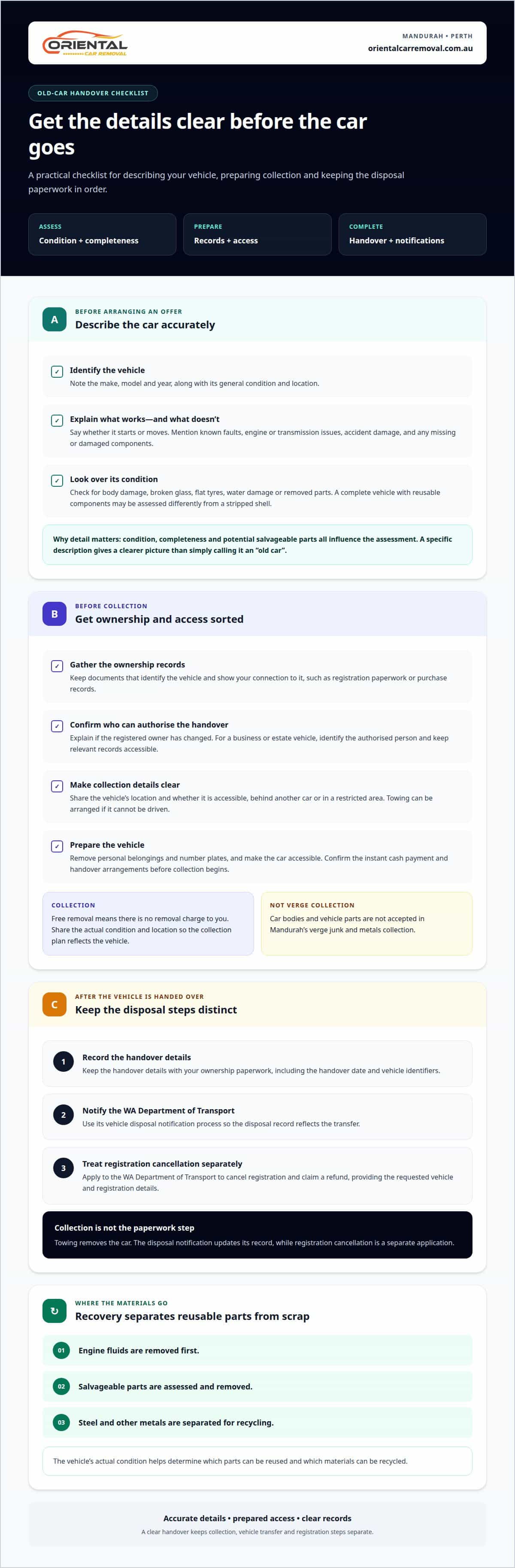
After selling or disposing of a vehicle, notify the WA Department of Transport through its vehicle disposal notification process. Provide the disposal details, including the handover date and vehicle identifiers, so the record reflects the transfer.

To cancel registration and claim a refund, apply to the WA Department of Transport for registration cancellation and provide the requested vehicle and registration details. Treat this as separate from physical collection: towing removes the car, while the notification updates its disposal record.

Keep the handover details with your ownership paperwork until the notification and cancellation steps are complete. Remove the number plates before collection, as advised for old-car handovers. This keeps the vehicle transfer, plate removal and registration cancellation clear as separate steps.

Assessing a vehicle’s condition and ownership records

A clear vehicle assessment starts with two things: its condition and your authority to sell it. Describe any damage or missing parts, and say whether it starts. Keep ownership records together so the handover details can be matched to the vehicle. These checks clarify what is being sold and which recovery options may suit it.

Look over the car in daylight and note details that affect its condition, such as body damage, broken glass, flat tyres, water damage or removed parts. Say whether the engine starts, the vehicle moves and the keys are available. An engine-damaged car presents a different assessment from one with cosmetic dents but working components.

Ownership records matter too. Gather documents that identify the vehicle and show your connection to it, such as registration paperwork or purchase records. If the registered owner has changed, explain that before arranging a sale. For a business or estate vehicle, identify who can authorise the handover and keep the relevant records accessible.

Cash offers for unwanted, damaged and scrap vehicles depend on the details provided. A complete vehicle with reusable components may be assessed differently from a stripped shell. Be specific: “doesn’t start after engine failure” gives a clearer picture than “old car”. Condition, completeness and the potential for salvageable parts all influence the assessment.

At Oriental Car Removal’s Mandurah service, salvageable parts are assessed after the vehicle reaches the yard. Your initial description helps set expectations, while the vehicle’s actual condition informs the assessment. A missing transmission, damaged interior or intact engine can change which parts are suitable for reuse.

Donating an unwanted vehicle for firefighter training is another possibility. Training organisations need to accept the vehicle and its condition for their intended use. Before choosing this route, identify the receiving organisation, confirm it can take the car and agree how ownership will be transferred. A severely damaged car may not suit every training purpose.

Use these details to prepare an accurate assessment:

  • Make, model and year, plus the vehicle’s general condition.
  • Whether it starts, moves, or has missing or damaged components.
  • Ownership documents and the name of the person authorising the sale.
  • Any known faults, including engine, transmission or accident damage.

Accurate information helps an assessor distinguish a repairable vehicle from a scrap car or a source of reusable parts. If the car is unwanted and no longer roadworthy, scrap-car removal information can help you understand that disposal route.

Reusing and recycling car parts and scrap metal

Recycling an end-of-life car separates reusable components from scrap materials. For Mandurah owners, the recovery route depends on the vehicle’s condition and the parts accepted at the facility.

Processing end-of-life cars

At a car recycling facility, workers remove engine fluids first, then salvageable parts, followed by steel and other metals. This separates materials for reuse or recycling and helps keep fluids away from soil and waterways. Engines, transmissions, batteries and tyres may be salvaged from vehicles that are no longer roadworthy.

Reusable parts can be tested before resale or reuse. A working transmission, for example, may have a different recovery path from a damaged body panel. After useful components are removed, the remaining shell can be dismantled. Steel, aluminium and some plastics can then be separated for recycling.

For local drop-off, the Mandurah Waste Management Centre is at 80 Corsican Pl, Parklands. It accepts car parts as metal waste. The centre is open Monday to Friday from 7am to 4pm, and on weekends and public holidays from 8am to 5pm. Separate usable components from general rubbish before transporting them.

Car parts don’t belong in household recycling bins. Tyres should not go in those bins either, while used motor oil should go to a designated collection point. The City of Mandurah’s verge collection doesn’t accept car bodies, vehicle parts, tyres or batteries, so don’t leave them out with household junk.

Some specialist plastics recyclers accept plastic bumpers, but general car recyclers may not. A bumper can contain different materials from a vehicle’s metal components. Identify the item and ask the facility about acceptance before arranging drop-off. This helps avoid taking a part to a site that cannot process it.

Choosing a licensed car recycler

Choose a recycler that can show current licence details, explain its fluid removal and parts recovery process, and provide handover paperwork. These checks help you understand how the vehicle will be handled and whether the facility accepts its components.

Ask how the recycler handles difficult items, such as a damaged battery or mixed-material bumper. Check whether collection or drop-off suits your vehicle and location. A clear explanation of what happens to fluids, reusable parts and scrap metal makes the recovery process easier to understand.

How to Dispose of an Old Car in Mandurah for Cash and Parts

Collection arrangements and proof of ownership

A smooth collection in Mandurah starts with accurate vehicle details, accessible parking and ownership paperwork. Prepare the handover before the tow truck arrives so the vehicle, documents and instant cash payment can be dealt with together.

When arranging collection, provide the vehicle’s make, model, year and condition. Explain whether it starts, where it is parked and whether a tow truck can reach it. A car behind a locked gate needs different access arrangements from one in an open driveway. Share these details early so collection can be planned for the actual location.

Cash for Cars Mandurah advises sellers to gather the vehicle title or scrap certificate and remove the plates before collection. These are practical handover steps when disposing of an old vehicle. Keep the paperwork together rather than searching through the glovebox while the driver waits. If someone else is arranging collection, ensure they can access the vehicle and relevant documents.

Check the car for personal belongings before it leaves. Look in the boot, centre console, door pockets and under the seats. Remove garage remotes, toll tags and any paperwork you want to keep. A quick check also helps separate items you’re keeping from components that remain with the vehicle, such as its battery or other metals.

Free car removal in Mandurah includes towing for vehicles that cannot be driven. Make the collection point clear and describe obstacles such as a narrow driveway or another vehicle blocking access. If the car is accident-damaged or missing parts, include that in your description. Accurate information helps match the collection plan to the vehicle being handed over.

Before the vehicle is loaded, confirm it matches the agreed details. Keep the handover paperwork available and note the collection date for your records. Oriental Car Removal provides instant cash when the vehicle is removed, so confirm the collection and payment arrangements beforehand. Hand over the keys once the vehicle and payment arrangements are clear.

A practical preparation list keeps the handover focused:

  • Put the title or scrap certificate with the other vehicle paperwork.
  • Remove the number plates and personal belongings before collection.
  • Explain the vehicle’s condition, location and access details.
  • Keep the keys ready if they are available.
  • Record the handover date and retain your paperwork.

These steps help Mandurah owners prepare whether a car is complete, damaged or no longer running. Clear access, accurate details and organised paperwork reduce avoidable delays at collection. After handover, keep the records with your registration documents while completing any separate disposal notifications.

Selling an unwanted or old car for cash

Choose a sale method based on whether the car works, how easily you can describe it and whether you want another vehicle. In Mandurah, a private sale, trade-in or removal can each suit a different unwanted car. The right fit depends on the vehicle’s condition and the effort you’re prepared to manage.

A private sale may suit a usable car with a clear, accurate description. Include its make, model, year, service history and known faults in the listing. For example, state that the air conditioning doesn’t work rather than calling the car perfect. Clear details help prospective buyers understand what they’re considering before arranging an inspection.

A trade-in can combine disposing of an old vehicle with buying another, if the seller accepts it. This can be practical if you’re already planning a purchase and the car is suitable for trade-in. A damaged or non-running vehicle may be harder to sell privately or trade in. In that case, removal can handle the car as it is.

For a cash offer, describe the car’s condition and completeness accurately. Mention accident damage, mechanical faults, missing components and whether it starts. The price depends on the vehicle and is given after a quote request; condition, completeness and the potential for reusable parts help shape the assessment. Avoid describing a damaged vehicle as roadworthy or leaving out known faults.

The same approach applies to trucks: explain the vehicle type, condition, missing parts and pickup access. A truck that no longer runs needs a different collection plan from a driveable one. Clear details help match the offer and removal arrangements to the vehicle, whether it is a car, van or truck.

Before choosing, compare the practical steps involved in each route:

  • Private sale: prepare an accurate description and arrange buyer inspections.
  • Trade-in: consider it alongside the vehicle you plan to purchase.
  • Removal: provide the vehicle’s condition and location for collection planning.

Keep your ownership paperwork and agreed sale details together. At handover, confirm the vehicle matches its description and retain a record of the transaction. If the car is no longer useful and you want pickup instead of a private listing, a removal-based sale can avoid managing buyer enquiries and inspections yourself.

Oriental Car Removal

Oriental Car Removal helps Mandurah owners move on unwanted vehicles through cash offers and vehicle removal. If an old car is damaged, no longer running or difficult to sell privately, this can provide a direct route from assessment to collection. The service also covers trucks, 4WDs and vans, so you can discuss different vehicle types through the same process.

Share the vehicle’s make, model, condition and location to begin an assessment. Accurate details help shape the instant cash offer and collection arrangements. Oriental Car Removal provides Free Car Removal, so you don’t need to arrange separate towing. Keep ownership paperwork ready for handover, and handle registration notifications separately after disposal.

Choose your next step with confidence

Choosing how to dispose of an old car in Mandurah comes down to the outcome you want: a private sale, a trade-in or a direct handover. Decide which route suits your car and your plans. If you’re ready to move on from an unwanted vehicle, choose a clear process with an agreed next step.

Oriental Car Removal offers Cash for Cars in Perth, Free Car Removal and Cash for Trucks. These services can help if you’re moving on an old car or truck and want to arrange an instant cash sale and removal together. Share the vehicle details to start the conversation, then decide whether the proposed arrangement suits your needs.

You don’t need to keep an unwanted vehicle simply because disposal feels like a hassle. When you’re ready, take the next step with the car’s condition and your preferred outcome in mind.

A clear decision can help you move forward and make space for what comes next.

Frequently Asked Questions

What happens at handover?

At handover, the vehicle is matched to the agreed sale details, then the keys and instant cash payment are handled. Before collection, remove personal items from the glovebox, boot and elsewhere in the car. Keep a record of the handover date and vehicle details. If someone else is present, make sure they know who is authorised to complete the transaction.

Can I sell my car if it’s been in an accident?

Yes. An accident-damaged car can be sold through an accident-removal service. Describe the damage clearly, such as a crumpled guard, broken lights or a car that no longer starts. Include whether it is complete and where it is located. These details help shape the assessment and collection plan. Don’t call damage minor if it affects how the car runs or moves.

Can I arrange removal for an accident-damaged car in Perth?

Yes. Accident-damaged cars can be arranged for removal in Perth. Explain the damage and access conditions when discussing collection. For example, say if the car is in a garage, has a damaged wheel or cannot roll. This helps plan a suitable pickup. Remove loose belongings and have the ownership details ready for handover.

How can I dispose of an old car in Mandurah, WA?

To decide how to dispose of an old car in Mandurah, consider its condition and whether you want to manage a private sale. A working vehicle with a clear description may suit a private buyer or trade-in. For a damaged or non-running car, request an instant cash offer and free removal. Then arrange the handover and complete any separate registration steps.

Which Mandurah car wreckers offer free vehicle removal?

Oriental Car Removal provides Free Car Removal for unwanted vehicles. It can suit a car that is damaged, no longer running or difficult to sell privately. Share the vehicle’s location and condition when arranging collection, including access issues such as a narrow driveway. This helps plan pickup and align the handover details with the vehicle being collected.

How much do car wreckers pay for scrap cars in Mandurah?

The amount depends on the individual car and is provided after a quote request. Factors include its make, model, condition, completeness and the potential for reusable parts. For example, an intact engine or transmission may affect the assessment differently from a stripped vehicle shell. Describe known damage and missing components accurately so the offer reflects the car being handed over.

What documents are needed to sell or scrap a car in Western Australia?

Have ownership paperwork available, such as registration documents, and gather the vehicle title or scrap certificate if you have one. These documents help identify the vehicle and support a clear handover. Remove the number plates before collection, as advised for old-car disposal. If someone else is handling the sale, ensure they can access the documents and are authorised to arrange the handover.

Can an unregistered or non-running car be collected in Mandurah?

A non-running car can be collected in Mandurah, so it doesn’t need to start or move under its own power. Explain whether it rolls, has missing wheels or is blocked in. For an unregistered vehicle, describe its condition and location when arranging removal. Clear access information helps plan collection without needing to drive the car to a yard.

Unwanted Car Pickup in Warnbro for Cash Offers and Removal

Unwanted Car Pickup in Warnbro for Cash Offers and Removal

Pickup timing for an unwanted car in Warnbro depends on the collection schedule, your address and access to the vehicle. For unwanted car pickup in Warnbro, the vehicle’s type and condition also help shape the assessment and removal arrangements.

A car that won’t start, has accident damage or is taking up space can be difficult to move on your own. Before arranging pickup, it’s reasonable to want clear information about timing, payment and whether removal costs anything.

This guide explains how pickup timing works, what can affect an instant cash offer and how free removal fits into the process. You’ll also learn which vehicles can be collected, what to expect when selling a scrap car, and which nearby areas around Warnbro are covered. These details can help you plan a straightforward handover.

Written-Off Vehicle Sale Tips from Oriental Car Removal

  • Learn how a vehicle’s type, condition and accessibility can shape its cash offer and pickup arrangements.
  • Find out what free vehicle removal means and how towing fits into the collection process.
  • See why cars, trucks, vans, utes and 4WDs can all be considered for removal, including vehicles that no longer run.
  • Understand how Warnbro fits into the Rockingham service area and which nearby suburbs may be covered.
  • Know that the City of Rockingham’s general waste verge collection does not accept car bodies, vehicle parts or tyres.

What Happens to the Cars and Scrap Metal?

A vehicle’s condition helps shape its assessment for removal. A damaged car, a vehicle that won’t start and an older car with scrap value can each have different considerations. The make, model, completeness and condition of key components can affect its value. Access matters too: a car blocked behind another vehicle may need different collection arrangements from one parked in a clear driveway.

Cars aren’t the only vehicles considered. Trucks, 4WDs, vans and utes may also be suitable, depending on their condition and collection requirements. For example, a damaged van and an unwanted ute are different vehicle types, but both can be assessed for removal. Share the vehicle type, its condition and whether it runs when arranging a pickup. That gives the collection team practical details to plan around.

  • Damaged: Accident damage can affect the vehicle’s condition and assessment.
  • Not running: Tell the collector if the engine won’t start or the vehicle can’t move under its own power.
  • Scrap condition: Scrap car removal is an option to consider when a vehicle is no longer wanted as a road car.

No single condition describes every unwanted vehicle. A car may be damaged but complete, or it may be missing parts and unsuitable for driving. A truck, van, ute or 4WD may also have mechanical issues or body damage. Describe what’s wrong rather than assuming the vehicle’s condition rules it out. The vehicle’s details and access help shape the assessment and removal plan.

City of Rockingham verge collection is for household waste, not whole vehicles. Its general waste collection allows up to two cubic metres per residential property and won’t accept waste longer than 1.5 metres. Old furniture up to 1.5 metres may be accepted, with glass removed. Car bodies, vehicle parts and tyres aren’t accepted through that collection, so placing them on the verge isn’t a suitable disposal step.

Green waste has separate limits. The City of Rockingham accepts up to three cubic metres per residential property per collection. Tree and shrub prunings can be up to 1.5 metres long and 350 millimetres in diameter. Those rules apply to green waste, not vehicles or scrap metal. Keeping the categories separate helps avoid leaving an unwanted car where the verge service won’t collect it.

After selling a car in WA, notify the Department of Transport and follow its vehicle licence cancellation process. Keep the sale details for your records and check what steps may apply after selling a car.

Cash offers and factors affecting vehicle value

An instant cash offer reflects the vehicle’s details and condition, not just whether it starts. The information you provide helps assess its value as a usable vehicle or for scrap.

Offers for Scrap and Unwanted Cars

A scrap car can still have value even if it’s no longer suitable for driving. The offer depends on the vehicle’s make, model, condition and recoverable materials. A complete car may be assessed differently from one missing major components. Describe the vehicle accurately so the instant cash offer reflects what is being collected. This also helps distinguish scrap value from the value of a roadworthy vehicle.

Offers for Damaged Vehicles

Damage doesn’t automatically rule out an instant cash offer. Accident damage, a non-starting engine or worn components can affect the vehicle’s condition and assessment. For example, a car with body damage but intact components differs from one with extensive damage and missing parts. Describe the damage and say whether the vehicle runs. Clear details help the assessment reflect its actual condition.

Vehicle Assessment and Offer Factors

An assessment connects the vehicle’s details to the instant cash offer. Relevant details include its make and model, whether it starts, visible damage and missing components. Access can also affect collection arrangements, such as when a car is parked behind another vehicle. Give a clear description and mention anything that could affect the assessment. Accurate information makes it easier to discuss the offer before collection.

For a practical assessment, gather the vehicle’s identifying details and describe its condition. Note whether it starts, has accident damage or is missing major parts. If access is difficult, explain where it’s parked. These details help distinguish a scrap vehicle from an unwanted car that may retain usable value. They also help avoid surprises at collection.

  • Vehicle details: Provide the make and model.
  • Condition: Explain whether it runs and describe damage or missing parts.
  • Access: Mention obstacles around the vehicle’s parking spot.

A cash offer is the amount agreed for the vehicle, while payment arrangements should be clear before handover. Keep the agreed amount and collection details together so both are easy to refer to. Don’t assume every scrap car has the same value: condition, completeness and recoverable materials all matter. A cash offer for a scrap car starts with an accurate picture of the vehicle.

Is scrap car removal really free in Warnbro?

Vehicle removal can include free pickup and towing, so you aren’t charged to move the unwanted car. Before arranging a sale, prepare clear vehicle details and ownership information, and agree on the instant cash payment and collection arrangements.

Have identification and ownership details ready for the handover. Registration status and missing parts are also useful details to share during the quote process.

Free Pickup and Towing

Free towing means the vehicle is collected without a separate charge to you. Oriental Car Removal arranges removal, which is useful if a scrap car can’t be driven from your Warnbro property. Before agreeing, make sure the instant cash offer and collection arrangements are clear, including that removal is free.

Quote and Vehicle Assessment

A quote starts with the vehicle’s details and condition. Share its make and model, whether it runs, visible damage, missing components and where it’s parked. For example, an accident-damaged car that won’t start needs a different collection plan from a complete car in a driveway. These details help shape the assessment and instant cash offer. Agree on the offer and pickup arrangements before handover.

Unregistered Vehicles and Missing Parts

An unregistered vehicle can still be considered for removal. Registration status doesn’t describe the whole vehicle, so also explain its condition and whether it can move. Mention any parts already removed, such as a battery or wheels. Clear details help the assessment reflect the vehicle being collected. Have identification and ownership details ready for handover, and keep a record of the sale.

After collection, recycling can separate a vehicle’s metal and reusable components from material that needs disposal. A vehicle’s condition and completeness can influence which materials are suitable for recovery. A dismantled scrap vehicle may have fewer reusable components than a complete car, while damaged panels can affect the recoverable material. Recycling helps recover usable materials and process the remainder for disposal, rather than leaving an abandoned shell.

To sell your car without arranging a separate tow, follow a clear sequence:

  • Describe the vehicle, its condition and any missing parts.
  • Agree on the cash offer and collection arrangements.
  • Have ownership details ready, then complete the handover.

Free pickup takes the towing step off your hands, but it’s still important to agree on the instant cash offer. The offer should reflect the details supplied about the unwanted vehicle. Keep a sale record and confirm payment at handover. This gives you a clear transaction record and helps you complete your obligations as the seller.

Unwanted Car Pickup in Warnbro for Cash Offers and Removal

Rockingham service area and nearby suburbs

Warnbro is a named service location, and Rockingham is covered under postcode 6168. The wider service area extends within a 100 km radius of the Maddington wrecking yard, giving vehicle owners a clear reference point for nearby pickups.

Pickup Across Rockingham Suburbs

Rockingham postcode 6168 helps identify pickups within the Rockingham area. Provide the suburb and full address when arranging a car removal service, so the collection point is clear. Nearby named locations include Warnbro, Port Kennedy, Secret Harbour and Golden Bay. Giving the exact suburb helps distinguish a local pickup from a general request for the broader Rockingham area.

Address details help clarify vehicle access. A car in an open driveway presents a different collection situation from one behind a gate or in a shared complex. Include the pickup address and any practical access information when arranging collection. This helps Oriental Car Removal understand where the vehicle is parked and how it can be reached.

Nearby suburbs can be considered in relation to the stated service area. The wider coverage is measured within a 100 km radius of the Maddington wrecking yard. A suburb that appears close to Rockingham may sit at a different distance from Maddington. Providing the complete pickup address helps establish the location in relation to that radius.

Service Coverage Around Warnbro

Warnbro is specifically named as a service location, making it a useful reference for owners with unwanted cars or scrap cars. Rockingham postcode 6168 is another location marker. Other nearby named areas include Port Kennedy, Secret Harbour and Golden Bay. These place names help identify where a vehicle is located without relying on a broad description such as “near Rockingham”.

Give the suburb first, then the full pickup address. Add a practical access detail, such as whether the vehicle is in a driveway or behind a locked gate. For pickup in Warnbro, naming the suburb identifies the local area. If the vehicle is elsewhere, its address helps establish the collection location in relation to Rockingham and the Maddington wrecking yard.

Service-area descriptions are easier to use when the pickup point is specific. For example, Rockingham postcode 6168 identifies that locality, while a nearby suburb can be considered against the 100 km radius from Maddington. This gives owners a clearer way to describe where collection is needed before arranging it.

If you’re planning to sell an unwanted vehicle, start with its exact location. State whether it’s in Warnbro, Rockingham, Port Kennedy, Secret Harbour or Golden Bay, then provide the pickup address. Mention driveway access or obstacles around the vehicle too. These details clearly describe the collection point and help with local arrangements.

Removal of cars, trucks, vans, utes and 4WDs

Vehicle removal can cover more than a standard passenger car. Cars, trucks, vans, utes and 4WDs each have different sizes, conditions and collection needs. A damaged sedan and an unwanted work ute, for example, are different vehicles to assess. The key takeaway is simple: describe the vehicle accurately so its type and condition are clear.

A car may be unwanted because it’s old, damaged, no longer running or taking up space. A scrap car removal request may also involve a vehicle that’s incomplete or unsuitable to drive. These details matter because a car that starts differs from one that needs to be loaded for removal. Explain whether it runs and mention visible damage when arranging collection.

Trucks need clear identification too. Tell the removal team whether it’s a truck, rather than describing it only as a large vehicle. A van or ute may be used for work or personal transport, while a 4WD has a different body style and purpose. Naming the vehicle type helps keep the removal request specific. For example, state “van” or “4WD”, then describe its condition.

Vehicle condition varies within each category. One ute may be complete but no longer wanted, while another may have accident damage or missing parts. A truck may not start, and a van may be unregistered. Identify the vehicle clearly, including its make and model if known, whether it runs, and any damage or missing components.

Access is another practical detail for cars, trucks, vans, utes and 4WDs. A vehicle in an open driveway presents a different collection situation from one behind a gate or blocked by another car. Give the pickup address and explain the access issue. If a truck is parked in a tight area, say so. A clear description helps plan around the vehicle’s location and condition.

Use this short checklist when describing a vehicle for removal:

  • Type: Identify the car, truck, van, ute or 4WD.
  • Condition: Say whether it starts and describe damage or missing parts.
  • Location: Provide the pickup address and explain driveway or gate access.

A cash offer and removal plan depend on the vehicle details provided. “Top cash” alone doesn’t explain what a particular vehicle is worth. A complete, running van and a damaged, non-running 4WD need separate assessments. Share accurate details, discuss the offer, then agree on collection arrangements before handover. This straightforward process applies whether you want car removal or need an unwanted truck taken away.

Oriental Car Removal: Cash for Unwanted Cars

Oriental Car Removal can help when you’re ready to move on an unwanted vehicle. Its Cash for Unwanted Cars and Cash for Cars in Perth services provide a straightforward next step for cars you no longer need, while Free Car Removal includes collection and towing at no charge. Cash for Trucks is also available for unwanted trucks.

To get started, share the vehicle type, condition and pickup location. Details such as whether it runs, has damage or is difficult to access help shape the assessment and collection arrangements. Discuss the instant cash offer, then agree on a pickup plan for the handover.

Contact Oriental Car Removal to discuss your unwanted vehicle.

Make your next step straightforward

When you’re ready to move on from a vehicle, keep the handover simple. Gather its details, describe its condition clearly and arrange pickup for its location. A clear plan can help you arrange unwanted car pickup in Warnbro without leaving a vehicle sitting unused.

Oriental Car Removal offers Cash for Cars in Perth, Free Car Removal and Cash for Trucks. Whether you have a car you no longer need or a truck ready to go, share the vehicle details to discuss an instant cash offer and free collection arrangements.

Take the first step when you’re ready, and make space for what comes next.

Frequently Asked Questions

How quickly can you pick up my car in Warnbro?

Pickup timing depends on the collection schedule, your address and vehicle access. A car in an open driveway may be easier to reach than one behind a locked gate or blocked by another vehicle. Share your Warnbro address, the car’s condition and any access issues when arranging collection. This helps plan a suitable pickup time and avoid delays caused by unclear access arrangements. Same-day pickup may be possible where logistics allow, but timing isn’t guaranteed.

Do you buy old or non-running cars in Warnbro?

Yes. Older and non-running cars can be considered for removal in Warnbro. A vehicle doesn’t need to start to be assessed, and age alone doesn’t rule it out. Explain if the engine won’t turn over, the car has accident damage or parts are missing. Oriental Car Removal accepts vehicles across makes, models and conditions, including cars for scrap removal.

How and when do I get paid?

Payment is made as instant cash on the spot when the sale is completed. The agreed amount and handover arrangements should be clear before the vehicle is collected. Have the vehicle and ownership details ready so the transaction can be completed smoothly. If you’re selling a car that won’t run, mention this during the initial discussion so the offer reflects the vehicle being collected.

Is towing really free this far south?

Yes. Free Car Removal includes towing at no charge to the owner, and Warnbro is among the listed service locations. This can help if a scrap car can’t be driven or is parked away from central Perth. Include the pickup address and any driveway, gate or access restrictions when arranging collection, especially if a tow vehicle needs clear access.

What paperwork do I need to sell my car in Warnbro?

Have proof of ownership and identification ready for the sale. Registration isn’t always required when selling a car, but ownership details help establish that you can hand it over. Oriental Car Removal handles the sale paperwork as part of the process. Keep a record for your files, including the agreed amount and the date the vehicle changes hands.

Who offers unwanted car pickup in Warnbro, WA?

Oriental Car Removal offers unwanted car pickup in Warnbro, WA, as part of its service across Perth and surrounding suburbs. Its Cash for Cars in Perth service covers unwanted vehicles, while Free Car Removal includes collection and towing at no charge. Truck owners can also ask about Cash for Trucks. Share the pickup suburb and vehicle details to discuss an instant cash offer and collection arrangements.

How much can I get for an unwanted car in Warnbro?

The instant cash offer depends on details such as the car’s make, model, condition and completeness. A damaged vehicle with missing components may be assessed differently from a complete car. Share accurate details, including whether it runs, so the offer reflects the vehicle being sold.

Which unwanted vehicles do Warnbro car buyers accept?

Oriental Car Removal accepts cars, trucks, 4WDs, vans and utes, including unwanted, damaged, scrap and non-running vehicles. Make, model and condition don’t automatically exclude a vehicle. For instance, you can describe an unregistered van or an accident-damaged 4WD for assessment. Mention missing parts and access details too, so the vehicle’s condition and collection needs are understood from the outset.

Top Dollar for Cars in Joondalup: Get a Quote

Top Dollar for Cars in Joondalup: Get a Quote

Your car isn’t the only vehicle that can earn a quote in Joondalup. Cars, trucks, 4WDs, vans and utes can all be considered, and a vehicle doesn’t have to be in perfect condition to be worth asking about. Getting top dollar for cars in Joondalup starts with clear details about the vehicle and its condition, because these help shape the quote.

Selling an older, damaged or unwanted vehicle can feel like a hassle, especially when you’re unsure what buyers will accept or how collection works. With top dollar for cars in Joondalup in mind, a clear quote process helps you understand what information matters before deciding.

Learn which vehicle types and conditions Oriental Car Removal accepts, how to request a quote and how free removal works around Joondalup and Perth. Sharing a few practical details about your vehicle and its location helps the team assess it and plan collection.

Written-Off Vehicle Sale Tips from Oriental Car Removal

  • Cars aren’t the only vehicles to consider selling; trucks, vans, utes and 4WDs may also be eligible.
  • A vehicle’s condition matters when assessing its value, but damage or non-running status doesn’t automatically rule it out.
  • Share the vehicle type, suburb and access details when requesting a quote to help organise the next steps.
  • Joondalup is part of the northern Perth area, and coverage depends on where the vehicle is located.
  • Find out how Oriental Car Removal’s cash offers and free removal can help with an unwanted vehicle.

Need Car Removal in Joondalup?

A cash offer for an unwanted vehicle depends on more than its age. In Joondalup, its condition, usable parts, demand and collection access can all shape the valuation.

Cash offers for unwanted cars

Cash offers can cover used, damaged, junk and scrap cars. A vehicle that no longer runs may still have reusable parts or scrap value. For example, a damaged car and a roadworthy used car need different assessments. Describe the condition accurately, including visible damage and whether the car starts. If it’s at the end of its working life, scrap car removal is one option to consider. The key is matching the vehicle’s actual state with the right removal service.

Quote acceptance and valuation

Start a quote by sharing the vehicle’s make, model, year and condition. Include whether it runs and where it’s located in Joondalup. These details help assess the vehicle before an offer is made. The offer should reflect its condition, reusable components, scrap value and collection access. Review the offer and any removal terms before accepting. Once accepted, vehicle paperwork may include transfer or deregistration, where applicable. Keep copies of documents related to the sale and collection. This gives you a clear record of the agreed terms and what happens next.

Comparing local car buyers

How does a Joondalup buyer compare with nearby car buyers and wreckers? Compare what each offer covers, including the vehicle assessment, removal arrangements and payment process. A higher headline offer may not tell the whole story if collection terms differ. Customer reviews are most useful when they describe specific parts of the transaction, such as whether the quoted offer matched the final offer, how collection went and whether paperwork was handled clearly. Look for details about the same vehicle type and condition, rather than relying only on general praise. That makes comparisons more relevant to your situation.

Available car buying services

In Joondalup, a cash-for-cars service buys unwanted vehicles and arranges their removal. Depending on the operator, the service may include assessment, collection and paperwork. Ask what the offer covers before you accept, and check whether removal has a separate charge or is included. Be clear about access issues, such as a vehicle parked in a tight space, because collection conditions can affect the arrangements. For cars with significant damage, confirm that the vehicle’s condition is reflected in the offer. This helps you understand the transaction before agreeing to sell.

These advertised amounts describe different services and vehicle categories, so they provide context rather than a guaranteed quote for a particular car.

These examples show that non-running vehicles have been removed for cash, while the outcome depends on each vehicle’s assessment.

Vehicle types and conditions accepted

Oriental Car Removal handles more than conventional cars in Joondalup. Vehicle type and condition help determine the collection arrangements.

Accepted vehicle types

Accepted vehicle categories include cars, utes, vans, SUVs, trucks, jeeps and 4WDs. A vehicle can be assessed as a complete unit, whether it’s a family SUV, work ute or larger truck. Give its correct type when arranging a quote. That helps match the vehicle with suitable removal arrangements, including the tow truck needed for collection. Buyers handling cars in Perth may also take vehicles that fall outside a standard passenger-car category.

  • Cars: passenger vehicles, including older or damaged models.
  • Utes: work vehicles and personal transport.
  • Vans: commercial or family vehicles.
  • SUVs and 4WDs: larger vehicles with different body styles.
  • Trucks and jeeps: other vehicle types to identify clearly in your quote details.

Use the vehicle’s actual type, rather than a broad label. For example, describe a dual-cab ute as a ute and a four-wheel-drive wagon as a 4WD or SUV. Accurate details help avoid confusion about the vehicle being collected. If you’re considering car removal options, include the body type and location when arranging the next step.

Vehicles in any condition

Condition doesn’t have to rule out a vehicle. Joondalup car removal services accept vehicles regardless of condition, including old, rusted, wrecked and scrap cars. This can include a car that no longer runs, a vehicle with accident damage or one that has deteriorated while parked. Describe the main issue plainly, such as a damaged front end, rust or missing components. Clear details help assess the vehicle and plan its removal.

Be specific about what happens when you try to start the vehicle. Say whether it runs, has a flat tyre or has visible damage. A non-running vehicle may need different loading arrangements from one that can move under its own power. Also explain where it’s parked and whether a tow truck can reach it. These practical details help the team plan removal, even when the vehicle is scrap.

Same-day vehicle pickup is advertised in Joondalup, but timing depends on the collection arrangements. Share the vehicle’s condition and access details early, especially if it’s wrecked or immobile. That gives the removal service useful information before collection is organised. For someone seeking top dollar for cars in Joondalup, an accurate description is a practical first step: it helps the buyer assess the vehicle on its actual type and condition.

Getting a quote by phone or online

A useful quote starts with accurate vehicle and collection details. Phone or online requests can help establish the offer and organise pickup.

Information for a quote

Include the vehicle’s make, model, year and body type. Describe its condition, whether it runs, and any accident damage or missing parts. Give the Joondalup suburb and exact pickup location. Mention access limits, such as a narrow driveway or a car parked behind another vehicle. These details help assess the vehicle and plan towing.

  • Vehicle details: make, model, year and type.
  • Condition: whether it runs, and any damage or missing components.
  • Collection details: suburb, parking location and access issues.
  • Sale documents: proof of ownership and valid photo ID.

In Western Australia, have proof of ownership and valid photo ID ready for the sale process. If the vehicle has been in an accident, describe the damage clearly rather than relying on a broad label. Specific information helps the buyer understand what is being assessed and what collection may involve.

Quote and pickup scheduling

Quote requests can be made by phone or online. Cash for Cars Joondalup says quotes take minutes to obtain. A phone request can cover vehicle details and access in one conversation. An online request lets you provide those details in writing. For phone enquiries, the number provided for arranging Perth car removal is 412 053 119.

After receiving an offer, review the amount and removal arrangements before accepting. The assessment considers the vehicle’s type, condition, reusable parts and access for collection. Ask for the offer and agreed arrangements to be clear before proceeding. Oriental Car Removal offers instant cash, with payment made on the spot as part of the accepted sale.

Once you accept, pickup can be scheduled. Most Joondalup pickups are collected within 60 to 90 minutes after confirmation. Share access instructions and any changes to the vehicle’s location before collection. This matters if the car is in a shared garage, behind a locked gate or difficult for a tow truck to reach. The removal team can then plan the pickup using the details provided.

Keep the sale documents with you during handover. Oriental Car Removal handles the paperwork and any applicable transfer or deregistration steps. Have your proof of ownership and photo ID ready, and ensure the vehicle matches the details you provided for the quote. This helps keep the offer, payment and removal process aligned.

Top Dollar for Cars in Joondalup: Get a Quote

Service coverage across Perth and surrounding suburbs

Joondalup sits in Perth’s northern corridor, and unwanted cars can be collected across Perth and surrounding suburbs. Give the vehicle’s suburb and pickup location to establish where collection is needed.

Joondalup service coverage

Joondalup is identified by postcode 6027 and forms part of northern Perth. Car removal is available in Joondalup and nearby suburbs, including for unwanted and scrap vehicles. Collection can be arranged from a home, mechanic or another facility. The exact pickup point matters because the vehicle may be somewhere other than its registered owner’s home.

For a Joondalup pickup, provide the suburb, street location and access details when requesting a quote. For example, say whether a scrap car is at a residence or a mechanic’s workshop. If it’s in a shared car park or behind a secured entry, mention that too. Clear directions help the team plan how to reach the vehicle.

Free towing is included for unwanted vehicles in Perth and surrounding suburbs, so there’s no removal charge to the customer. Make sure the address you provide is where the vehicle will be ready for pickup. If it moves before collection, share the updated location so the arrangement stays accurate.

Northern Perth service areas

Joondalup is a useful reference point for arranging collection across Perth’s northern corridor. A nearby suburb may have a different pickup address, so give the exact suburb rather than describing the location only as “near Joondalup”. This helps identify where the vehicle is waiting and plan the route.

Oriental Car Removal’s service area covers Perth and surrounding suburbs, with collection from homes, mechanics and other facilities. For a car at a workshop, provide the workshop’s address and access details. These specifics help coordinate collection whether the vehicle is at a private property or another site.

To arrange collection in the Perth service area, provide the suburb and full pickup address, then describe where the vehicle is parked, such as a driveway, workshop yard or shared parking area. If a scrap car cannot move under its own power, mention the available towing access. Location and access details help make the pickup arrangement clear from the outset.

Whether you’re selling an unwanted car in Joondalup or elsewhere in Perth and surrounding suburbs, the pickup address is essential for planning removal. Keep the vehicle at the stated location and pass on any access instructions before collection. This gives the removal team a clear destination and helps avoid confusion at pickup.

Cars, trucks, buses, utes and 4WDs

A vehicle quote isn’t limited to a standard passenger car. Vehicle type, condition, reusable parts and collection requirements all help shape its assessment.

Cars, trucks, buses, utes and 4WDs differ in size and likely use. That affects how a buyer assesses the vehicle and plans collection. A Toyota passenger car, a work ute and a delivery truck each need to be described accurately. For a bus, identify it as a bus rather than calling it a large van. The clearer the description, the easier it is to assess the right vehicle category.

  • Cars: identify the make, model and whether the vehicle runs.
  • Utes: describe the cab style and any work-related damage.
  • 4WDs: say whether it’s a wagon or another four-wheel-drive body type.
  • Trucks and buses: provide the vehicle type and collection location.

Size can affect collection planning. A truck or bus may need different towing equipment from a passenger car, while a ute or 4WD may have its own access considerations. The removal team needs the vehicle’s location and a clear account of access. For example, say whether a large vehicle is parked on a street, in a yard or inside a worksite. Those details help plan how to handle pickup.

Condition matters across every category. An old Toyota with accident damage, a non-running ute or a worn 4WD can still be assessed. Tell the buyer whether the engine starts, whether the vehicle can roll, and what major damage is visible. For a truck or bus, describe any issues that affect movement or access. A wrecker may consider usable components as well as scrap value, so don’t assume a damaged vehicle has no value.

An offer depends on the vehicle’s make, model, age, condition, parts and accessibility. For a Toyota, for instance, the exact model and whether key components remain can matter more than the badge alone. Be precise about missing parts or damage. A complete vehicle and one stripped for parts require different assessments.

When arranging collection, provide the vehicle category, exact location and access information. Trucks and other large vehicles may require suitable towing and room to load. If the vehicle is at a business site, explain any entry instructions. These practical details help the team plan for the vehicle being collected.

Share your vehicle details to arrange an assessment.

Collection capability can also depend on the vehicle and equipment available. The service says its tilt-tray truck can handle trucks, buses, 4WDs and heavy machinery. Confirm the vehicle type and access details so collection can be considered against the equipment required.

Oriental Car Removal provides free car removal in Joondalup and nearby Perth suburbs. There is no removal charge to the customer.

Oriental Car Removal: Cash for Cars

Oriental Car Removal offers Cash for Cars and Free Car Removal for unwanted vehicles in Perth. If your car is damaged, no longer running or simply no longer needed, request a quote and share its condition and pickup location. This gives the team the details needed to assess the vehicle and discuss the next step.

For other vehicles, Oriental Car Removal also offers Cash for Trucks and Cash for 4WDs and Vans. The right option depends on what you’re selling, whether it’s a truck, 4WD, van or car. Free removal can help simplify collection when you’re ready to sell, without arranging separate towing yourself.

Choose a clear next step for your vehicle

The best time to arrange a sale is when you’re ready to move on from a vehicle you no longer need. Decide whether you want to sell a car, truck or another eligible vehicle, then share its details to start the conversation. A clear description helps set up a quote that reflects the vehicle you’re selling.

Oriental Car Removal offers Cash for Cars in Perth, Free Car Removal and Cash for Trucks. If you’re considering top dollar for cars in Joondalup, request a quote and describe the vehicle and its collection needs. You can then decide whether to proceed.

When you’re ready to discuss your vehicle’s next step, contact Oriental Car Removal for a quote and free removal in Perth and surrounding suburbs.

Frequently Asked Questions

Ready to Sell Your Car in Joondalup?

Yes. If you’re ready to sell in Joondalup, contact Oriental Car Removal to discuss your vehicle and arrange a quote. Cash for Cars in Perth includes instant cash for unwanted vehicles, with free removal available. Before handover, gather the vehicle’s keys and any ownership documents you have. That can help keep the sale organised. For top dollar for cars in Joondalup, give accurate details about the vehicle so its offer reflects what you’re selling.

Does Top Dollar for Cars Joondalup buy damaged, unregistered, or scrap cars?

Oriental Car Removal accepts unwanted vehicles in all conditions, including damaged and scrap cars. You can also discuss an unregistered car as an unwanted vehicle. Include its registration status, accident damage, missing parts and any issues that affect movement. The team handles paperwork and towing as part of its vehicle removal service, giving you a way to sell a car that’s no longer suitable for normal road use.

How much does Top Dollar for Cars Joondalup pay for used cars?

Cash for Cars Success: Selling a Written-Off Vehicle

Cash for Cars Success: Selling a Written-Off Vehicle

Cash for cars in Success can be an option for a written-off vehicle, but its classification affects what can happen next. In Western Australia, a statutory write-off can only be sold for parts or scrap and can’t be re-licensed for road use. A repairable write-off may be repaired and re-licensed after required inspections.

It’s understandable to want a clear answer before arranging a sale, especially if the car is damaged or hard to move. This guide explains what to prepare and how removal compares with a private sale, including paperwork and payment. If you’re considering cash for cars in Success, these practical steps can help you decide what to do next.

Written-Off Vehicle Sale Tips from Oriental Car Removal

  • A written-off vehicle may be sold, but its classification affects whether it can return to the road or be sold only for parts or scrap.
  • Before arranging collection, gather available ownership documents and explain access issues such as a narrow entrance or blocked driveway.
  • Describe whether the vehicle starts, rolls or steers, and disclose known damage, missing parts and hazards when requesting an offer.
  • Before handover, remove personal belongings and information-bearing documents or devices, then confirm the offer, removal details and payment method.
  • Compare removal with a private sale by considering the vehicle’s condition, collection logistics and the paperwork involved.

1. Can I sell a written-off car for cash in Success?

Yes, a written-off car in Success may still be sold for cash, but its write-off classification affects what can happen next. In Western Australia, a statutory write-off can only be sold for parts or scrap and cannot be re-licensed for road use. A repairable write-off may be repaired and re-licensed after the required inspections. Identify the vehicle’s status before arranging a sale, as each category has a different outcome.

A PPSR search can show vehicle history, including WOVR records. Use the result alongside the paperwork you already have, rather than assuming a damaged car has a particular classification. The WA Department of Transport can advise on current requirements for a specific vehicle. This information matters when weighing a private sale against removal or deciding whether repairs are worth pursuing.

Before arranging collection, establish who is authorised to sell the vehicle. Gather the ownership documents you have and make sure the person arranging the handover has authority to do so. If someone else owns the car, agree on who will handle the transaction and paperwork. Clear ownership information helps the buyer arrange collection smoothly.

Access can shape the collection plan as much as visible damage. Tell the buyer if the car is behind a locked gate, in a shared driveway or on a narrow accessway. Mention a second vehicle blocking the exit, low clearance or a steep driveway. For example, a car that rolls but cannot turn through a tight entrance needs a different collection plan from one parked at the kerb.

Describe the vehicle’s condition plainly. Say whether it starts, rolls and steers, then disclose known damage, missing components and hazards. A flat tyre, broken steering or sharp body damage can affect loading arrangements. Don’t rely on photos alone if an important access obstacle or safety issue won’t be visible. Clear details help set practical expectations for collection.

Collection timing and coverage for a Success address depend on the vehicle’s condition, access and agreed arrangements. Set out the exact pickup location and any access limits when discussing timing. If towing is described as free, have the agreed removal terms recorded with the offer, so collection costs aren’t confused with the vehicle payment. The scrap car removal option is relevant when a written-off vehicle is destined for scrap rather than road use.

2. Selling a written-off vehicle for removal

Removal can be a practical option when damage makes a private sale difficult. In Western Australia, a statutory write-off can only be sold for parts or scrap and cannot be re-licensed for road use. A repairable write-off has a different pathway, subject to repairs and required inspections. The classification helps establish whether the vehicle is being sold for road use, parts or scrap.

A vehicle assessment does not guarantee an offer. Share the make, model, year and write-off status, then describe the damage accurately. Explain whether it starts, rolls and steers. Include missing components and any hazards that could affect loading. If the car is partly dismantled, describe what remains rather than relying on its original specifications.

Agree on the practical details before collection. Give the exact pickup location and explain access limits, such as a blocked driveway or restricted vehicle movement. Confirm the offer, removal arrangements and payment method with the buyer before handing over the keys. Remove personal belongings and documents or devices containing personal information. Keep your sale records and handover correspondence.

For a vehicle under finance, contact the lender before agreeing to a sale. Ask for the current payout figure and the steps for settling the loan. Compare that amount with the proposed sale proceeds, as the sale may not clear the debt in full. Follow the lender’s instructions for releasing its interest, and don’t describe the vehicle as debt-free while finance remains outstanding.

In Australia, transfer and registration procedures vary by state. In Western Australia, follow the Department of Transport’s current instructions for recording a vehicle sale or cancelling its registration, and keep a record of the handover. The WA Department of Transport is the relevant point of contact for advice about a specific vehicle’s requirements.

Keep the transaction in a clear sequence: disclose the vehicle’s status, provide accurate condition details, agree on collection and payment, then complete the relevant paperwork. A written-off vehicle may be assessed for removal, but its classification, condition and collection circumstances all matter. If the vehicle is destined for scrap, scrap car removal is one relevant option to consider for the next step.

Oriental Car Removal notes that statutory write-off vehicles cannot be re-registered once classified as statutory write-offs, so confirm the classification before discussing a removal or parts sale.

Vehicle makes, models and conditions accepted

Acceptance depends on the vehicle’s details, condition and intended use. Give the buyer the make, model, year and vehicle type. A small hatchback, commercial ute and four-wheel drive can have different parts, weight and recovery needs. Describe the exact vehicle rather than assuming every make or model will be accepted.

Condition matters just as much as the badge. Explain whether the vehicle starts, rolls and steers. Disclose accident damage, missing components, flat tyres and known hazards. For example, a car that won’t steer may need different loading arrangements from one that drives but has body damage. A clear description helps assess the vehicle and plan collection. Photos can show visible damage, but mention anything they don’t capture.

Buyers may assess vehicles beyond standard passenger cars. Describe whether you have a truck, 4WD, van or ute, and note its condition. If a vehicle is written off, explain its classification and whether it is being sold for parts or scrap. That classification affects the sale pathway.

How does a cash-for-cars buyer compare with a wrecker in Australia? The names alone don’t determine the outcome. Compare the proposed offer, accepted vehicle condition, collection arrangements and payment method. A wrecker may assess a vehicle for parts or scrap, while a buyer’s assessment can depend on its condition and intended destination. Provide the same vehicle details to each buyer for a clearer comparison.

Before accepting an offer, get clear answers about the transaction. Ask what vehicle details informed the offer, whether the amount depends on an inspection, and what happens if its condition differs from your description. Confirm who arranges collection, whether any removal cost applies, and how payment will be made. Agree on these points before handing over the vehicle.

  • Does the offer account for the disclosed damage and missing parts?
  • Is collection included in the agreed arrangement?
  • When and how will payment be made?

Is a particular buyer licensed, reputable and well reviewed? Those points are specific to each business, so a name or offer alone doesn’t establish them. Check relevant licence and insurance details, then read reviews for recurring comments about communication, collection and payment. Treat specific claims as things to verify, not assumptions.

Prepare the details once: vehicle identity, condition, write-off status and collection needs. That makes it easier to compare like with like, whether you’re selling a damaged hatchback or an unwanted work ute. Keep the agreed offer, removal plan and payment method clear before the handover.

Cash for Cars Success: Selling a Written-Off Vehicle

4. Digital sale paperwork and payment

For a car sale in Australia, gather available ownership documents and records showing who can sell the vehicle. In Western Australia, follow Department of Transport instructions for your circumstances. If finance remains, keep relevant lender correspondence with your sale records.

Digital copies can make records easier to organise. Photograph or scan the documents you already have, then check that names and vehicle details are readable. Keep the originals secure until handover. A digital copy helps you retrieve information, but don’t assume it replaces paperwork required for your transaction.

Match every record to the vehicle being sold. Compare the registration details and vehicle identification information on your documents with the car. If a name differs, or another person is arranging the sale, clarify who has authority to act. Share only the information needed to arrange the transaction, and avoid sending sensitive documents through an insecure channel.

Keep the sale terms in writing, whether they arrive by email, text or paper. Record the agreed offer, vehicle description, collection arrangements and payment method. If the buyer changes the offer after inspecting the car, ask for the revised amount and reason in writing before agreeing. This creates a clear record of what both sides accepted.

Confirm how payment will be made before collection. Ask whether it will be cash or an electronic transfer, and agree when payment is due. For a transfer, check your own account for the funds rather than relying only on a screenshot or payment notification. Keep the transaction record with the sale documents.

Before the vehicle leaves, remove personal items and documents or devices containing personal information. Check the glovebox, centre console, boot and storage compartments. Remove saved navigation addresses or paired-device details where possible. Keep your own copy of the agreed terms, payment record and collection confirmation.

A simple digital folder can hold the vehicle documents, written offer, messages and payment confirmation. Use a clear label, such as the vehicle registration, so you can find the record later. Don’t delete the conversation immediately after collection. If a question arises about the agreed amount or pickup, saved messages show the transaction details.

Make the handover a final check, not a rushed exchange. Confirm the vehicle being collected, the agreed payment method and that your personal belongings are out. Keep the records together after the sale. Clear documents and written terms help you track each step, from accepting the offer through payment and collection.

5. Cash offers for unwanted cars in Success

In Success, cash for cars gives owners a way to seek payment for an unwanted vehicle and arrange collection. You provide the car’s details, describe its condition and review the terms before handover. Start by giving a clear picture of the vehicle before comparing an offer.

An offer reflects more than the badge. Make, model, age, condition and usable components all help shape an assessment. A complete car differs from one missing its engine or wheels. Describe specific faults and missing items rather than calling the vehicle simply “old” or “damaged”.

For example, say whether the engine starts, the car rolls and it steers. Mention accident damage, flat tyres, missing keys or parts, and hazards. If it’s written off, state its classification. This information helps the buyer assess the vehicle’s likely destination, such as parts or scrap, and plan collection.

Compare the whole transaction, not just the cash amount. Ask whether the offer includes free collection, what could change it after inspection and how payment will be made. Confirm the terms before agreeing. A higher initial figure may not suit you if the final terms or collection arrangements don’t fit your situation.

A private sale and a removal sale involve different tasks. A private seller prepares an advert, handles enquiries and coordinates viewings. A removal sale centres on assessing the vehicle, agreeing on payment and arranging collection. If the car won’t start, has extensive damage or is difficult to move, compare how each option handles those practical needs.

What does cash for cars in Success involve? It gives owners a way to seek payment for an unwanted vehicle and arrange its removal. Review the offer and collection terms before handing over the car.

Use a short checklist before accepting: provide accurate vehicle details, disclose damage, confirm the amount, agree on collection and verify the payment method. Keep the written offer and transaction messages. If an inspection changes the offer, ask for revised terms before collection proceeds.

For a fair comparison, give each option the same make, model, condition and access details. Then weigh the proposed payment, removal arrangements and steps required from you. This makes it easier to decide whether cash for cars in Success suits an unwanted car that’s no longer practical to drive or sell privately.

Oriental Car Removal: Cash for Cars

Oriental Car Removal offers Cash for Cars and Free Car Removal for unwanted vehicles. If your written-off car is difficult to sell privately, these services offer a practical next step. Share its classification, condition and collection details so the transaction can be assessed clearly.

The business also offers Cash for Trucks and Cash for 4WDs and Vans. Describe the vehicle accurately, including damage or missing parts, before discussing an offer and removal arrangements. Keep the agreed payment method and collection details clear before handover.

For a written-off vehicle in Success, contact Oriental Car Removal to discuss the vehicle and arrange the next steps.

Choose your next step with confidence

Base your decision on what you need next, not just clearing the driveway. If the vehicle may return to road use, compare that pathway with selling it for removal. For a cash-for-cars sale in Success, start with a clear account of the vehicle and the outcome you want. That keeps the conversation focused on a practical choice, not a rushed handover.

Take time to review the terms and choose a route that suits your circumstances. A written-off car can feel like a complicated problem, but clear priorities make the next move easier to manage. You’re ready to proceed when you understand your options and feel comfortable with your decision.

Take it one step at a time. You can move forward with a choice that feels right for you.

Frequently Asked Questions

Can I sell a written-off car for cash in Success?

Yes, a written-off car in Success can be offered for sale, but its classification matters. A statutory write-off is limited to parts or scrap, while a repairable write-off may have a road-use pathway after repairs and required inspections. Share the classification and vehicle details upfront. If ownership is shared, make sure the person arranging the sale has authority to do so.

Can a statutory write-off be sold for removal in Western Australia?

Yes, a statutory write-off can be sold for parts or scrap in Western Australia, but it cannot be re-licensed for road use. Its classification determines the appropriate sale pathway. A PPSR search can show vehicle history, including WOVR records. Keep that result with your available vehicle documents, and describe the car as a statutory write-off when discussing a removal sale.

Can a written-off car be sold for removal in Success?

Yes, a written-off car in Success can be put forward for a removal assessment. Tell the buyer whether it is classified as statutory or repairable, and whether it has missing parts or major damage. For example, a car without wheels needs different loading arrangements from one that can roll. Give the pickup address and describe any access restrictions clearly.

Does a written-off car need to be running for collection?

A car can be assessed even if it won’t start. State whether it starts, rolls and steers, and mention issues such as a flat tyre or damaged steering. These details help determine how it can be loaded and moved. If the vehicle is stuck behind another car or inside a tight garage, explain that before agreeing on collection arrangements.

How do you decide what to pay?

An offer depends on the vehicle’s details and condition, rather than one standard amount. Make, model, year, damage, missing components and usable parts can all affect its assessment. A complete car and one missing key components present different salvage possibilities. Provide an accurate description and ask for the offer terms in writing before agreeing to collection.

How much is your salvage car worth?

Your salvage car’s value depends on its specific details, condition and what remains usable. For example, a damaged vehicle with intact components differs from one that has been partly dismantled. Share its make, model, year, write-off status and known faults when requesting an assessment. The price depends on the case and is provided after a quote request.

Is there a fee for the tow?

Oriental Car Removal provides Free Car Removal at no charge to the owner. Before collection, make sure the agreed arrangement covers the vehicle and pickup location you described. Tell the buyer about narrow access, blocked driveways or a car that cannot roll. Clear details help avoid confusion about the collection plan and payment at handover.

Private sale or a vehicle removal buyer?

A private sale means preparing an advert, handling enquiries and arranging viewings, while a removal buyer focuses on assessing the vehicle and collection arrangements. A private listing may suit a roadworthy car with time for prospective buyers to inspect it. For a damaged or immobile vehicle, compare the written offer, removal terms and payment method before choosing your preferred route.