
Car Salvage Yard Services for Vehicle Sourcing and Recycling

A busy yard isn’t automatically a successful one. Car salvage yard success comes from sourcing suitable vehicles, assessing reusable parts, and managing dismantling, recycling and sales efficiently. In Australia, salvage yards may acquire insurer write-offs or end-of-life vehicles from owners who decide repairs aren’t worthwhile.

Success takes more than finding vehicles. Assess each one, record its details and handle reusable parts carefully. A clear process helps the yard decide what to recover and how to manage the remaining materials.

This guide explains how vehicle purchasing and recycling work, what shapes a yard’s day-to-day performance, and where operators can find opportunities to grow. You’ll also see how owners in Perth can move an unwanted car, truck, 4WD or van into the recycling process without managing the removal themselves.

Key Takeaways

  • Assess each vehicle’s ownership details, condition and potential for reuse before deciding how to process it.
  • Improve yard performance by tracking inventory, controlling operating costs and reviewing how work moves through the yard.
  • Plan for licensing and environmental obligations by identifying the rules that apply to the yard’s location and activities.
  • Prioritise parts based on condition, demand and the effort needed to inspect, store and sell them.
  • Make online listings easier for buyers to use with clear vehicle details, accurate part descriptions and organised stock records.

Used vehicle purchasing and recycling

Thousands of cars reach the end of their useful life each year through accidents, age or mechanical breakdown. Australian salvage yards may acquire insurer-written-off vehicles or cars owners no longer consider worth repairing. These sources create different assessment needs: accident damage can affect component safety, while age and mechanical failure shape which parts remain usable.

How do vehicle write-off and end-of-life car rules differ across Australian states and territories? Write-off status and end-of-life disposal are separate issues, and state or territory rules determine the relevant paperwork and waste duties. In Victoria, the EPA Protection Act 2017 placed obligations on owners of statutory and repairable written-off vehicles to dispose of their industrial waste at a lawful place, effective 1 July 2021.

At intake, record the vehicle’s ownership, title and registration details before accepting it. Then document its make, model and condition in the inventory system. This gives staff a clear starting point for deciding whether to dismantle it, recover reusable components or send the shell for metal recycling. If the yard purchases vehicles as-is and where-is, arrange towing as part of the acquisition process.

Recycling starts with safe fluid handling. Drain and store fuel, oil, coolant and other vehicle fluids for recycling or safe disposal. Then inspect the engine, gearbox, doors, lights and other components for damage and reuse potential. Professional wreckers clean and inspect recovered parts before resale. Buyers can assess each item for rust, cracks or worn edges before purchase.

A U-Pull yard lets customers remove parts themselves; a full-service yard has staff remove them for a fee. Both approaches require clear stock records and safe work practices. Reusing serviceable parts also reduces the resources needed to manufacture replacements.

After removing usable components, separate ferrous and non-ferrous metals from vehicle shells. These materials can go to steel mills or metal recyclers. Keep scrap metal separate from mixed waste, and send fluids and other hazardous materials through appropriate recycling or disposal processes. This makes the final end-of-life stage easier to manage.

A recycler network can help yards direct different materials to suitable recovery channels. For example, a regional yard could coordinate with metal recyclers for shells and specialist processors for fluids. Shared vehicle descriptions and condition records also clarify transfers. A consistent intake checklist helps each partner understand what has been inspected, removed or drained.

For a yard, car salvage yard success depends on treating purchasing and recycling as one controlled workflow. Verify vehicle details, assess reusable components, record inventory, handle fluids safely and separate metals. Each step supports sound decisions and responsible end-of-life vehicle processing.

Industry growth opportunities

Growth starts with making better use of the vehicles and staff already on site. Track which models attract enquiries, which auto parts sell and which stock takes up space without moving. Compare inventory records with completed sales regularly, then use the results to guide future vehicle purchases and dismantling priorities.

A documented yard turnaround shows why workflow matters. The business had eight employees, then reduced to five about four weeks after systems were installed and the yard was cleaned up. After pay for performance was introduced, one salesman left, and the yard operated with four employees within two weeks. This example shows how clear roles and organised processes can affect staffing needs, but it doesn’t prove the same structure suits every yard.

Build on that lesson by reviewing each work stage. Record who handles vehicle intake, inspection, dismantling, cleaning, listing and dispatch. Then identify recurring delays, such as unlabelled components or parts waiting for inspection. Assign responsibility for each step and set a routine for updating inventory. Clear records help car wreckers find stock without searching through the yard.

Online demand can create another growth path. Useful listings identify the part, vehicle make and model, condition, and any visible wear. Add clear photos and update the listing when the part sells. For an engine, for example, describe the item accurately and record its condition rather than relying on a broad “used auto parts” label. Specific details help customers judge whether a listing suits their needs.

Trust also supports repeat business. If a yard offers a warranty on selected car parts, state its terms clearly beside the listing and keep a record of the sale. Don’t imply that every part has identical coverage. Consistent descriptions and straightforward policies reduce confusion and help staff handle enquiries efficiently.

Consider growth beyond the yard’s immediate area, too. A recycler network can provide routes for suitable vehicles, reusable components and scrap materials. Before pursuing a new channel, compare its handling requirements with the yard’s capacity, transport arrangements and stock records. Networks work best when partners receive reliable descriptions and know what has already been inspected.

For car salvage yard success, test improvements in stages. Choose one bottleneck, such as slow parts identification, and introduce a simple tracking process. Review its effect on staff time, stock accuracy and completed sales before expanding the change. The turnaround above moved from eight employees to five, then four. Treat it as a specific example, not a universal staffing target.

What licences and permits are required to operate a car salvage yard in Australia?

There isn’t one permit checklist that fits every Australian salvage yard. The approvals to investigate depend on the site’s location and planned activities. A yard that only stores vehicles has a different operating profile from one that dismantles cars, handles fluids and processes scrap metal. Start by describing each activity, then match it to the relevant local council and state or territory agencies.

Use this sequence to map the approval pathway before committing to a site:

  1. Describe the operation. List vehicle storage, dismantling, parts handling, fluid removal, scrap-metal processing and customer access. Note which activities happen indoors or outdoors.
  2. Check the proposed land use. Give the local council the site address and activity list. Ask how the intended use fits local planning controls, and whether a planning approval or other council permit applies.
  3. Map environmental impacts. Identify likely noise, drainage, waste, fluid storage and emissions concerns. Discuss the actual processes with the state or territory environmental regulator to establish which approvals apply.
  4. Separate vehicle and business processes. Record how vehicles enter the yard, how ownership details are checked, and how waste and recovered materials leave. Then identify any separate registrations or permissions relevant to those activities.
  5. Keep written records. Store council responses, regulator decisions, site plans and operating procedures together. Update the file when the yard adds a new process, such as dismantling trucks or storing fluids.

Environmental duties can be specific to a jurisdiction and vehicle status. According to Victoria’s EPA, the EPA Protection Act 2017 placed obligations on owners of statutory and repairable written-off vehicles to dispose of their industrial waste at a lawful place, effective 1 July 2021. That Victoria-specific rule illustrates why a national operating plan must account for local requirements.

Build the approval file around the yard’s actual workflow. For example, a site that drains fluids needs to explain how it collects and stores them. A yard that separates vehicle shells for scrap metal should describe that process clearly. These details help authorities assess the proposed work rather than relying on a broad label such as “car salvage”.

Before opening, compare every approval with the final site layout and operating plan. Changes to vehicle types, dismantling practices or waste handling can affect the questions authorities need answered. Keep dated records of approvals and correspondence, and assign a staff member to maintain them. This gives the operator a practical basis for managing compliance as the yard develops.

Imlachs operated a 9-acre self-service auto recycling facility. The recycling yard’s salvage sales increased to $25,000 in the first month after the operational changes. A successful recycling yard operator cited by the consultant sold $60,000 per month with three employees and made well over $100k per year.

Which car parts are most profitable to salvage and sell?

There’s no universal list of the most profitable parts. A component’s return depends on its condition, demand, removal effort, storage needs and time to sell. Compare expected sale value with the work required to recover, inspect, clean, store and list each item. Even a sought-after engine can be a poor choice if damage makes its condition difficult to assess.

Start with parts that can be identified clearly and matched to specific vehicle models. Engines, gearboxes, alternators, doors, headlights, mirrors and wheels are practical candidates to assess. Their value to a yard depends on whether each component is intact, whether buyers need it and whether staff can describe it accurately. Check recent enquiries and completed sales against inventory before prioritising a part category.

Use a consistent assessment for each vehicle. For example, note whether an engine turns over, record visible damage and identify the vehicle’s make and model. For a door, record its colour, fittings and visible condition. Clear descriptions help buyers judge compatibility and avoid unnecessary questions. Professional wreckers inspect and clean salvaged parts before resale, while buyers should look for rust, cracks or worn edges.

Build a simple recovery scorecard instead of relying on guesswork. For each component, record:

  • Condition: note damage, wear and any missing fittings.
  • Demand: compare customer enquiries and previous sales for the same model.
  • Handling: assess the time, labour and storage space needed.
  • Sale readiness: record inspection, cleaning, photographs and listing details.

Then compare categories using the same measures. This shows whether a bulky gearbox with uncertain demand deserves space over an intact mirror with a clear model match. Used car parts are generally cheaper than new parts, so accurate identification and condition descriptions help customers assess value without relying on price claims alone.

Keep warranty terms specific to the part and the yard’s actual policy. State what the warranty covers, any limits, and how a buyer can raise an issue. Don’t imply that every component has the same coverage. A clear record linking the part, vehicle and sale makes staff follow-up easier.

Prioritise parts that combine sound condition, identifiable fitment and buyer interest. Review the scorecard as enquiries and sales change. If a component remains unsold, reassess its description, storage burden and demand before recovering more examples. This approach makes dismantling decisions repeatable instead of relying on a guess about which component might sell fastest.

Dismantling works best when recovery decisions reflect the vehicle’s condition and which parts buyers may be able to reuse. Vehicle dismantlers assess vehicles and recover parts for reuse or repurposing. Keep assessment notes, condition details and sale records together to help staff make consistent choices about what to remove and how to describe it. These records also help the yard review which categories merit attention as buyer interest changes.

The recycling yard recorded $42,000 in parts sales in the second month after the operational changes. That result can be considered alongside the yard’s own recovery and sales records when reviewing priorities. Continue comparing handling effort, sale readiness and buyer interest, rather than assuming that every vehicle or part category will produce the same return.

How can an Australian salvage yard sell parts online and attract customers?

Create searchable listings that help buyers identify the right part before enquiring. For each item, include the vehicle make, model, year where known, part name, condition and stock reference. A headlight listing should identify its side and any visible damage. Clear details reduce mismatched enquiries and make stock easier to find.

Use consistent photos for every listing. Show the whole component, its identifying marks and any wear or damage. Photograph an engine from several useful angles, including close-ups of visible cracks, connectors or missing fittings. Keep the background uncluttered and match each image to the correct inventory record. Accurate photos set realistic expectations before a buyer contacts the yard.

Choose sales channels that suit the yard’s customers and stock. A business website can organise parts by make, model and category. Google Business Profile can help local customers find the yard and its contact details. Online marketplaces may reach buyers beyond the local area. Keep listings current on every channel, and remove or mark items unavailable as soon as they sell.

Make every listing easy to act on. Include a clear way to enquire, the stock reference and the details needed to check fitment. Use the same reference in your response, then record the enquiry and its outcome. If several people manage online sales, shared records help prevent duplicate promises about the same part.

Build confidence with accurate condition notes and transparent sale terms. State whether a part has been inspected, cleaned or tested, and describe any known damage. If the yard provides a warranty for a particular item, explain the applicable terms clearly. Don’t imply that all used car parts have the same coverage. Link the sale record to the listing and the part’s stock reference.

Encourage repeat visits with useful, specific updates. A post about a newly dismantled vehicle can identify its make and model, then direct interested buyers to the available components. Share it through the yard’s chosen online channels and keep the matching inventory updated. Avoid advertising parts that have already sold, since stale listings waste staff time and frustrate customers.

Review online enquiries alongside completed sales. Note which vehicle models generate questions, which listings convert, and where buyers stop responding. Use those patterns to improve titles, photos and descriptions. A simple monthly review can help the yard decide what to list first and which channels deserve more attention.

Oriental Car Removal: Cash for Cars

Oriental Car Removal buys unwanted cars, trucks, 4WDs and vans in Perth, WA. If a vehicle has reached the end of its useful life, been damaged in an accident or no longer suits your needs, Cash for Cars offers a practical next step. Free Car Removal is included, so you don’t need to arrange towing yourself.

Oriental Car Removal handles the paperwork, towing and disposal at no charge to the vehicle owner. This can simplify clearing a vehicle when you’d rather not dismantle it or sell parts individually.

Contact Oriental Car Removal to discuss removing your unwanted vehicle.

Turn your next decision into a practical step

For a salvage yard, car salvage yard success comes from disciplined decisions, not simply a larger stockpile. Keep improving how vehicles are assessed, materials are handled and parts are presented to buyers. Choose one process to refine next, then use clear records to see whether the change helps your operation.

If you own an unwanted vehicle rather than run a yard, Oriental Car Removal offers Cash for Cars, Free Car Removal and Cash for Trucks. It’s a straightforward option when you’re ready to move a vehicle on instead of managing its recycling yourself.

Take the next step with a clear plan, and keep building a more organised, responsible vehicle recycling process.

Frequently Asked Questions

What makes a car salvage yard successful in Australia?

In Australia, car salvage yard success depends on sound decisions across purchasing, processing and sales. One practical measure is whether each vehicle generates worthwhile returns after accounting for the work and resources needed to handle it. Compare recovered parts and recyclable materials with the effort spent acquiring, dismantling and storing them. Use those records to adjust purchasing choices, reduce slow-moving stock and focus staff time where it creates value.

How do salvage yards source vehicles and assess their resale value?

Salvage yards may acquire insurer-written-off vehicles after accidents or vehicles their owners decide aren’t worth repairing. To assess resale potential, consider the vehicle’s make, model and condition, then judge which components may be reusable and which materials can be recycled. Damage concentrated at one end, for example, may leave other components intact, while mechanical failure may affect engine value. The decision also depends on likely buyer demand and the work needed to process the vehicle.

How profitable are Australian car salvage yards, and what are typical margins?

Profitability varies with sales, operating costs and stock movement. In one yard turnaround, used-part and warranty sales had a cost of goods of about 35%, monthly expenses were around $20,000, and sales reached $45,000 by the third month; this is a specific example, not a typical margin.

What equipment and facilities does a car salvage yard need?

Plan the yard to support vehicle storage, dismantling, parts inspection and cleaning, safe fluid drainage and storage, and separation of ferrous and non-ferrous metals. Keep clear inventory records and follow safe work practices throughout.

What are the main risks and common reasons salvage yards fail?

Risks include inadequate ownership checks, unsafe fluid handling, overlooked local environmental or licensing obligations, and weak inventory control. Unsold parts can take up valuable space, while delays in inspection, listing or dispatch and uncontrolled operating costs can undermine performance.

Affordable Recycled Car Parts in Perth: Oriental Car Removal

Recycled Car Parts Perth: The Complete 2026 Guide to Affordable Auto Salvage

Why pay full retail price for a brand-new component when a genuine, tested alternative could save you hundreds of dollars? Most Perth drivers feel the sting of rising repair costs and the frustration of waiting weeks for parts to arrive from overseas. It’s a common headache that often leaves your car sitting idle in the driveway. Finding reliable recycled car parts perth shouldn’t feel like a gamble, and it doesn’t have to be.

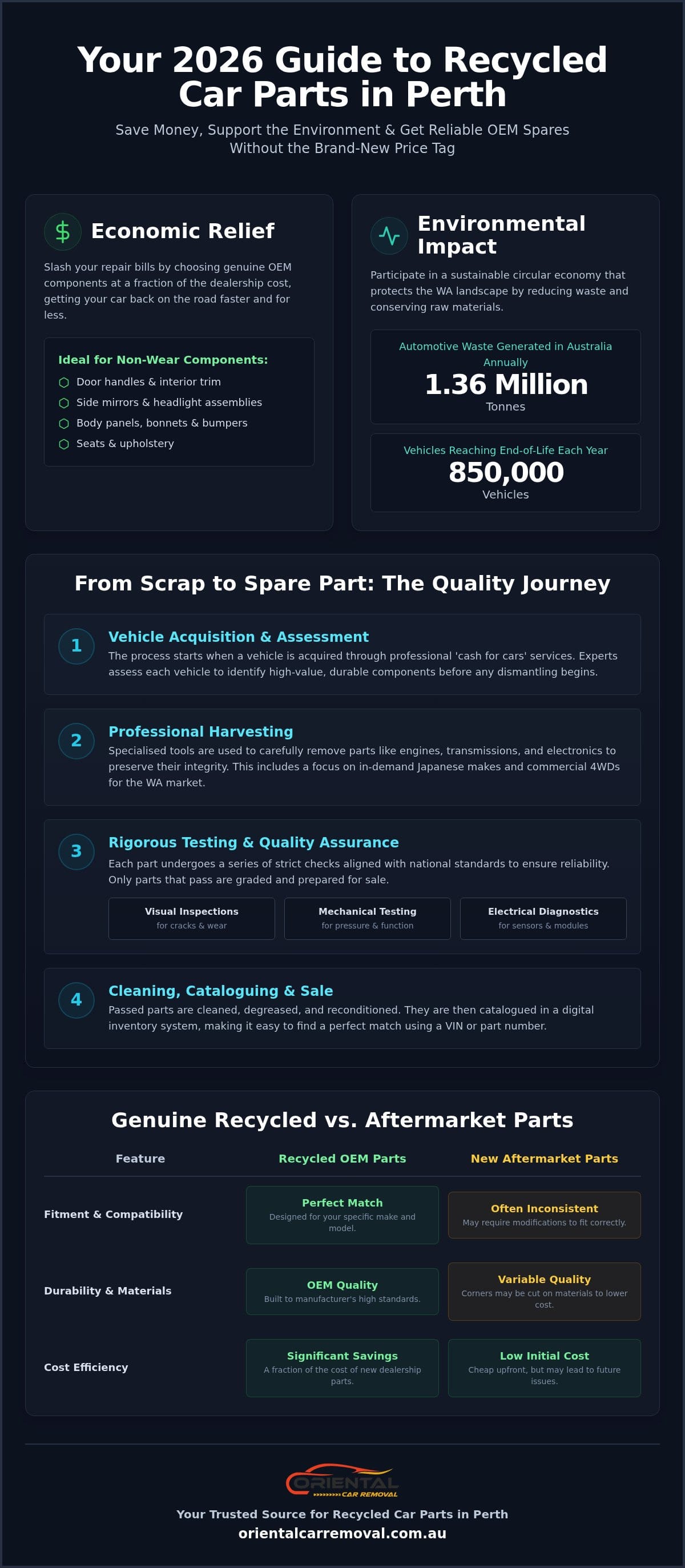
We know you want a solution that balances cost with absolute reliability. This 2026 guide shows you how to secure high-quality second-hand spares that fit your vehicle perfectly. You will learn how to identify tested components, understand warranty protections, and slash your maintenance bills. We’ll also look at how choosing salvaged parts helps lower the 1.36 million tonnes of automotive waste generated in Australia annually. From compatibility checks to sourcing tips from Kenwick experts, this is your roadmap to stress-free auto salvage. Get the parts you need without the brand-new price tag.

Key Takeaways

  • Slash your repair bills by choosing genuine OEM components that offer the same performance as brand-new dealership parts at a fraction of the cost.
  • Learn how the professional salvage process identifies and tests high-quality spares to ensure they meet strict mechanical standards before being sold.
  • Discover why recycled car parts perth often provide better fitment and durability than cheap aftermarket alternatives that may cut corners on materials.
  • Master the simple steps to identify your exact VIN or part number to guarantee a perfect match and eliminate the risk of compatibility issues.
  • Understand the benefits of sourcing from licensed experts who specialise in Japanese vehicles and commercial 4WDs for reliable, long-term results.

The Benefits of Choosing Recycled Car Parts in Perth

Choosing recycled car parts perth is the smartest way to manage your vehicle maintenance budget. Dealerships often charge a massive premium for brand-new components that perform exactly like a well-maintained second-hand unit. By sourcing from a local salvager, you bypass the retail markups and long shipping delays associated with new stock. It’s a practical choice that gets your car back on the road faster.

Economic Relief for Perth Drivers

Repairing an older vehicle shouldn’t break the bank. Many manufacturers stop producing specific components once a model reaches a certain age. This makes sourcing recycled car parts perth essential for keeping your daily driver or work ute functional. You’ll find that salvaged components often cost significantly less than their new counterparts. This price gap is especially noticeable for non-critical parts that don’t suffer from mechanical wear. Consider these items for your next repair:

  • Door handles and interior trim panels
  • Side mirrors and headlight assemblies
  • Body panels, bonnets, and bumpers
  • Seats and upholstery components

Buying these items used provides the same aesthetic and functional result as buying new. Choosing local spares also keeps your money within the Western Australian economy. It supports local jobs in Kenwick and surrounding suburbs rather than sending profits to overseas manufacturers. This creates a resilient supply chain for Perth motorists who need parts immediately.

Environmental Impact and the Circular Economy

Every time you choose a salvaged part, you participate in a sustainable vehicle recycling process that protects the Western Australian landscape. Australia sees approximately 850,000 vehicles reach the end of their life every year. This creates about 1.36 million tonnes of waste. While the current national recovery rate is roughly 70%, local car wreckers perth are working hard to push that number higher through efficient dismantling.

Reusing a single alternator or starter motor saves the massive raw energy required to manufacture a new one from scratch. It directly reduces the demand for fresh steel, aluminium, and plastic production. Professional salvagers in Perth also manage the careful recovery of hazardous fluids. They strip out oil, coolant, and brake fluid to prevent them from leaching into our soil or waterways. Supporting this circular economy keeps bulky scrap out of WA landfills and ensures valuable materials stay in use. It’s a direct way to lower your carbon footprint while maintaining your vehicle’s reliability.

Understanding the Salvage Process: From Scrap to Spare Part

Recycled car parts are genuine Original Equipment Manufacturer (OEM) components harvested from vehicles that have reached the end of their functional life. These aren’t generic imitations. They are the same high-quality parts that were originally installed on the assembly line. By choosing recycled car parts perth, you are buying components designed specifically for your vehicle’s make and model. The process involves far more than just pulling a part off a wreck. It’s a methodical system of recovery, testing, and cataloguing.

Harvesting Quality from Cash for Cars Perth

The journey of a recycled part begins when a vehicle is acquired through professional cash for cars perth services. Licensed salvagers in Kenwick assess every vehicle to identify high-value components before dismantling begins. This stage is critical for preserving part integrity. Experts use specialised tools to remove engines, transmissions, and delicate electrical systems without causing damage. Specialisation in Japanese makes and commercial 4WDs allows the team to focus on the most in-demand, durable components for the local WA market. Wrecked and collision-damaged vehicles are also a key source of quality spares, and owners of these cars can benefit from a professional accident car removal perth service that pays instant cash while supplying our dismantling team with fresh inventory.

Testing and Quality Assurance

Integrity is everything in the salvage industry. Before any component is listed for sale, it must pass a series of rigorous checks. Professional salvagers align their processes with standards set by the Auto Parts Recyclers Association of Australia to ensure consumer safety and reliability. Mechanical parts like engines undergo compression testing, while transmissions are checked for smooth shifting and fluid clarity. Electrical items are bench-tested to confirm they function exactly as they should.

  • Visual inspections for structural cracks or excessive wear.
  • Mechanical pressure testing for cooling and hydraulic systems.
  • Electrical diagnostic scans for sensors and control modules.
  • Cleaning and degreasing to prepare parts for immediate installation.

A1 Grade salvaged parts represent the highest quality level, indicating the component is in excellent working condition with minimal wear and no structural defects. Once a part passes these tests, it’s cleaned and reconditioned. Modern wreckers then use digital inventory management to track every item. This allows them to provide instant updates on availability for specific VINs or part numbers. If you are looking for a reliable replacement, checking the current stock at Oriental Car Removal is the fastest way to find a perfect match. This organised approach ensures you receive a part that is ready to be bolted straight onto your car.

Recycled OEM Parts vs. Brand New Aftermarket: The Real Comparison

New doesn’t always mean better. Many Perth drivers assume a fresh aftermarket part beats a used one, but the reality is often different. Aftermarket manufacturers frequently cut corners to keep prices low. They might use thinner steel for body panels or lower-grade plastics for cooling components. When you choose recycled car parts perth, you get genuine Original Equipment Manufacturer (OEM) quality. These parts were engineered specifically for your vehicle’s safety and performance standards from the day it left the factory.

Why Fitment Matters for Perth Utes and 4WDs

Getting a replacement bumper or guard to line up perfectly is a common headache for DIYers and mechanics alike. Aftermarket panels often have slight deviations in bolt hole placement or curvature. This is a major issue for popular local models like the Toyota Hilux or Ford Ranger. Genuine spares ensure that every clip, sensor, and electrical connector clicks into place without modification. For those driving specific makes, checking a guide on used japanese car parts perth provides deeper insights into brand-specific compatibility. It’s about getting the job done right the first time.

The Price-to-Performance Ratio

A used genuine part often has a longer remaining lifespan than a brand-new budget alternative. Think about an alternator or a starter motor. A genuine unit is built to withstand extreme Australian conditions for years. A cheap imitation might fail in months. Don’t let the word “used” scare you off. Professional wreckers test these parts to confirm they aren’t worn out. They are simply pre-owned. For major mechanical repairs like transmissions, the savings are massive. The reliability of an OEM build provides peace of mind that budget brands simply can’t match.

Safety-critical components like brake calipers or suspension arms are best sourced as genuine OEM items. While you should always buy “wear and tear” items like brake pads or tyres brand new, the structural housing of a caliper is often better as a recycled genuine part than a generic new one. Reputable Perth wreckers typically offer a standard 3-month warranty on these components. This gives you the confidence that the part is fit for purpose and ready for the road. Stop overpaying for inferior imitations and stick with the quality your car was built with. 4WD owners preparing for serious off-road adventures should also explore used Nissan Patrol parts Perth to keep their rigs trail-ready without the dealership price tag.

  • OEM parts maintain the structural integrity of your vehicle.
  • Genuine sensors prevent “check engine” lights caused by aftermarket voltage variances.
  • Recycled parts preserve the resale value of your car by keeping it “all genuine.”

How to Source and Inspect Second-Hand Car Parts in WA

Accuracy is the foundation of a successful repair. Never guess which part you need based on looks alone. Always use your Vehicle Identification Number (VIN) or the specific OEM part number to ensure a perfect match. Small changes in manufacturing years can mean different sensor plugs or mounting points. Getting this right at the start saves you the hassle of returning a heavy component later. When you begin your search for recycled car parts perth, start with a clear plan and the right data.

Researching reputable car wreckers perth is your next priority. Look for established businesses with high ratings and transparent processes. Don’t be afraid to ask direct questions. Find out the exact mileage of the donor vehicle and ask if the part has been bench-tested. Reliable salvagers in Western Australia typically offer a standard 3-month warranty on major mechanical items. Always confirm the return policy before you hand over any cash. This transparency is what separates professional yards from backyard operators.

The Buyer’s Inspection Checklist

Perform a thorough physical check if you are visiting a yard in person. For mechanical parts, look for dried fluid stains or fresh leaks around gaskets and seals. Inspect metal housings for hairline cracks or signs of impact damage. If you are buying electrical components, look closely at the plastic connectors. Green crusty deposits indicate water damage, while bent pins will make installation impossible. For body panels, check the “straightness” by looking down the swage lines and feel for hidden rust or thick layers of filler that suggest a poor previous repair. Collision-damaged vehicles are a particularly rich source of undamaged mechanical components, which is why our team actively acquires write-offs through our accident car removal perth programme, turning wrecked cars into quality spares for WA drivers.

Digital Sourcing and Delivery in WA

You don’t always have to travel to Kenwick to find what you need. Modern wreckers use sophisticated online search tools to help you find stock instantly. If you are buying remotely, demand high-resolution photos of the actual item rather than a generic stock image. Ask for a photo of the part number sticker to verify compatibility. Handling bulky items like engines or gearboxes requires professional transport. Most leading salvagers have established courier networks to deliver heavy parts across the Perth metro area and regional WA safely. If you need a specific component right now, check our current inventory for immediate availability and expert advice.

  • Use your VIN to eliminate compatibility guesswork.
  • Verify the 3-month industry-standard warranty for peace of mind.
  • Inspect electrical pins for corrosion before leaving the yard.
  • Request actual photos for all online orders.

Recycled Car Parts Perth: The Complete 2026 Guide to Affordable Auto Salvage

Oriental Car Removal: Your Local Expert for Recycled Spares

Oriental Car Removal has served the Perth automotive community for over 10 years. We aren’t just a parts yard. We are a licensed and insured local business that understands the specific needs of Western Australian drivers. Our deep experience allows us to provide more than just a component. We provide the technical advice you need to get your car back on the road. Because we operate a comprehensive free car removal perth service, we have a constant stream of fresh inventory arriving daily. This synergy means we harvest parts from vehicles we’ve acquired directly. We know the history of the cars we dismantle. This gives our team full control over the quality of the dismantling and testing process from start to finish.

Expertise in Kenwick and Beyond

Our team specialise in high-demand Japanese makes and commercial 4WDs. This focus is vital for Perth, where Utes and off-road vehicles are the backbone of local industry and recreation. Whether you drive a Toyota, Nissan, Isuzu, or Mitsubishi, we likely have the specific genuine component you’re looking for. Our Kenwick location makes us a central hub for fast pick-ups and professional advice. You can drop in, speak to an expert, and see the part before you buy. If you are searching for recycled car parts perth, dealing with a local team who knows the WA landscape is a major advantage. We help you find the exact part, even for rare or older models that dealerships have long since forgotten. Nissan Patrol owners in particular will benefit from our extensive stock of used Nissan Patrol parts Perth sourced from well-maintained local vehicles. We understand the logistical challenges of keeping a fleet or a family car running, and we’re here to fix those hurdles quickly.

The Oriental Car Removal Promise

The Oriental Car Removal Promise is built on transparency and reliability. We know the fear of buying a “lemon” part from a wrecking yard. That’s why every item in our inventory must meet our strict internal quality standards before it ever hits the shelf. We don’t hide behind vague descriptions or stock photos. You get honest, direct information about the part’s condition and history. Our goal is to provide a stress-free experience from your first phone call through to the final installation. We handle the heavy lifting of sourcing and testing so you don’t have to. It’s a no-nonsense approach that values your time and your wallet. We are your proactive partners in vehicle maintenance. Enquire about our current recycled parts inventory today! and see the difference that a decade of local expertise makes for your vehicle.

  • Over 10 years of experience in the Perth salvage market.
  • Specialisation in Japanese utes, vans, and commercial 4WDs.
  • Licensed and insured operations for your peace of mind.
  • Convenient Kenwick location for easy part inspections and pick-ups.

Secure Quality Spares for Your Vehicle Today

Choosing recycled car parts perth is a smart, cost-effective decision that doesn’t sacrifice your vehicle’s safety or performance. You now have the tools to distinguish between high-quality OEM components and inferior aftermarket imitations. By verifying your VIN and following a strict inspection checklist, you can maintain your vehicle with absolute confidence. This approach keeps your repair bills low while supporting a sustainable circular economy right here in Western Australia.

Oriental Car Removal is here to handle the heavy lifting for you. As a licensed WA auto wrecker with over 10 years of Perth experience, we pride ourselves on transparency and reliability. We are specialists in 4WD and commercial spares, harvesting only the best components from our local acquisitions. Our Kenwick team is ready to provide the expert advice and genuine parts you need to get back on the road quickly. Don’t settle for overpriced dealership stock or unreliable imitations. Find Quality Recycled Car Parts at Oriental Car Removal Today. Let’s get your car running perfectly again with a solution that makes sense for your wallet.

Frequently Asked Questions

Is it safe to buy recycled car parts for my family vehicle?

Yes, it’s safe to buy recycled components as long as you source them from a licensed Perth business. Professional salvagers test every mechanical item to ensure it meets safety standards before it reaches the customer. While you should always buy new tyres and brake pads, items like alternators, starter motors, and body panels are perfectly safe. Searching for recycled car parts perth provides a reliable way to keep your family vehicle functional.

Do recycled car parts come with a warranty in Western Australia?

Most reputable wreckers in Western Australia provide a standard 3-month warranty on major mechanical components. This coverage ensures that if a part fails due to a pre-existing fault, you can seek a replacement or refund. It’s important to confirm the specific terms before purchase, as warranties usually cover the part only and not the labour costs for installation. Always keep your tax invoice to ensure a smooth claim process if something goes wrong.

How do I know if a second-hand part will fit my specific car model?

The most reliable way to ensure a perfect fit is to provide your Vehicle Identification Number (VIN) to the yard. This 17-digit code allows our team to identify the exact production run and specifications of your car. You can also check the OEM part number stamped directly on the old component. Since manufacturers often change plug designs or mounting points mid-model, using these numbers eliminates guesswork and prevents the frustration of buying a part that doesn’t fit.

What are the most common car parts that people buy second-hand?

Drivers frequently source body panels like doors and bonnets because they don’t suffer from mechanical wear. Other common second-hand items include:

  • Engines and transmissions
  • Headlight and taillight assemblies
  • Alternators and starter motors
  • Interior trim and seats

These components offer the best price-to-performance ratio for Perth motorists looking to repair their vehicles without overspending on brand-new dealership stock.

Can I return a recycled part if it doesn’t work after installation?

Yes, you can return a part if it proves to be faulty, provided it is within the agreed warranty period. Professional yards value their reputation and will either provide a functional replacement or a full refund if a spare is unavailable. You must ensure the part hasn’t been tampered with or dismantled after purchase. Clear communication with the team at the time of sale ensures you understand the specific return window for your component.

Why are recycled parts so much cheaper than new ones from a dealer?

Recycled components are more affordable because you aren’t paying for new manufacturing, international logistics, or heavy dealership brand markups. When you buy recycled car parts perth, you’re paying for the value of a pre-owned genuine item rather than a fresh retail product. This allows you to secure OEM quality at a fraction of the original cost. It’s an efficient way to manage vehicle maintenance without the massive premium that dealerships usually charge.

Do you offer delivery for large recycled parts like engines in Perth?

Yes, delivery is available for bulky and heavy items throughout the Perth metropolitan area and regional Western Australia. Professional salvagers use dedicated courier networks to ensure engines, gearboxes, and large body panels arrive safely at your home or mechanic’s workshop. Shipping costs vary based on weight and your specific location. Arranging professional transport is often safer and more convenient than trying to move heavy mechanical components in a standard passenger vehicle yourself.

What happens to the cars that you can’t salvage parts from?

Vehicles that no longer have salvageable parts are processed through a strict environmental recycling stream. We drain all hazardous fluids, including oil and coolant, to prevent soil contamination in Western Australia. The remaining metal shell is then crushed and sent to local metal recyclers for processing. This ensures that even the most damaged cars are disposed of responsibly. It keeps bulky waste out of landfills and ensures valuable raw materials are recovered for future use.