
A damaged car isn’t automatically without value. Car wreckers in Fremantle assess unwanted vehicles for reusable parts and recyclable materials, then make a cash offer and arrange removal if the offer is accepted. The vehicle’s condition, history and salvageable components all help shape its value.
It’s reasonable to want a clear offer and straightforward collection, especially when a car is old, damaged, flooded or no longer wanted. Wrecking involves more than towing: the vehicle is assessed, reusable components are recovered, and remaining materials are handled for recycling or disposal. Make, model, year, mileage, damage and mechanical issues can all affect the assessment.
This guide explains how offers are prepared, what dismantling can involve in East Fremantle, and which cars, trucks, 4WDs, vans and utes may be suitable. You’ll also learn what information helps shape an offer and what happens after you accept it, so you can decide whether wrecking is the practical next step for your vehicle.
Key Takeaways
- A cash offer can reflect a vehicle’s condition, history, damage and reusable or recyclable materials.
- Car dismantling can recover usable components before remaining materials are sorted for recycling or disposal.
- Cars, trucks, 4WDs, vans and utes may be suitable, including vehicles that are old, damaged or unwanted.
- Learn what documents may be relevant when selling a vehicle to a wrecker in Western Australia.
- Collection is generally arranged after you accept the offer, with the vehicle’s location and condition helping shape the process.
Cash offers for unwanted vehicles
In Fremantle, an offer reflects the vehicle’s condition and the value of its reusable parts and recyclable materials. The same assessment factors apply in Fremantle and East Fremantle. Dismantling also involves separating materials for appropriate handling.
The offer process is separate from disposal rules. Vehicle dismantling and disposal involve handling recyclable materials and hazardous items appropriately, rather than treating every part as general waste.
Offers for Scrap and Unwanted Cars
A scrap car can still have value in its metal and components suitable for reuse. A wrecker may consider its make, model, year, mileage, history, damage and mechanical issues when preparing an offer. Start by providing accurate details, including whether the vehicle has been in an accident or sustained flood damage.
Those details help show how the vehicle’s condition affects its assessment. For example, a damaged car may have fewer reusable components, while other parts or recyclable materials can still contribute value. The offer reflects the vehicle as a whole, not just whether it can be driven.
Accepted Vehicle Conditions
Vehicles accepted for wrecking can include old, scrap, flooded and accident-damaged cars. A vehicle does not need to be roadworthy to be considered. Damage, missing or unusable components and mechanical problems inform the assessment, rather than automatically ruling the vehicle out.
Describe the car’s condition clearly. A vehicle that has been in a collision, for instance, may have damage to its bodywork, engine or other components. Accurate details help the wrecker assess what may be reusable and what needs recycling or disposal.
Assessment and Payment Process
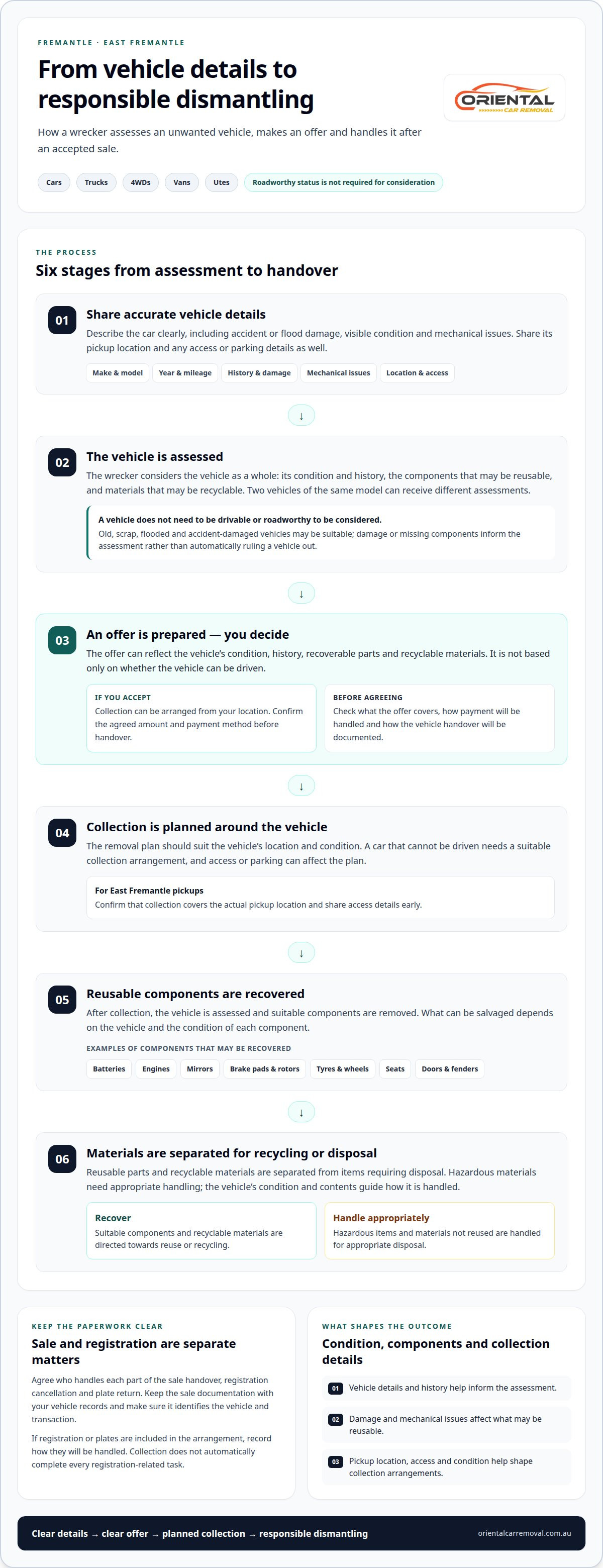
Assessment starts with the vehicle’s identifying details and condition. Make, model, year, mileage, history, visible damage and mechanical issues can all affect the offer. The wrecker also considers recoverable parts and materials. These factors explain why two cars of the same model can receive different assessments.
Once the offer is made, you decide whether to accept it. If you do, collection can be arranged from your location. The Fremantle vehicle removal service covers the local collection step. Payment is then handled as part of the agreed transaction; clarify the amount and payment method before the vehicle is handed over.
Recycling and Safe Disposal
Wrecking is more than crushing a car. The vehicle is assessed for recoverable components, then reusable parts and recyclable materials are separated from items requiring disposal. This applies to cars with accident damage as well as old vehicles at the end of their useful life.
Hazardous materials need appropriate handling during dismantling and disposal. Their presence is one reason vehicle wrecking is different from treating a car as ordinary household waste. The vehicle’s condition and contents guide how it is handled, while suitable metal and materials can be directed towards recycling.
Car wrecking and dismantling in East Fremantle
Before choosing car wreckers in Fremantle, look for clear information about dismantling, collection and sale paperwork. For an East Fremantle vehicle, understand how reusable components are separated and how the handover is documented.
Vehicle Dismantling
Wrecking involves assessing a vehicle, removing suitable components and separating materials for recovery or disposal. What can be salvaged depends on the vehicle and its components. A car with body damage may still contain reusable components, while other materials can be directed towards recycling.
Parts recovered from Fremantle vehicles can include batteries, engines, mirrors, brake pads, rotors, tyres, wheels, seats, doors and fenders. The list shows why dismantling involves more than removing a vehicle from a property. Each component has different potential uses, and its condition affects whether it can be recovered.
Ask for a plain explanation of what happens after collection. A clear account should cover assessment, component removal and handling materials that are not reused. This helps you understand the full process, not just the tow-away step.
Choosing a Car Wrecker
Compare practical service details, not just a headline cash offer. The quote should reflect the vehicle information supplied, and the collection plan should account for its location and condition. A car that cannot be driven, for example, needs a suitable removal plan.
Look for a clear explanation of the sale paperwork and vehicle handover. The wrecker should explain what the agreed offer covers, what happens during collection and how the vehicle proceeds to dismantling. Clear steps make the transaction easier to understand before you accept an offer.
For an East Fremantle vehicle, consider whether collection covers its actual pickup location. Access, parking and the car’s condition can affect arrangements. Share those details early so the removal plan fits the site, rather than relying on assumptions based only on the vehicle’s make or model.
Registration Cancellation and Plate Returns
Treat the sale handover, registration cancellation and plate return as separate administrative matters. Agree who will handle each part and what paperwork will record the vehicle’s sale. This keeps responsibilities clear without assuming collection automatically completes every registration-related task.
Keep the sale documentation with your vehicle records, and make sure the handover details identify the vehicle and transaction. If registration or plates are part of the arrangement, record how they will be handled. A clear paper trail distinguishes the wrecker’s dismantling work from the vehicle owner’s remaining administrative steps.
For a Fremantle collection, review local vehicle removal options alongside the dismantling and paperwork arrangements, so the service fits the vehicle and pickup location.
Car makes and models accepted
In Fremantle, a vehicle’s make and model help identify its likely reusable components and guide its assessment. Wreckers handle cars, trucks, 4WDs, vans and utes, but the badge alone does not determine an offer. Year, condition, mileage, history, damage and mechanical issues also matter.
Wreckers can assess vehicles from different manufacturers, though the parts available may vary by make and model. That does not mean every individual vehicle receives the same assessment. A particular model may have useful components, while damage or mechanical problems can affect what remains suitable for recovery.
Give the wrecker the vehicle’s make, model and year. Include the body type and any known model variant, such as sedan rather than hatchback. These details help distinguish vehicles that share a manufacturer’s badge but have different body styles or components.
- Cars: identify the model and body style, then describe its condition and any accident damage.
- 4WDs: include the model and drivetrain details if known, along with mechanical issues.
- Vans and utes: state the vehicle type and explain any damage or missing components.
- Trucks: provide the make, model and relevant condition details for assessment.
Use registration papers or vehicle identification details to avoid mixing up a model name, badge or variant. If paperwork is unavailable, share the identifying information you have and describe the vehicle clearly. A precise model description gives the assessor a more useful starting point than a broad label such as “old car”.
Condition still shapes the assessment. For example, two vehicles with the same model name can differ in mileage, service history, collision damage and mechanical state. Those differences affect the remaining components and materials. Be specific about whether the engine runs, panels are damaged or parts have already been removed.
Share any known changes to the vehicle, too. Aftermarket modifications, replaced components or missing items can make it different from its original configuration. An accurate description helps the wrecker assess the car, van, ute or truck being sold, rather than relying only on its make and model.
For East Fremantle sellers, a useful first step is to provide the vehicle’s identifying details and a concise condition summary. Include its location and whether it can be moved. This gives the wrecker a clearer picture and helps shape the assessment around its actual make, model and condition.
Documents for selling a car to a wrecker in WA
For a Western Australian vehicle sale, prepare photo identification, vehicle details and any ownership or registration records you have. These documents help identify you, the car and your authority to sell it.
Identity and vehicle details
Have photo identification available for the person completing the sale. The name on it helps match the seller with the transaction paperwork. Also provide the car’s registration details, vehicle identification number or chassis number, make, model and year. These identifiers help distinguish your vehicle from another car of the same make.
If you have a registration certificate, purchase receipt or other ownership record, keep it with the vehicle information. Such records can help establish the car’s details and your connection to it. They are useful to provide, though every sale may not use an identical document set.
If you’re selling on someone else’s behalf
Clarify the ownership arrangement before handover. If the registered owner cannot attend, explain who owns the vehicle and who is authorised to complete the sale. Bring any written authority or ownership paperwork available for the situation. For example, don’t present a family member’s vehicle as your own.
For a company vehicle, gather business records identifying the organisation and the person handling the transaction. The paperwork should clarify the seller’s role and connect the vehicle to the business. This is especially useful when the person arranging collection is not named on the vehicle’s records.
Before the vehicle is collected
Keep the sale details together: seller identification, vehicle identifiers, available ownership records and agreed transaction information. Check that the paperwork describes the correct car, especially if your household has several vehicles or similar models. A mismatch in registration or vehicle identification details can complicate handover.
Tell the wrecker if registration papers are missing or the vehicle is registered to someone else. This helps establish what records are available and who needs to take part in the sale. Don’t guess at missing details. Share the vehicle’s known make, model and identifying numbers accurately.
At handover, keep a copy of the sale or transfer record provided for the transaction with your vehicle documents. Don’t rely on memory for the collection date or agreed terms. If plates or registration cancellation are also being handled, keep those arrangements distinct from proof of sale. Clear records help you track what was agreed and what steps remain for you.
How quickly can a wrecker collect a car in Fremantle?
In Fremantle, collection is generally arranged after you accept the quote. Oriental Car Removal provides free vehicle removal, with pickup timing agreed around access and vehicle condition. Same-day pickup may be requested where logistics allow, but it is not guaranteed.
The process starts with the vehicle details and pickup address. Share the make, model, condition and whether the car can move. Include the Fremantle street or property location, plus access limits such as a narrow driveway or restricted parking. These details help plan the right collection approach.
After accepting the quote, confirm the collection arrangement directly. Make sure the pickup location is accurate and explain where the vehicle is on the property. A car parked behind another vehicle, for example, may need a different removal plan from one with clear street access.
Vehicle condition matters, too. A car that starts and rolls differs from one with flat tyres, collision damage or locked wheels. Tell the wrecker about these issues before collection. That helps determine the equipment and handling needed, rather than leaving the towing team to discover obstacles on arrival.
Access in Fremantle can vary between a driveway, apartment parking area, workshop or roadside location. Mention gates, height restrictions and tight turns when arranging pickup. If the car is in a shared car park, explain how the tow vehicle can reach it and whether the car can be moved to an accessible spot.
Keep the handover practical. Have the vehicle’s identifying details and sale paperwork ready, and remove personal belongings before the agreed pickup. If keys are unavailable or the car is immobilised, say so when arranging collection. The wrecker can then plan for the actual vehicle, rather than assuming it can be driven onto a truck.
There isn’t one collection interval that fits every Fremantle vehicle. The steps are straightforward: provide accurate vehicle and location details, accept the quote, then agree on a pickup arrangement. Clear information about access and condition helps avoid preventable delays and makes the collection plan more precise.
For a Fremantle car removal arrangement, share the vehicle’s location and condition when requesting a quote.
Oriental Car Removal
Oriental Car Removal helps Fremantle vehicle owners sell unwanted cars and arrange removal. It also handles trucks, 4WDs and vans, so the vehicle type needn’t be a barrier to getting a quote. If you’ve reviewed how assessment, dismantling and collection work, the next step is to provide the vehicle details and location.
Its services include Cash for Cars, Free Car Removal, Cash for Trucks, and Cash for 4WDs and Vans. Share the make, model, condition and any damage or access issues so the vehicle can be assessed against the information provided. This is a practical option for an unwanted, damaged or end-of-life vehicle that you’re ready to sell and have removed.
Contact Oriental Car Removal to discuss your vehicle.
Make your next move with confidence
Choosing car wreckers in Fremantle is easier when you know what matters for your vehicle and handover. Before proceeding, consider whether you’re ready to sell, whether the vehicle details are accurate and whether collection arrangements suit your circumstances. A clear decision helps you move forward without unnecessary back-and-forth.
Oriental Car Removal offers Cash for Cars, Free Car Removal and Cash for Trucks in Perth and surrounding suburbs. These services suit people looking to sell an unwanted car or truck and arrange its removal. Choose the option that matches the vehicle you want to move on from, then take the next step when you’re ready.
Your next step is simple: decide what you need from the sale and contact Oriental Car Removal to discuss the vehicle. With a clear understanding of the process, you can move forward with confidence.
Frequently Asked Questions
How Do Car Wreckers Work?
Car wreckers assess unwanted vehicles, then recover suitable components and materials. To get started, provide the vehicle’s identifying details and explain its condition, including any missing parts. The wrecker uses that information to prepare an offer. If you accept, collection is arranged and the vehicle proceeds to dismantling. This suits cars that are no longer useful to their owners, not just vehicles with major damage.
How It Works?
The process moves from vehicle details to a quote, then an agreed handover. Share the make, model, year, location and any known damage or mechanical issues. Review the offer before accepting, then agree on collection arrangements. At handover, keep the transaction record with your vehicle documents. This sequence clarifies what happens next without requiring you to prepare the car for dismantling.
Which car wreckers operate in Fremantle and nearby suburbs?
Oriental Car Removal provides vehicle-buying and removal services in Fremantle and named surrounding areas. Nearby localities include Bibra Lake, Success, Beeliar and Naval Base, as well as Rockingham and Joondalup. If you’re considering car wreckers in Fremantle, give the pickup suburb and vehicle location when requesting an assessment. That helps establish whether the collection address is within the service area and informs the removal arrangement.
Which Fremantle car wreckers offer free vehicle removal or towing?
Oriental Car Removal provides free vehicle removal, with no charge for towing. If the car is in a locked car park or cannot roll, share those details so the collection arrangement reflects the actual access conditions. Free removal is a useful consideration when choosing how to move an unwanted vehicle from your property.
How much do car wreckers in Fremantle pay for scrap or unwanted cars?
The amount depends on the vehicle and is provided after a quote request. Wreckers consider details such as make, model, year, condition, mileage, damage and mechanical issues, alongside reusable parts and recyclable materials. For an accurate assessment, describe the car’s state plainly, including missing components or accident damage. Oriental Car Removal provides an instant cash offer after assessing the vehicle information, rather than using one amount for every car.
How can I get a car wrecking quote in Fremantle?
Request a quote by providing the vehicle’s make, model, year, condition and Fremantle pickup location. Mention whether it runs, has collision damage or is missing components. Clear details help the wrecker assess the vehicle and prepare an offer. You can also include access information, such as a narrow driveway, so the removal plan reflects where the car is parked. Review the offer before deciding whether to proceed.
Do Fremantle car wreckers buy damaged, unregistered, or non-running vehicles?
Damaged and non-running vehicles are accepted, including cars with accident damage or significant mechanical problems. Tell the wrecker if the vehicle is unregistered, and include that detail with its make, model and condition when requesting a quote. Registration status is useful for the sale and handover. A car does not need to be driveable to receive an assessment, but accurate details help plan collection.