
Most drivers assume vehicle disposal simply means dropping a damaged car into a scrap metal shredder. In truth, modern car recycling Perth operations centre on a rigorous industrial depollution process that safeguards Western Australian soil and groundwater long before any steel is processed.
If you have an unlicensed or non-running vehicle sitting on your property, you probably share common concerns. You might worry about confusing Department of Transport transfer forms, toxic fluid leaks, or getting hit with expensive towing fees just to clear your driveway. Disposing of an end-of-life car shouldn’t feel like an administrative chore or an environmental gamble. In this complete guide, you will discover how vehicle recycling works across Western Australia and learn how to dispose of your scrap car responsibly. We break down each stage of the automotive dismantling chain, explain official WA plate cancellation rules, and show you exactly how to prepare your vehicle for safe collection.
Key Takeaways
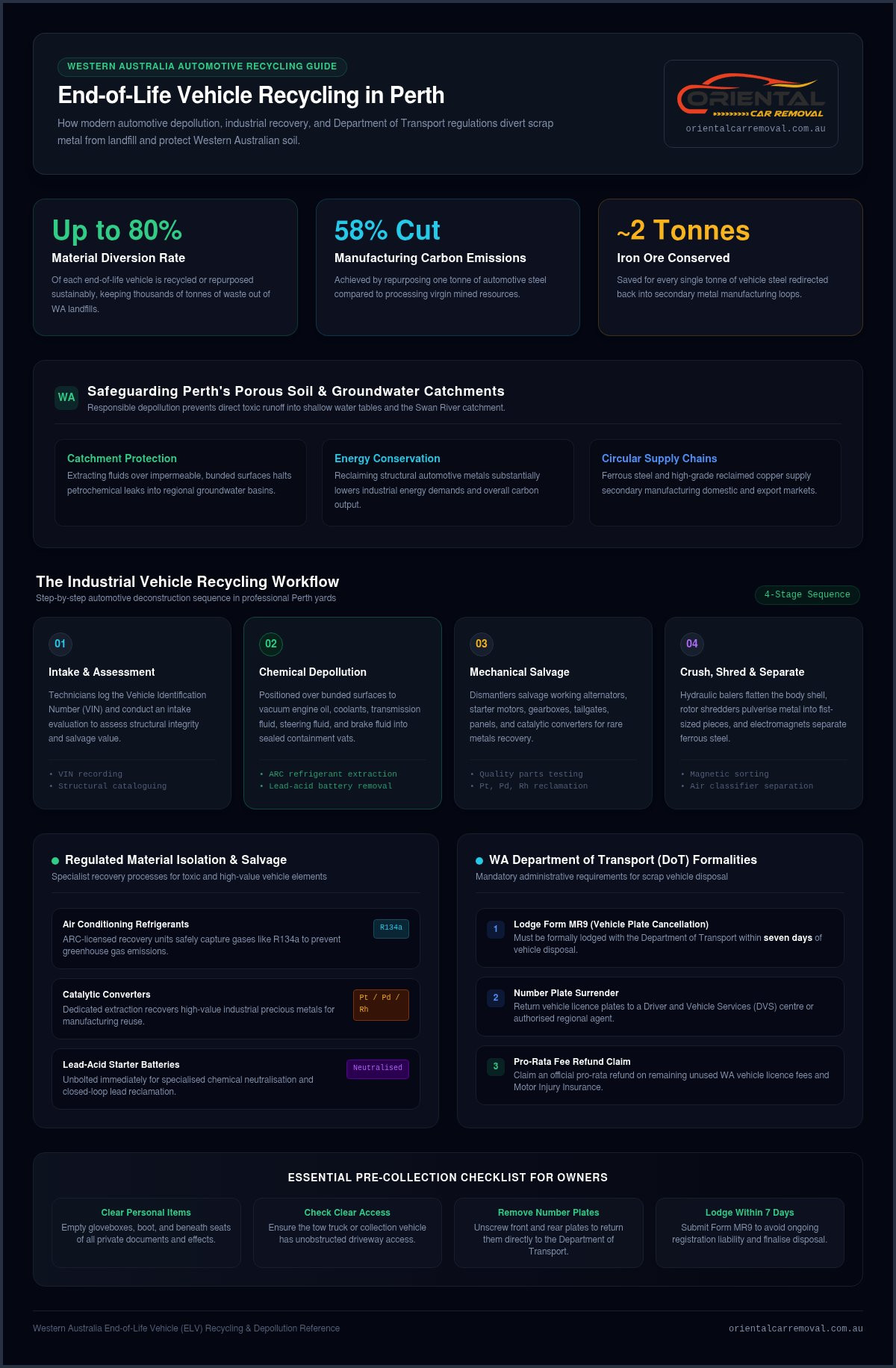
- Understand the complete industrial depollution sequence that diverts up to 80 percent of vehicle materials away from Western Australian landfills.
- Discover how reputable car recycling Perth facilities recover heavy metals and fluids safely on bunded surfaces under strict environmental regulations.
- Learn the correct Department of Transport procedure to lodge Form MR9 and cancel your vehicle registration within seven days of disposal.
- Find out how to claim a pro-rata refund on unused WA vehicle licence fees and Motor Injury Insurance after returning your number plates.
- Follow an essential pre-collection checklist to clear personal belongings and organise free scrap vehicle removal from your property.
What Is Car Recycling and How Does It Work in Perth?
Automotive recycling turns damaged, deregistered, and non-running vehicles into reusable commodities. Instead of abandoning old metal to rust in suburban backyards, modern car recycling Perth facilities dismantle scrap cars to supply secondary manufacturing markets with essential materials. Up to 80 percent of a motor vehicle can be recycled or repurposed sustainably, keeping thousands of tonnes of hazardous automotive waste out of Western Australian landfills annually.
The system connects mechanical salvage, environmental depollution, and industrial metal recovery into a seamless loop. Professional operators systematically dismantle the vehicle to divert high-grade steel, copper wiring, and aluminium castings back into productive commercial use.
The Concept of End-of-Life Vehicles (ELV)
An end-of-life vehicle (ELV) is any car, ute, or van that is no longer roadworthy or economically viable to repair. This category includes mechanical write-offs, flood-damaged sedans, commercial utilities with blown transmissions, and rusted chassis shells. Professional car wreckers Perth treat ELVs as secondary resource hubs. Rather than crushing a car whole, recyclers carefully catalog functional assemblies before fragmenting the body shell for scrap metal mills.
Why Vehicle Recycling Matters for Western Australia
Dumping derelict vehicles on private properties or verges poses real threats to local environments. Perth’s porous, sandy soil allows uncontained motor oil, brake fluid, and battery acid to soak directly into shallow water tables, threatening local wetlands and the Swan River catchment. Responsible vehicle recycling stops this toxic runoff at the source.
- Energy conservation: Repurposing one tonne of automotive steel cuts manufacturing carbon emissions by 58 percent and saves nearly two tonnes of raw iron ore compared to virgin mining.
- Catchment protection: Capturing toxic fluids on impermeable hardstands prevents petrochemical leaches from entering regional groundwater basins.
- Circular supply chains: Shredded ferrous metals and reclaimed copper flow directly to domestic and international fabricators, reducing overall industrial waste across WA.
Choosing professional car recycling gives you a quick way to clear your driveway while supporting sustainable material recovery across the Perth metropolitan region.
The Step-by-Step Car Dismantling and Recycling Process
Professional car recycling Perth facilities follow a strict four-stage workflow to maximise scrap metal recovery and eliminate environmental contamination. When a vehicle arrives at an authorised yard, technicians log its vehicle identification number (VIN) and run an intake assessment to record structural integrity and parts value.
Once intake documentation is complete, the vehicle moves systematically through chemical isolation, mechanical strip-down, and industrial fragmenting.
Vehicle Depollution and Fluid Drainage
Technicians position the vehicle over an impermeable, bunded draining station to extract every drop of hazardous liquid. Engine oil, automatic transmission fluid, differential grease, power steering fluid, and glycol-based coolants are vacuumed into sealed containment vats. ARC-licensed technicians hook up recovery units to extract air conditioning refrigerants like R134a without venting greenhouse gases into the atmosphere. Lead-acid starter batteries are unbolted immediately and sent to specialist plants for chemical neutralisation and lead reclamation.
Mechanical Salvage and Parts Recovery
After fluid extraction renders the vehicle chemically inert, auto dismantlers strip valuable mechanical and cosmetic assemblies. Working alternators, starter motors, gearboxes, tailgates, and undamaged body panels are carefully inventoried. Car owners looking to repair other vehicles can explore quality tested components through recycled car parts Perth suppliers. Catalytic converters undergo dedicated extraction to reclaim rare industrial metals, including platinum, palladium, and rhodium, preventing valuable elements from going to waste.
Crushing, Shredding, and Material Separation
Stripped shells enter heavy-duty industrial machinery to prepare metal for foundry furnaces:
- Hydraulic crushing: High-pressure balers compress the de-trimmed chassis into compact metal blocks or flattened hulks for efficient transport.
- Hammer mill shredding: Industrial rotor shredders pulverise the steel body into fist-sized pieces in seconds.
- Magnetic separation: Powerful overhead electromagnets pull ferrous steel away from non-ferrous metals like copper wiring and aluminium, while air classifiers remove light plastics and foam.
If you have an old runabout, work ute, or damaged 4WD taking up valuable garage space, booking an efficient scrap car removal service ensures every reusable gram of metal is reclaimed cleanly.
Environmental Standards and Hazardous Waste Management in WA
Backyard vehicle abandonment inflicts severe ecological damage across Western Australia. When an old car rots on grass or unsealed dirt, heavy metals, battery acid, and petroleum hydrocarbons leach directly into Perth’s shallow sandy aquifers. Regulated car recycling Perth facilities operate under strict statutory oversight from the Department of Water and Environmental Regulation (DWER) to neutralise these threats before crushing begins.
Safe processing requires specialised yards designed to capture toxic compounds, ensuring our delicate coastal catchments and river systems remain clean.
Managing Harmful Automotive Chemicals
End-of-life vehicles hold a volatile mix of chemical liquids. Under the Environmental Protection (Controlled Waste) Regulations 2004, dismantlers must drain all fluids on impermeable, bunded hardstands engineered to contain leaks.
- Ethylene glycol: Radiator coolant tastes sweet but acts as a lethal poison to family pets and native wildlife. Technicians pump coolant directly into sealed drums for controlled chemical treatment.
- Waste engine oils: Oil extracted from sumps and gearboxes is logged through DWER’s Controlled Waste Tracking System (CWTS) and dispatched to licensed industrial facilities for re-refining into fuel oils.
- Stormwater isolation: Purpose-built drainage traps prevent oily workshop runoff from entering municipal drains during heavy winter downpours.
Tyre and Glass Disposal Challenges
Diverting non-metal items away from landfill presents unique processing hurdles. Non-metallic elements account for nearly 30 percent of a car’s total mass, contributing to automotive shredder residue (ASR). Responsible recyclers rely on specialised processing channels to recycle these components safely:
- Tyre stewardship: Scrap tyres represent a massive fire hazard if left in suburban stockpiles. Authorised yards partner with national recycling programs to shred casings into fine rubber crumb, which is repurposed for playground matting, sporting ovals, and road asphalt blends.
- Windscreen delamination: Laminated vehicle windscreens feature a flexible polyvinyl butyral (PVB) plastic layer bonded between twin sheets of glass. Specialised mechanical strippers crush the glass away from the plastic, yielding clean cullet for new industrial glass containers.
Choosing an authorised recycler ensures that toxic waste is captured legally, reducing overall landfill volumes and supporting Western Australia’s circular economy.
Preparing Your Scrap Car for Recycling in Western Australia
Preparing your vehicle properly saves time and ensures an effortless handover on collection day. Professional car recycling Perth operators handle the heavy lifting, but completing a few administrative and practical checks beforehand protects your legal standing and personal privacy. Take twenty minutes to clear your vehicle thoroughly.
Search under the front seats, inside the glovebox, inside the centre console, and beneath boot floor linings. Remove any toll tags, aftermarket audio accessories, and parking permits stuck to the windscreen. For a complete legal breakdown, review our detailed guide on how to scrap a car in WA.
Handling WA Department of Transport (DoT) Paperwork
Western Australian vehicle disposal is governed by the Road Traffic (Vehicles) Act 2012. You must lodge a formal Notice of Disposal within 7 days of vehicle handover to cancel future liabilities:
- Lodge Form MR9: Fill out the seller section of the vehicle licence transfer application online through DoTDirect or submit it at a Driver and Vehicle Services (DVS) centre.
- Surrender number plates: Unscrew both plates before collection. Return them in person to a DVS centre or regional DoT agency. Metropolitan Australia Post outlets cannot accept surrendered licence plates.
- Claim your refund: Submit an Application for Refund (Form C2) when surrendering your plates to recover any unused vehicle licence fees and Motor Injury Insurance (MII).
- Verify your identity: Have your Western Australian driver’s licence ready. Recyclers must confirm your identity to comply with local anti-theft scrap regulations.
Ensuring Safe and Clear Towing Access
Flatbed tilt-tray trucks need clear operating space. Park working household vehicles on the road, unlock gates, and move garden hoses or bins out of the driveway. Inform your driver beforehand if the vehicle has flat tyres, locked steering, or seized brakes so they can arrive with specialised recovery winches and wheel skates. For simple handover steps, review our free car removal Perth checklist.
Schedule your vehicle collection across Perth
Why Choose a Licensed Auto Recycler in Perth?
Handing over an old car to an unlicensed scrap collector creates serious financial and legal liabilities. Unregulated backyard operators often pick out high-value parts, leave stripped shells dumped on suburban roadsides or Crown bushland, and fail to submit proper ownership transfer paperwork. Choosing a licensed provider for car recycling Perth gives you complete legal indemnity, safe toxic waste handling, and complimentary vehicle towing from start to finish.
Authorised operators run purpose-built vehicle salvage fleets equipped to winch stuck, submerged, or immobile cars without damaging your driveway or surrounding buildings.
Protecting Yourself from Legal and Financial Liabilities
If an unlicensed scrap collector takes your car and leaves the registration active, you remain legally responsible for that vehicle. Speeding fines, toll notices, and council abandonment penalties will arrive directly in your letterbox. Authorised motor vehicle dismantlers hold a valid Category B wrecker licence issued under the Western Australian Motor Vehicle Dealers Act 1973.
- Instant liability transfer: Licensed wreckers complete statutory transfer forms correctly, closing your legal obligations as the registered keeper immediately.
- Secure identity protection: Compliant operators observe WA anti-theft scrap regulations by confirming your ID and processing payments through traceable electronic bank transfers.
- Environmental compliance: Regulated facilities depollute vehicles strictly over bunded wash pads, protecting local groundwater from contamination.
Streamlined Vehicle Collection Across Metropolitan Perth
Established in 2009, Oriental Car Removal provides fully licensed automotive salvage across the entire Perth metropolitan area, running from Joondalup and Osborne Park down through Fremantle, Rockingham, and Mandurah. Our heavy flatbed tilt-trays manage everything from compact commuter runabouts to large commercial vans and 4WDs. You avoid the high cost of third-party towing or council disposal permits entirely.
Selling your damaged vehicle shouldn’t involve endless back-and-forth or hidden transport deductions. Discover how easy vehicle disposal can be with our transparent cash for cars Perth collection service, or book a fast collection using our dedicated scrap car removal team. We handle the heavy lifting, tow your car at zero cost, and ensure every recyclable component is repurposed responsibly.
Dispose of Your Vehicle the Right Way Today
Clearing a broken, deregistered, or accident-damaged car from your property doesn’t have to be complicated. Modern car recycling Perth services transform an abandoned liability into a valuable industrial resource, recovering high-grade metals while keeping toxic automotive fluids out of Western Australian soil. Following the correct Department of Transport procedures ensures your licence plates are cancelled legally without lingering fines or headaches.
Oriental Car Removal brings over 10 years of vehicle recycling experience to Western Australia. Our fully licensed automotive salvage specialists manage all the heavy lifting, ensure complete statutory compliance, and provide free scrap car towing across all Perth suburbs from Joondalup down to Mandurah.
Reclaim your driveway space and enjoy total peace of mind knowing your vehicle is recycled responsibly by local Perth experts.
Frequently Asked Questions
Can I recycle a car in Perth if it does not run or has no keys?
Yes, you can recycle non-running vehicles without working ignition keys. Professional salvage specialists use heavy-duty recovery winches and wheel skates to load immobilized cars onto flatbed tilt-trays safely. As long as you provide valid photo identification and establish proof of ownership, missing keys or mechanical breakdowns won’t prevent collection.
What paperwork do I need to scrap and recycle my vehicle in Western Australia?
You need primary photo identification and your vehicle’s proof of ownership to complete disposal. Present your current Western Australian driver’s licence or passport to comply with state scrap metal regulations. You must also fill out the seller section of Form MR9 (Vehicle Licence Transfer Application) to log the transfer legally with the authorities.
Do I have to return my licence plates to the Department of Transport before recycling?
Yes, you must unscrew and return both number plates to officially cancel vehicle registration. Hand them over at any Driver and Vehicle Services (DVS) centre or regional DoT office. Returning the plates protects you against automated toll and camera fines while allowing you to claim a pro-rata refund on unused licence fees and Motor Injury Insurance.
How much of my vehicle is actually recycled rather than sent to landfill?
Approximately 70 to 80 percent of an end-of-life vehicle is recycled by weight. Through professional car recycling Perth processes, operators reclaim structural steel, copper wiring, aluminium assemblies, and catalytic converters for manufacturing. The remaining non-recyclable residue, including dashboard plastics, glass, and fabrics, is processed responsibly according to state waste guidelines.
Is vehicle towing always free when booking auto recycling in Perth?
Reputable licensed auto dismantlers provide complimentary towing across metropolitan Perth. Established operators like Oriental Car Removal offer free collection from Joondalup down to Mandurah and Rockingham. You won’t face hidden call-out charges or transport deductions, even for heavily damaged or unregistered vehicles stuck in tight carports.
Can I recycle accident-damaged, rusted, or burnt cars in WA?
Yes, vehicles in any physical condition qualify for automotive dismantling and metal reclamation. Total loss insurance write-offs, severely rusted utilities, flood-damaged sedans, and fire-damaged chassis still contain high-grade scrap steel and salvageable raw materials. Tilt-tray trucks extract these damaged shells safely without needing the vehicle to roll or steer.
What happens to the hazardous chemicals and oils inside a scrap vehicle?
Hazardous automotive fluids are drained into sealed containment vessels over impermeable, bunded hardstands. Certified technicians extract waste motor oil, transmission fluids, glycol coolants, and air conditioning gases to comply with strict DWER regulations. These liquids are re-refined for industrial use or treated to prevent toxic chemicals from leaching into Perth catchments.
How do I ensure I am no longer legally responsible for a recycled car?
Submit your Notice of Disposal to the Department of Transport within 7 days of vehicle handover. Lodging Form MR9 online via DoTDirect or at a DVS centre officially ends your legal keeper obligations. Choosing licensed car recycling Perth providers guarantees legitimate documentation, ensuring you receive zero surprise parking fines or abandonment notices.