
Eco Friendly Car Wreckers: What Happens to an End of Life Car

Eco Friendly Car Wreckers: What Happens to an End of Life Car

An unwanted car doesn’t have to become landfill. Eco friendly car wreckers in Success dismantle end-of-life vehicles, recover reusable parts and recyclable materials, and handle hazardous fluids through controlled processes. That gives an old car a more responsible next step than leaving it unused or disposing of it improperly.

It’s understandable to wonder what happens after a wrecker collects a vehicle, especially if it no longer runs or needs costly repairs. Responsible dismantling separates reusable components from recyclable materials and manages fluids, fuel and batteries carefully.

This guide explains how vehicle recycling works, how wreckers handle hazardous materials and reduce landfill waste, and what to consider when selling an unwanted car. It also covers how a vehicle’s condition and collection arrangements affect the process, helping you make an informed decision.

Key Takeaways

  • Auto recycling separates reusable components and recyclable materials from an end-of-life vehicle, while fluids and other hazardous items need controlled handling.
  • Careful dismantling helps recover valuable materials and reduce the amount of vehicle waste sent to landfill.
  • A vehicle’s condition, salvageable components and removal arrangements can shape the process of selling it to a wrecker.
  • Understand the removal and payment arrangements before agreeing to sell, so you know what to expect when your unwanted vehicle is collected.
  • If you have an unwanted car, truck, 4WD or van in Perth, Oriental Car Removal offers cash for these vehicles and free car removal.

What is Auto Recycling?

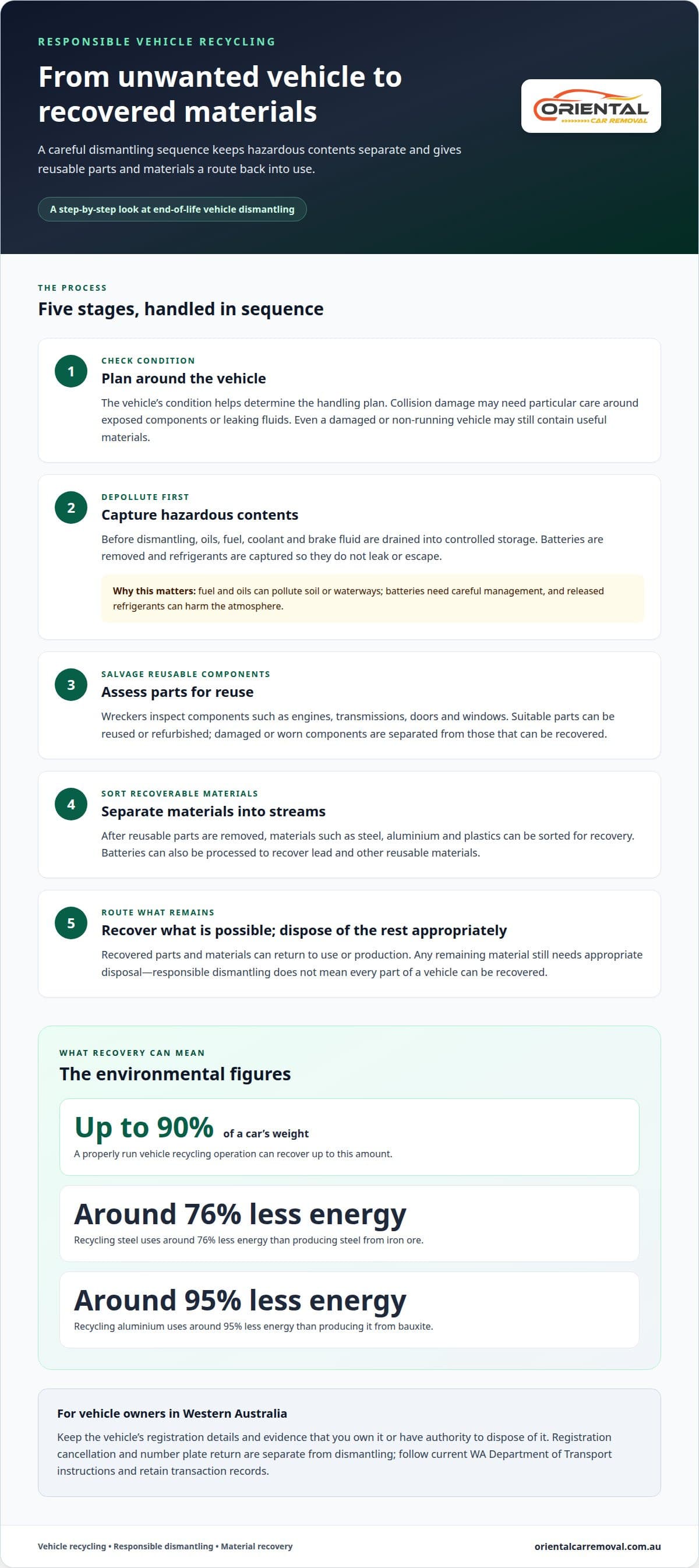
Auto recycling involves dismantling an end-of-life vehicle to recover usable components and materials. In Western Australia, this can keep vehicle waste out of landfill and return metals to manufacturing.

Reusable Vehicle Components

Reusable vehicle components are parts removed from a car and assessed for reuse or refurbishment. Wreckers inspect items such as engines, transmissions, doors and windows, separating suitable parts from damaged or worn components. Reusing working parts can reduce demand for newly manufactured materials and help conserve resources.

After removing reusable parts, recyclers sort the remaining vehicle materials. Steel and aluminium can enter recycling streams, while fluids need controlled handling to prevent leaks. For example, batteries can be processed to recover lead and other reusable materials. Separating these materials helps recover value from different parts of the vehicle.

End-of-Life Recycling in Western Australia

End-of-life vehicle recycling in Western Australia means dismantling an unwanted car and routing reusable components and materials for recovery. Tens of thousands of vehicles reach the end of their life across the state each year. For owners, keeping the paperwork and ownership details together helps make the transfer and disposal process clearer.

Keep the vehicle’s registration details and evidence that you own it or have authority to dispose of it. Registration cancellation and number plate return are separate from dismantling, so follow the current instructions from the WA Department of Transport and retain transaction records. The documents and steps depend on the vehicle and the owner’s circumstances.

Eco-friendly car wreckers in Success dismantle vehicles carefully, recover reusable parts and recyclable metals, and manage fluids through controlled processes. To identify a responsible option, focus on how it handles each stage rather than relying on the word “green” alone.

Environmental Benefits of Vehicle Recycling

Sustainable dismantling reduces waste and can lower the need to mine and process virgin materials. Recycling steel uses around 76% less energy than producing steel from iron ore, while recycling aluminium uses around 95% less energy than producing it from bauxite. Recovered metals can therefore return to production with less energy-intensive processing.

A properly run vehicle recycling operation can recover up to 90% of a car’s weight. The remaining material still needs appropriate disposal. A responsible process also keeps oils, fuels and heavy metals out of the environment by directing them to controlled processing systems. For owners of 4WDs, 4WD wreckers are one relevant part of the vehicle recycling chain.

Choosing responsible disposal matters because abandoned or improperly handled vehicles can leave materials and fluids unmanaged. In Western Australia, recycling supports material recovery from end-of-life vehicles and reduces the amount of vehicle waste sent to landfill.

Safe dismantling and disposal of end-of-life vehicles

Safe vehicle dismantling separates reusable components, recyclable materials and hazardous contents, with appropriate handling for each.

Vehicle Depollution and Fluid Handling

Vehicle depollution removes hazardous materials before dismantling, helping prevent leaks and environmental contamination. Dismantlers drain oils, fuel, coolant and brake fluid into controlled storage rather than leaving them in the vehicle. They also remove batteries and capture refrigerants, which can escape if air-conditioning systems are opened carelessly. Keeping these materials separate allows them to be managed through appropriate processing or disposal channels.

After depollution, dismantlers work through the vehicle in a planned sequence. They identify components for salvage, then separate metals and other recyclable materials. A damaged vehicle may still contain reusable doors, windows or transmission components, while its fluids and battery need separate handling. This order reduces the risk of spills and keeps recoverable items separate from hazardous contents.

Fuel and oils can pollute soil or waterways if they leak. Batteries also contain materials that need careful management. Refrigerants must be captured because releasing these gases can harm the atmosphere. Responsible handling means collecting these substances instead of pouring them away, leaving them in the vehicle or allowing them to escape during dismantling.

Responsible Disposal of Old Vehicles

Responsible disposal sends an unwanted vehicle for dismantling and material recovery instead of abandonment or improper disposal. An old car can contain both salvageable components and hazardous contents. Even a damaged or non-running vehicle may have useful materials, so its condition alone doesn’t determine whether recovery is possible.

Wrecking can also recover economic value from a vehicle that’s no longer suitable for regular use. Reusable parts can return to use, while recovered metals can become inputs for new products. Owners can sell an unwanted vehicle directly to a wrecker without spending money on advertising or repairs. The vehicle’s condition and salvageable components determine what can be recovered.

For a vehicle beyond repair, responsible removal avoids leaving it to deteriorate on private land or in an unmanaged location. A wrecker can collect it for dismantling, separating parts, metals and hazardous contents. This connects disposal with recovery rather than treating the whole car as rubbish.

Before a vehicle is dismantled, its condition helps determine the handling plan. A car with collision damage may need particular care around exposed components or leaking fluids. An intact scrap vehicle presents different dismantling tasks, but still requires depollution before materials are separated. Explore responsible vehicle removal when an unwanted car needs a clear next step.

Reducing landfill waste

Vehicle recycling reduces landfill waste by separating materials that can return to use from those that need disposal. Steel, aluminium and plastics can be sorted into distinct recovery streams. This matters because some materials used to build cars can take decades or even centuries to break down naturally.

The process starts with dismantling, not crushing the whole vehicle as mixed waste. Reusable components are removed first, then metal and plastic materials are separated for recycling. This helps keep recoverable material out of landfill. Even a damaged car that can no longer be driven may contain materials suitable for recovery.

Sorting matters because different materials need different next steps. Metal can be processed as recycled feedstock, while vehicle plastics need to be separated from mixed waste before recovery. Fluids and other hazardous contents also require controlled handling so they don’t contaminate materials intended for recycling. Keeping each stream distinct makes it easier to direct it to appropriate processing.

Recycling also reduces demand for virgin materials. When recovered metals become manufacturing inputs, producers need less newly mined material. This can reduce pressure on mining and the energy used to extract and process raw resources. The benefit depends on successful recovery: material left mixed with waste cannot readily serve as manufacturing feedstock.

There’s also a supply-chain benefit. Producing new steel and aluminium requires mining, processing and transport, while recycling recovered metals uses less energy and creates fewer greenhouse gases than producing new metals. Recycling doesn’t remove every environmental impact, but it can reduce the need for energy-intensive stages in the materials supply chain.

A vehicle’s condition doesn’t determine whether recycling can help. A damaged vehicle may still have recoverable metal or plastic, even if some parts aren’t suitable for reuse. Proper dismantling separates those materials from waste and hazardous contents, supporting safer handling and reducing the amount sent to landfill.

Recycling works best when a vehicle reaches a facility that can dismantle it and sort its materials. Abandoning an old car leaves its components and contents outside the recovery process. Responsible dismantling gives salvageable materials a route back into manufacturing and keeps more vehicle waste out of landfill.

Owners can also look for reuse opportunities before assuming a replacement part must be new. The page recommends checking whether a Perth car wrecker sells recycled parts, which can reduce the need to buy new parts. This connects dismantling with another form of recovery: components that remain usable can be directed back into use rather than treated as waste. It complements material recycling, where metals and plastics are sorted for processing.

Looking for recycled parts keeps the focus on a vehicle as a source of useful components as well as raw materials. Choosing recycled parts can reduce the need for new replacements. It doesn’t replace careful dismantling or sorting, but extends recovery beyond raw materials and helps keep usable items in circulation.
Eco Friendly Car Wreckers: What Happens to an End of Life Car

Safe disposal of hazardous automotive materials

An end-of-life vehicle can contain fluids and components that need separate handling before disposal. Oils, fuel, coolant, brake fluid, batteries and refrigerants each require a suitable route. Careful separation helps prevent leaks, pollution and contamination of materials intended for recycling. Owners reduce risk by arranging responsible disposal rather than leaving a damaged car or attempting to drain hazardous contents themselves.

During depollution, dismantlers remove fluids before taking apart major components. They drain oils, fuel, coolant and brake fluid into suitable containers for controlled processing or disposal. Keeping each fluid separate matters because mixing different wastes can complicate later handling. Collision damage or visible leaks also affect how dismantlers approach a vehicle safely.

Refrigerants need particular care. Dismantlers capture them from air-conditioning systems rather than releasing them into the air. Batteries are removed separately and can be recycled to recover lead and other reusable materials. These steps keep hazardous contents out of general waste and allow each item to follow an appropriate processing route.

Not every component can be reused or recycled. After salvageable parts and recoverable materials are separated, non-reusable materials still need responsible disposal through appropriate channels. Dismantlers sort the vehicle instead of treating it as one mass of rubbish. This helps distinguish recyclable metals from contaminated or unusable material and reduces the chance of hazardous waste entering the wrong stream.

Owners can support safer disposal by choosing a vehicle recovery route that includes dismantling, fluid handling and material separation. Don’t pour automotive fluids onto the ground, into a drain or into household rubbish. A vehicle left to deteriorate can leak oil or fuel, while a damaged battery may also need careful handling. Professional removal gives the vehicle a route into controlled processing.

For example, a battery can be directed to recycling, used oil to controlled processing, and refrigerant captured before dismantling continues. A reusable component can be salvaged, while an unserviceable part follows an appropriate disposal route. Each decision depends on the material’s condition and whether it can be recovered safely.

Responsible disposal protects people and the environment by managing hazardous contents from collection through dismantling. It also supports recycling by preventing fluids from contaminating metals and other materials. If you have a scrap or damaged vehicle, arrange responsible recovery rather than attempting to drain hazardous fluids at home.

Selling unwanted cars to wreckers

Selling an unwanted car to a wrecker gives it a path into dismantling, salvage and material recovery. It doesn’t need to be roadworthy: a damaged car may still contain usable parts, metals or plastics. Describe its condition accurately so collection and handling can be planned for its actual state.

Oriental Car Removal provides free car removal in Perth, including Success. Free removal can simplify things when a car won’t start, has collision damage or can’t be driven safely.

To arrange eco-friendly car wrecking in Success, share the vehicle’s location, make and model, and a clear description of its condition. Mention issues such as a missing engine, flat tyres, collision damage or visible fluid leaks. These details help plan collection. After arrangements are made, the vehicle is collected for dismantling and material recovery.

Before handing over a car, remove personal belongings from the cabin, boot and glovebox. Gather available registration and ownership details to support a clear handover. If the vehicle has been in an accident, mention any damage that could affect access or loading. These details help avoid delays and surprises during collection.

A vehicle’s value depends on factors such as its condition, model and recoverable components. An intact engine or usable panels may have salvage value, while a severely damaged vehicle may mainly contribute recyclable metals. Plastics can also be separated where recovery is suitable. A wrecker assesses the vehicle as a whole rather than assuming every old car has the same value.

Responsible wrecking also depends on what happens after collection. The vehicle should be dismantled so usable auto parts can be identified, materials sorted and hazardous contents managed separately. Environmental practices and applicable regulations matter because careless handling can cause pollution or send recoverable material to landfill. A clear explanation of the recycling process helps you understand what happens to the car next.

Selling directly to a wrecker can spare owners the effort of advertising a damaged or unwanted vehicle and arranging repairs before a sale. Describe the car’s condition clearly and agree on collection and payment arrangements before transfer. That gives everyone a shared understanding of the vehicle and next steps.

In Perth, using local car wreckers supports local businesses and creates recycling jobs. Compare quotes, ask about fees, check reviews, and check environmental policies, practices and certifications. Many car wreckers offer vehicle pick-up services.

Oriental Car Removal

Oriental Car Removal helps Perth owners move unwanted vehicles on through removal and disposal. If your car is no longer roadworthy or worth keeping, its Cash for Cars and Free Car Removal services offer a straightforward next step. The business also handles unwanted trucks, 4WDs and vans, so you can discuss the vehicle type and condition as part of arranging removal.

Once collected, the vehicle can proceed to disposal rather than remain unused on your property. Share its location and condition when arranging the next step, especially if it’s damaged or doesn’t run. This helps clarify the collection arrangements and what happens next.

For an unwanted vehicle that’s ready to go, contact Oriental Car Removal to discuss removal.

Choose a practical next step for your vehicle

Choosing eco-friendly car wreckers in Success is about more than moving an old vehicle. Decide whether it’s ready for removal, then share a clear description of its condition and location. This helps make the handover straightforward.

Oriental Car Removal offers Cash for Cars, Free Car Removal and Cash for Trucks. If you’re ready to move on an unwanted vehicle, discuss its condition and the next step with the team.

Before getting in touch, note the vehicle’s make, model and location. Mention known damage, missing parts or whether it starts. These details make the collection discussion more useful from the outset.

An old or damaged vehicle doesn’t need to sit unused while you decide what to do. Choose a practical route that suits your situation and move forward when you’re ready.

A clear next step can make letting go of an unwanted vehicle much easier.

Frequently Asked Questions

Got an Old Car Sitting Around?

If your old car is taking up space, arrange removal instead of leaving it unused. Note its location, make, model and condition, including whether it starts or has visible damage. Remove personal belongings before collection and have ownership details ready for the handover. Even a car that won’t run may have recoverable components or materials, so roadworthiness isn’t the only factor.

How do eco-friendly car wreckers dispose of oils, batteries, tyres, and other hazardous materials?

Responsible wreckers separate hazardous items and direct them to appropriate handling or processing streams. Oils and other vehicle fluids are drained into controlled storage, while batteries are removed separately for recovery of lead and reusable materials. Tyres should also be separated from mixed vehicle waste. Refrigerants are captured rather than released during dismantling. Keeping these materials apart helps prevent leaks and contamination, though each item may follow a different disposal route.

What parts and materials can be reused or recycled when wrecking a car in Success?

Eco-friendly car wreckers in Success may recover working components such as engines, transmissions, doors and windows, depending on their condition. Steel and aluminium can be separated for recycling, while batteries can yield lead and other reusable materials. Plastics may also be sorted for suitable processing. A damaged car can still contain recoverable materials, but each component’s condition determines whether it can be reused, refurbished or recycled.

How can I compare car wrecker quotes, recycling practices, and licences in Success?

Compare quotes using the same details about each vehicle’s make, model, condition and location, then review the collection and paperwork arrangements. For recycling practices, look for clear explanations of fluid handling, parts recovery and material separation. Licensing status is another useful comparison point. Oriental Car Removal is a fully licensed and insured WA-based company, and its vehicle recycling process includes fluid removal and metal separation.

Car Salvage Yard Services for Vehicle Sourcing and Recycling

Car Salvage Yard Services for Vehicle Sourcing and Recycling

A busy yard isn’t automatically a successful one. Car salvage yard success comes from sourcing suitable vehicles, assessing reusable parts, and managing dismantling, recycling and sales efficiently. In Australia, salvage yards may acquire insurer write-offs or end-of-life vehicles from owners who decide repairs aren’t worthwhile.

Success takes more than finding vehicles. Assess each one, record its details and handle reusable parts carefully. A clear process helps the yard decide what to recover and how to manage the remaining materials.

This guide explains how vehicle purchasing and recycling work, what shapes a yard’s day-to-day performance, and where operators can find opportunities to grow. You’ll also see how owners in Perth can move an unwanted car, truck, 4WD or van into the recycling process without managing the removal themselves.

Key Takeaways

  • Assess each vehicle’s ownership details, condition and potential for reuse before deciding how to process it.
  • Improve yard performance by tracking inventory, controlling operating costs and reviewing how work moves through the yard.
  • Plan for licensing and environmental obligations by identifying the rules that apply to the yard’s location and activities.
  • Prioritise parts based on condition, demand and the effort needed to inspect, store and sell them.
  • Make online listings easier for buyers to use with clear vehicle details, accurate part descriptions and organised stock records.

Used vehicle purchasing and recycling

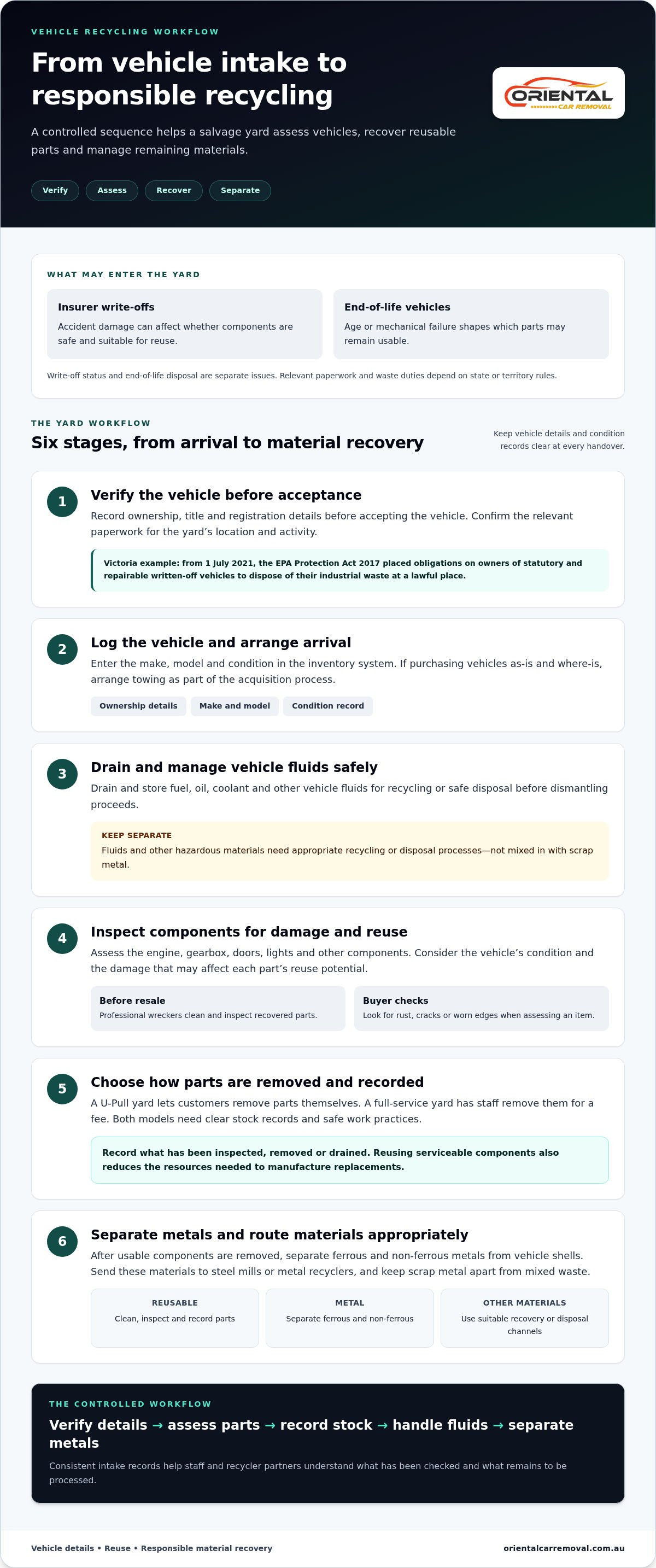
How do vehicle write-off and end-of-life car rules differ across Australian states and territories? Write-off status and end-of-life disposal are separate issues, and state or territory rules determine the relevant paperwork and waste duties. In Victoria, the EPA Protection Act 2017 placed obligations on owners of statutory and repairable written-off vehicles to dispose of their industrial waste at a lawful place, effective 1 July 2021.

At intake, record the vehicle’s ownership, title and registration details before accepting it. Then document its make, model and condition in the inventory system. This gives staff a clear starting point for deciding whether to dismantle it, recover reusable components or send the shell for metal recycling. If the yard purchases vehicles as-is and where-is, arrange towing as part of the acquisition process.

Recycling starts with safe fluid handling. Drain and store fuel, oil, coolant and other vehicle fluids for recycling or safe disposal. Then inspect the engine, gearbox, doors, lights and other components for damage and reuse potential. Professional wreckers clean and inspect recovered parts before resale. Buyers can assess each item for rust, cracks or worn edges before purchase.

A U-Pull yard lets customers remove parts themselves; a full-service yard has staff remove them for a fee. Both approaches require clear stock records and safe work practices. Reusing serviceable parts also reduces the resources needed to manufacture replacements.

After removing usable components, separate ferrous and non-ferrous metals from vehicle shells. These materials can go to steel mills or metal recyclers. Keep scrap metal separate from mixed waste, and send fluids and other hazardous materials through appropriate recycling or disposal processes. This makes the final end-of-life stage easier to manage.

A recycler network can help yards direct different materials to suitable recovery channels. For example, a regional yard could coordinate with metal recyclers for shells and specialist processors for fluids. Shared vehicle descriptions and condition records also clarify transfers. A consistent intake checklist helps each partner understand what has been inspected, removed or drained.

For a yard, car salvage yard success depends on treating purchasing and recycling as one controlled workflow. Verify vehicle details, assess reusable components, record inventory, handle fluids safely and separate metals. Each step supports sound decisions and responsible end-of-life vehicle processing.

Industry growth opportunities

Growth starts with making better use of the vehicles and staff already on site. Track which models attract enquiries, which auto parts sell and which stock takes up space without moving. Compare inventory records with completed sales regularly, then use the results to guide future vehicle purchases and dismantling priorities.

A documented yard turnaround shows why workflow matters. The business had eight employees, then reduced to five about four weeks after systems were installed and the yard was cleaned up. After pay for performance was introduced, one salesman left, and the yard operated with four employees within two weeks. This example shows how clear roles and organised processes can affect staffing needs, but it doesn’t prove the same structure suits every yard.

Build on that lesson by reviewing each work stage. Record who handles vehicle intake, inspection, dismantling, cleaning, listing and dispatch. Then identify recurring delays, such as unlabelled components or parts waiting for inspection. Assign responsibility for each step and set a routine for updating inventory. Clear records help car wreckers find stock without searching through the yard.

Online demand can create another growth path. Useful listings identify the part, vehicle make and model, condition, and any visible wear. Add clear photos and update the listing when the part sells. For an engine, for example, describe the item accurately and record its condition rather than relying on a broad “used auto parts” label. Specific details help customers judge whether a listing suits their needs.

Trust also supports repeat business. If a yard offers a warranty on selected car parts, state its terms clearly beside the listing and keep a record of the sale. Don’t imply that every part has identical coverage. Consistent descriptions and straightforward policies reduce confusion and help staff handle enquiries efficiently.

Consider growth beyond the yard’s immediate area, too. A recycler network can provide routes for suitable vehicles, reusable components and scrap materials. Before pursuing a new channel, compare its handling requirements with the yard’s capacity, transport arrangements and stock records. Networks work best when partners receive reliable descriptions and know what has already been inspected.

For car salvage yard success, test improvements in stages. Choose one bottleneck, such as slow parts identification, and introduce a simple tracking process. Review its effect on staff time, stock accuracy and completed sales before expanding the change. The turnaround above moved from eight employees to five, then four. Treat it as a specific example, not a universal staffing target.

What licences and permits are required to operate a car salvage yard in Australia?

There isn’t one permit checklist that fits every Australian salvage yard. The approvals to investigate depend on the site’s location and planned activities. A yard that only stores vehicles has a different operating profile from one that dismantles cars, handles fluids and processes scrap metal. Start by describing each activity, then match it to the relevant local council and state or territory agencies.

Use this sequence to map the approval pathway before committing to a site:

  1. Describe the operation. List vehicle storage, dismantling, parts handling, fluid removal, scrap-metal processing and customer access. Note which activities happen indoors or outdoors.
  2. Check the proposed land use. Give the local council the site address and activity list. Ask how the intended use fits local planning controls, and whether a planning approval or other council permit applies.
  3. Map environmental impacts. Identify likely noise, drainage, waste, fluid storage and emissions concerns. Discuss the actual processes with the state or territory environmental regulator to establish which approvals apply.
  4. Separate vehicle and business processes. Record how vehicles enter the yard, how ownership details are checked, and how waste and recovered materials leave. Then identify any separate registrations or permissions relevant to those activities.
  5. Keep written records. Store council responses, regulator decisions, site plans and operating procedures together. Update the file when the yard adds a new process, such as dismantling trucks or storing fluids.

Environmental duties can be specific to a jurisdiction and vehicle status. According to Victoria’s EPA, the EPA Protection Act 2017 placed obligations on owners of statutory and repairable written-off vehicles to dispose of their industrial waste at a lawful place, effective 1 July 2021. That Victoria-specific rule illustrates why a national operating plan must account for local requirements.

Build the approval file around the yard’s actual workflow. For example, a site that drains fluids needs to explain how it collects and stores them. A yard that separates vehicle shells for scrap metal should describe that process clearly. These details help authorities assess the proposed work rather than relying on a broad label such as “car salvage”.

Before opening, compare every approval with the final site layout and operating plan. Changes to vehicle types, dismantling practices or waste handling can affect the questions authorities need answered. Keep dated records of approvals and correspondence, and assign a staff member to maintain them. This gives the operator a practical basis for managing compliance as the yard develops.

Imlachs operated a 9-acre self-service auto recycling facility. The recycling yard’s salvage sales increased to $25,000 in the first month after the operational changes. A successful recycling yard operator cited by the consultant sold $60,000 per month with three employees and made well over $100k per year.

Car Salvage Yard Services for Vehicle Sourcing and Recycling

Which car parts are most profitable to salvage and sell?

There’s no universal list of the most profitable parts. A component’s return depends on its condition, demand, removal effort, storage needs and time to sell. Compare expected sale value with the work required to recover, inspect, clean, store and list each item. Even a sought-after engine can be a poor choice if damage makes its condition difficult to assess.

Start with parts that can be identified clearly and matched to specific vehicle models. Engines, gearboxes, alternators, doors, headlights, mirrors and wheels are practical candidates to assess. Their value to a yard depends on whether each component is intact, whether buyers need it and whether staff can describe it accurately. Check recent enquiries and completed sales against inventory before prioritising a part category.

Use a consistent assessment for each vehicle. For example, note whether an engine turns over, record visible damage and identify the vehicle’s make and model. For a door, record its colour, fittings and visible condition. Clear descriptions help buyers judge compatibility and avoid unnecessary questions. Professional wreckers inspect and clean salvaged parts before resale, while buyers should look for rust, cracks or worn edges.

Build a simple recovery scorecard instead of relying on guesswork. For each component, record:

  • Condition: note damage, wear and any missing fittings.
  • Demand: compare customer enquiries and previous sales for the same model.
  • Handling: assess the time, labour and storage space needed.
  • Sale readiness: record inspection, cleaning, photographs and listing details.

Then compare categories using the same measures. This shows whether a bulky gearbox with uncertain demand deserves space over an intact mirror with a clear model match. Used car parts are generally cheaper than new parts, so accurate identification and condition descriptions help customers assess value without relying on price claims alone.

Keep warranty terms specific to the part and the yard’s actual policy. State what the warranty covers, any limits, and how a buyer can raise an issue. Don’t imply that every component has the same coverage. A clear record linking the part, vehicle and sale makes staff follow-up easier.

Prioritise parts that combine sound condition, identifiable fitment and buyer interest. Review the scorecard as enquiries and sales change. If a component remains unsold, reassess its description, storage burden and demand before recovering more examples. This approach makes dismantling decisions repeatable instead of relying on a guess about which component might sell fastest.

Dismantling works best when recovery decisions reflect the vehicle’s condition and which parts buyers may be able to reuse. Vehicle dismantlers assess vehicles and recover parts for reuse or repurposing. Keep assessment notes, condition details and sale records together to help staff make consistent choices about what to remove and how to describe it. These records also help the yard review which categories merit attention as buyer interest changes.

The recycling yard recorded $42,000 in parts sales in the second month after the operational changes. That result can be considered alongside the yard’s own recovery and sales records when reviewing priorities. Continue comparing handling effort, sale readiness and buyer interest, rather than assuming that every vehicle or part category will produce the same return.

How can an Australian salvage yard sell parts online and attract customers?

Create searchable listings that help buyers identify the right part before enquiring. For each item, include the vehicle make, model, year where known, part name, condition and stock reference. A headlight listing should identify its side and any visible damage. Clear details reduce mismatched enquiries and make stock easier to find.

Use consistent photos for every listing. Show the whole component, its identifying marks and any wear or damage. Photograph an engine from several useful angles, including close-ups of visible cracks, connectors or missing fittings. Keep the background uncluttered and match each image to the correct inventory record. Accurate photos set realistic expectations before a buyer contacts the yard.

Choose sales channels that suit the yard’s customers and stock. A business website can organise parts by make, model and category. Google Business Profile can help local customers find the yard and its contact details. Online marketplaces may reach buyers beyond the local area. Keep listings current on every channel, and remove or mark items unavailable as soon as they sell.

Make every listing easy to act on. Include a clear way to enquire, the stock reference and the details needed to check fitment. Use the same reference in your response, then record the enquiry and its outcome. If several people manage online sales, shared records help prevent duplicate promises about the same part.

Build confidence with accurate condition notes and transparent sale terms. State whether a part has been inspected, cleaned or tested, and describe any known damage. If the yard provides a warranty for a particular item, explain the applicable terms clearly. Don’t imply that all used car parts have the same coverage. Link the sale record to the listing and the part’s stock reference.

Encourage repeat visits with useful, specific updates. A post about a newly dismantled vehicle can identify its make and model, then direct interested buyers to the available components. Share it through the yard’s chosen online channels and keep the matching inventory updated. Avoid advertising parts that have already sold, since stale listings waste staff time and frustrate customers.

Review online enquiries alongside completed sales. Note which vehicle models generate questions, which listings convert, and where buyers stop responding. Use those patterns to improve titles, photos and descriptions. A simple monthly review can help the yard decide what to list first and which channels deserve more attention.

Oriental Car Removal: Cash for Cars

Oriental Car Removal buys unwanted cars, trucks, 4WDs and vans in Perth, WA. If a vehicle has reached the end of its useful life, been damaged in an accident or no longer suits your needs, Cash for Cars offers a practical next step. Free Car Removal is included, so you don’t need to arrange towing yourself.

Oriental Car Removal handles the paperwork, towing and disposal at no charge to the vehicle owner. This can simplify clearing a vehicle when you’d rather not dismantle it or sell parts individually.

Contact Oriental Car Removal to discuss removing your unwanted vehicle.

Turn your next decision into a practical step

For a salvage yard, car salvage yard success comes from disciplined decisions, not simply a larger stockpile. Keep improving how vehicles are assessed, materials are handled and parts are presented to buyers. Choose one process to refine next, then use clear records to see whether the change helps your operation.

If you own an unwanted vehicle rather than run a yard, Oriental Car Removal offers Cash for Cars, Free Car Removal and Cash for Trucks. It’s a straightforward option when you’re ready to move a vehicle on instead of managing its recycling yourself.

Take the next step with a clear plan, and keep building a more organised, responsible vehicle recycling process.

Frequently Asked Questions

What makes a car salvage yard successful in Australia?

In Australia, car salvage yard success depends on sound decisions across purchasing, processing and sales. One practical measure is whether each vehicle generates worthwhile returns after accounting for the work and resources needed to handle it. Compare recovered parts and recyclable materials with the effort spent acquiring, dismantling and storing them. Use those records to adjust purchasing choices, reduce slow-moving stock and focus staff time where it creates value.

How do salvage yards source vehicles and assess their resale value?

Salvage yards may acquire insurer-written-off vehicles after accidents or vehicles their owners decide aren’t worth repairing. To assess resale potential, consider the vehicle’s make, model and condition, then judge which components may be reusable and which materials can be recycled. Damage concentrated at one end, for example, may leave other components intact, while mechanical failure may affect engine value. The decision also depends on likely buyer demand and the work needed to process the vehicle.

How profitable are Australian car salvage yards, and what are typical margins?

Profitability varies with sales, operating costs and stock movement. In one yard turnaround, used-part and warranty sales had a cost of goods of about 35%, monthly expenses were around $20,000, and sales reached $45,000 by the third month; this is a specific example, not a typical margin.

What equipment and facilities does a car salvage yard need?

Plan the yard to support vehicle storage, dismantling, parts inspection and cleaning, safe fluid drainage and storage, and separation of ferrous and non-ferrous metals. Keep clear inventory records and follow safe work practices throughout.

What are the main risks and common reasons salvage yards fail?

Risks include inadequate ownership checks, unsafe fluid handling, overlooked local environmental or licensing obligations, and weak inventory control. Unsold parts can take up valuable space, while delays in inspection, listing or dispatch and uncontrolled operating costs can undermine performance.