

Why pay dealership prices for a Toyota part when a genuine recycled option could keep your vehicle moving for less? Finding the right part matters, but so does knowing it’s compatible and has been properly assessed. That’s why choosing among toyota wreckers perth drivers can access calls for more than a quick search.
It’s understandable to worry about buying a faulty part from an unreliable source or waiting weeks for one to arrive from interstate. This guide explains what to look for when sourcing genuine used Toyota spares in Perth, including how to check fitment, ask about testing and understand any warranty offered. Oriental Car Removal brings more than 10 years of Perth experience and a specialisation in Japanese vehicles, including 4WDs and utes.
Read on for practical ways to narrow down your options, avoid common buying mistakes and make a more informed decision, whether you drive a HiLux, LandCruiser, Prado, Corolla or Camry.
Toyota Parts Buying Key Takeaways | Oriental Car Removal
- Compare new, aftermarket and recycled OEM parts to understand the trade-offs in cost and fit.
- Use the donor vehicle’s mileage and service history, where available, to make a more informed choice.
- Learn what to look for when inspecting body parts, including signs of rust or previous repairs.
- See why Toyota wreckers Perth drivers consider can be a useful local option when researching genuine recycled components.
- Explore the types of Toyota components commonly discussed, from 4WD driveline parts to body panels.
The Value of Genuine Recycled Toyota Parts in Perth
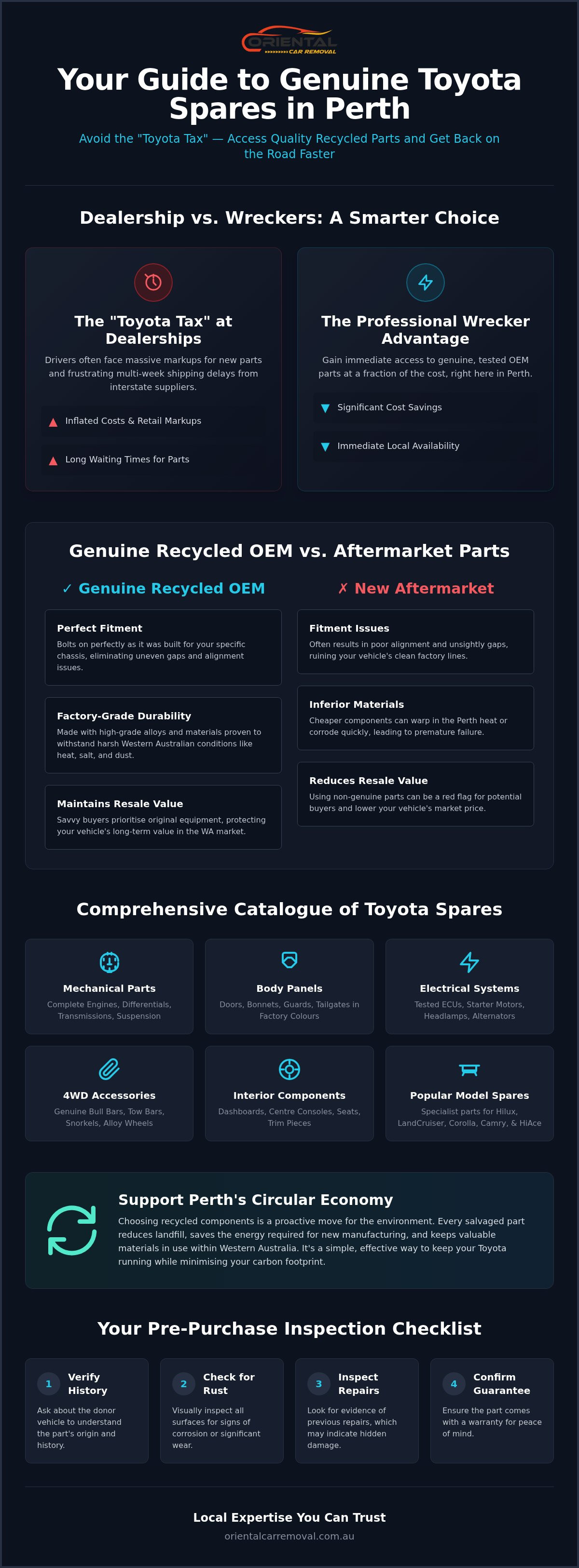
Toyotas are built around components designed to work together. A genuine part is made to the vehicle’s original specifications, which can help preserve correct fit and function when a replacement is needed. A recycled genuine component may also cost less than a new dealership spare, helping owners avoid some of the “Toyota tax” without automatically turning to an aftermarket alternative.
That difference matters in Western Australia. Heat, fine dust and long drives can place extra demands on vehicles, particularly 4WDs and utes used on regional roads. A correctly specified component is a more dependable starting point than a part that doesn’t match the vehicle’s design. Condition still matters, so check the part’s identification, visible wear and known history where available.
OEM Quality vs. Aftermarket Alternatives
Aftermarket parts vary in quality. A non-genuine body panel may not line up with the original mounting points or match surrounding panels, creating extra work during fitting. For mechanical components such as alternators, correct connections and suitable materials matter to reliable operation. A recycled OEM part retains the original design, though its condition should still be assessed. Keeping a Toyota closer to factory specification may also support its appeal to future buyers, without guaranteeing a particular resale value.
For Perth owners comparing options, Perth car wreckers can be a local starting point for understanding how vehicles are dismantled and components recovered. Toyota wreckers Perth drivers consider should be able to explain how a part was sourced and what checks it has undergone. That helps reduce the risk of choosing a component based on price alone.
Sustainability in the WA Automotive Industry
Professional dismantling gives usable components a chance to serve another vehicle before their materials are recycled. At its Kenwick operation, Oriental Car Removal works with Japanese vehicles, helping keep vehicle recovery and recycling within Perth’s local economy. The broader vehicle recycling process includes recovering reusable parts and separating materials for recycling.
Reusing steel and aluminium components can reduce demand for newly manufactured materials and the energy needed to produce them. It also helps limit the amount of recoverable vehicle material sent to landfill. Choosing a suitable recycled component supports a local circular economy while giving Toyota owners another option beyond buying new.
Comprehensive Catalogue of Toyota Spares
Toyota vehicles use parts across several systems, and the right replacement depends on the model, year, engine and trim. A wrecker’s catalogue may include mechanical, body, electrical and interior components recovered from donor vehicles. Use the vehicle identification details and the part number, where available, to narrow down what you need. A similar-looking component isn’t always the correct fit.
Parts by system and vehicle type
For 4WDs, engines, gearboxes and differentials are key drivetrain components. Body panels such as bonnets, guards, doors and tailgates can be useful replacements, and factory colour may help reduce the need for repainting. Electrical items can include ECUs, starter motors and headlamp assemblies. Older models may also have reusable seats, dashboards and centre consoles.
For each component, compare identifying numbers and mounting points, and inspect visible condition. Electrical and mechanical parts need particular care: appearance alone won’t tell you whether a component is suitable for the vehicle or in serviceable condition.
Specialist parts for popular Toyota models
Perth’s Toyota fleet includes models with different needs. Hilux and LandCruiser owners may be looking for drivetrain or suspension components suited to 4WD use. Corolla and Camry searches often focus on engines and transmissions, while HiAce owners may need commercial body components such as sliding doors or engine spares. These are examples of categories to look for, not a promise that a particular part is in stock.
Part fit can change between model generations and variants. Check the build details before relying on a model name alone. The phrase toyota wreckers perth can lead to local options, but clear vehicle details help make any parts search more precise.
4WD accessories and local sourcing
Owners may also search salvage listings for genuine bull bars, tow bars, snorkels, factory alloy wheels or spare tyre carriers. These items can vary by year and configuration, so confirm the part’s original application and inspect it for damage or signs of previous repairs. A local Perth source can make it easier to view larger components and discuss whether they match a specific 4WD, rather than relying only on an interstate listing.
Oriental Car Removal specialises in Japanese vehicles and has more than 10 years of experience in Perth, with wrecking operations based in Kenwick. If you’re looking to dispose of an unwanted Toyota rather than source a component, explore car wreckers in Perth and the vehicle removal options available locally.
New vs. Aftermarket vs. Recycled Toyota Parts
Choosing a replacement part means weighing purchase price against fit, condition, availability and the cost of getting it wrong. New genuine parts are made to Toyota’s specifications, but dealership pricing can be high. Aftermarket parts vary by manufacturer and may cost less upfront. Recycled genuine parts come from Toyota vehicles, so they retain the original design, though their condition and remaining service life depend on the donor component.
There’s no single best option for every repair. Compare the full cost, including delivery, fitting and any warranty terms. A part available locally may also save the wait for an interstate or international order, but only if it’s the correct match and ready to collect.
Fit, performance and safety
Genuine sensors are designed to work with the vehicle’s engine management system. A mismatch can affect how the system reads information, so check part numbers and vehicle compatibility. Cooling components also need to suit the vehicle and its operating conditions, including Perth’s hot summers. For braking and steering parts, prioritise correct specification and verified condition. Don’t assume a new aftermarket part is automatically safer or more reliable than a recycled genuine one.
Make the cost comparison practical
Look beyond the initial price. Consider shipping, fitment, condition and the consequences of needing another replacement. A high-quality recycled OEM component may offer savings over a new genuine part, while an aftermarket option could be more affordable upfront. The actual comparison depends on the specific part and vehicle.
Consumables that wear with use are often best bought new, while suitable major components may be worth considering recycled. Engines, gearboxes and other substantial parts need careful checks on identification, condition and history. Toyota wreckers Perth drivers compare can be a useful local option when a compatible component is available nearby, rather than waiting for an overseas shipment.
Check warranty terms before deciding
Warranty coverage can differ between new, aftermarket and recycled components. Read the terms before purchase and note the coverage period, exclusions and any conditions that apply. For a recycled part, establish what the warranty covers and keep the paperwork. A warranty doesn’t replace checking that the part matches your Toyota and is in suitable condition.
For more information on Japanese vehicle components, read our guide to used Japanese car parts in Perth.
Sourcing Toyota Parts in WA: What to Check
Before choosing a recycled Toyota component, match it to your vehicle’s model, year, variant and part number. Ask for donor vehicle details such as mileage and service history where available. These records can offer useful context, but they don’t replace checking the part’s condition and suitability.
Inspect condition and testing information
For body parts, look closely for rust, dents, cracked mounting points, uneven panel edges and signs of previous repairs. Check that doors, bonnets and tailgates haven’t been distorted. Factory colour can help with matching, but paint condition may differ between vehicles.
For engines and transmissions, request information about how the component was assessed before removal and whether its operating condition was recorded. Check for visible damage, leaks, corrosion or damaged connectors. A careful dismantling process matters too: rough removal can break sensitive electrical plugs, while clean, dry storage helps limit deterioration. Oriental Car Removal operates from Kenwick and is licensed and insured. Find out more about its Perth car wrecking operations.
Understand your rights and plan collection
In Australia, consumer guarantees under the Australian Consumer Law may apply when you buy second-hand goods from a business. What’s reasonable can depend on factors such as the item’s age, condition, price and any faults disclosed before purchase. Keep your receipt and any written description of the part or agreed warranty terms. A warranty is separate from consumer rights, so read its conditions carefully.
Sort out transport before committing to a bulky part. If your mechanic is in Osborne Park or Subiaco, confirm the workshop’s arrangements for receiving the item. For buyers travelling from Joondalup, Mandurah or Rockingham, plan collection and suitable handling in advance. Check that the part is packed securely, particularly if it includes electrical components or fragile fittings.
Use these checks to reduce guesswork. Match the part, inspect its condition and keep the purchase details.
Why Oriental Car Removal is Perth’s Toyota Specialist
Oriental Car Removal has more than 10 years of experience in Perth and specialises in Japanese vehicles, including Toyota cars, utes and 4WDs. That focus matters because part identification can depend on the model, year and vehicle variant. A Hilux component, for example, may not suit every Hilux. Sharing accurate vehicle details helps narrow down the right match and avoid unnecessary delays.
The business handles the vehicle lifecycle from acquisition through to salvaged-part retail. This local experience gives Perth drivers a practical point of contact when they’re exploring Toyota components or deciding what to do with an unwanted vehicle. As with any recycled part, suitability and condition matter, so make sure the component is matched to your vehicle before purchase.
Kenwick-based Japanese vehicle expertise
Oriental Car Removal’s wrecking operations are based in Kenwick, serving Perth metro customers from a local site. Its Japanese and commercial vehicle specialisation is relevant to WA drivers looking after utes and 4WDs, as well as everyday Toyotas. Use the vehicle identification details and, where available, the part number to describe what you need. Clear information helps make a parts enquiry more focused.
Searching for toyota wreckers perth should lead to more than a model name. The right component needs to suit the vehicle’s specific configuration. Oriental Car Removal’s experience with Japanese vehicles provides a useful foundation for that conversation, without assuming every part will fit every variant.
Turn an unwanted Toyota into a useful next step
If your Toyota has reached the end of the road, Oriental Car Removal offers cash for unwanted cars and complimentary removal of donor vehicles. Reusable components can be recovered for another vehicle, while remaining materials can be directed into recycling. That gives an unwanted car a role beyond sitting unused and may help keep suitable Toyota vehicles on the road.
For a vehicle that’s no longer wanted, explore the scrap car removal service in Perth. Share the Toyota’s make, model and condition to help get the process underway. An offer will depend on the vehicle and its circumstances, so provide clear details from the outset.
Choose the Right Toyota Part with Confidence
A suitable recycled genuine part can help you retain Toyota’s original design while avoiding the full cost of a new dealership component. Match the part to your vehicle’s model and variant, check its condition and history where available, and understand any warranty terms before buying. These steps help you compare options with less guesswork.
For drivers searching toyota wreckers perth, Oriental Car Removal brings more than 10 years of Perth experience and specialises in Japanese vehicles, including 4WDs and utes. Its Kenwick wrecking operations support the recovery of salvaged components, while unwanted donor vehicles can be removed at no charge. If your Toyota is ready to go, you can also request a cash quote.
Make your next parts decision with clear vehicle details and a trusted local specialist. A well-matched component can help keep your Toyota on the road.
Frequently Asked Questions
Do you provide a warranty on used Toyota parts?
Warranty coverage can depend on the component and the terms provided at purchase. Read any written warranty carefully, including its coverage period, exclusions and steps for making a claim. Keep your receipt and the part details. A warranty is separate from consumer guarantees that may apply under Australian Consumer Law, so don’t assume a warranty replaces your rights if a part has a problem.
How do I know if a part will fit my specific Toyota model?
Match the part to your Toyota’s model, year, variant and, where possible, its part number. Two vehicles with the same model name can use different components across generations or configurations. Give the supplier your vehicle identification details and compare the numbers or mounting points before purchase. For drivers searching toyota wreckers perth, accurate vehicle information makes it easier to narrow down suitable recycled components.
Can you deliver Toyota spares to my mechanic in Perth?
Delivery to a Perth mechanic depends on the arrangements for the particular purchase, so don’t assume it’s included. Before organising transport, confirm the workshop’s address, opening arrangements and ability to receive the component. For a bulky item such as an engine or door, plan suitable handling and transport. Local sourcing around Perth may also make collection more practical than waiting for an interstate shipment.
Are recycled Toyota parts safe for my family car?
Recycled parts can be suitable when they’re the correct match and their condition has been carefully assessed. Safety-critical components need particular care. Check identification, visible condition and any available testing or donor-vehicle information before purchase. Don’t rely on appearance alone, especially for braking, steering or engine-management parts. If you’re unsure about a component’s suitability, have a qualified automotive professional assess it before it’s fitted.
What Toyota models do you currently have in stock for wrecking?
Stock changes as donor vehicles are acquired and dismantled, so a fixed model list may quickly become outdated. Oriental Car Removal specialises in Japanese vehicles and supplies salvaged components from vehicles it processes. Toyota models commonly seen on Perth roads include Hilux, LandCruiser, Prado, Corolla and Camry, but that doesn’t mean a particular vehicle or part is currently available. Use exact model and year details when searching.
Do you sell genuine Toyota accessories like bull bars or roof racks?
Bull bars and roof racks are accessories, and their fit can depend on the Toyota model, year and existing fittings. Recycled components are different from new accessory retail. If you’re considering a salvaged item, check its condition, mounting points and vehicle compatibility rather than assuming it will fit. The same checks apply to other external components, including tow bars and spare-wheel carriers.
What happens if the part I bought is faulty?
Keep your receipt, purchase details and any written description or warranty information. If a part develops a fault, raise the issue with the seller promptly and explain what has happened. Australian Consumer Law may provide consumer guarantees for goods bought from a business, including second-hand goods, depending on the circumstances. The item’s age, condition, price and any faults disclosed before purchase can be relevant.
How much can I save by buying used vs new Toyota parts?
Savings vary with the part, its condition, availability and the price of a comparable new genuine component. Compare the complete cost, including freight and any fitting expenses, rather than looking only at the initial price. A recycled OEM component may cost less than a new dealership part, but it’s still important to check compatibility, condition and warranty terms before deciding. The right choice depends on the specific Toyota and component.