

Selling a wrecked car to a wrecker doesn’t remove your reporting step. For a notice of disposal for a WA vehicle, send the blue seller’s copy of the transfer form to Driver and Vehicle Services within 7 days of selling, gifting or disposing of it. A $100 infringement may apply if you miss the deadline.
It’s easy to assume the buyer takes care of everything once the vehicle is gone. But the buyer’s ownership transfer and your notice of disposal are separate steps, so complete your part promptly.
This guide explains who lodges each part of the transfer, how to notify the Department of Transport online or by mail, and what to do with the plates when a vehicle is written off. You’ll also learn what sale records to keep so you can complete the paperwork with confidence.
Key Takeaways
- The buyer handles the ownership transfer, but you must lodge your seller’s copy of the transfer form separately.
- Keep a dated sale receipt with both parties’ details and the vehicle’s identifying information as a record of the handover.
- You can notify the Department of Transport online or by mail. Choose the method that suits your sale and keep proof of lodgement.
- If the vehicle is on Western Australia’s Written-Off Vehicle Register, return its number plates within 28 days.
- Before disposing of a wrecked vehicle, understand what happens to its plates and any unused vehicle licence period.
Buyer responsibility for transferring vehicle ownership
If the buyer doesn’t transfer the vehicle into their name, lodge your blue seller’s copy with Driver and Vehicle Services within 7 days of the sale. Keep a dated receipt and your transfer records as evidence of the handover.
- Complete the MR9 transfer form with the buyer. In a Western Australian sale using form MR9, give the buyer the red copy and submit the blue copy yourself. Both copies record the change of ownership, but each party has a separate responsibility. Check that the vehicle and buyer details are legible before signing.
- Give the buyer the vehicle documents. Provide the current vehicle licence paper and any other applicable documentation. The buyer uses the transfer details to put the vehicle licence into their name. Keep your own record of the sale, including a dated receipt naming both parties and recording the vehicle’s VIN and odometer reading.
- Make sure the buyer completes their transfer. The buyer must lodge the red copy within 14 days after the sale. They can complete the transfer using the form or online. For an online transfer, they need your last name and the vehicle’s plate number. The buyer submits the Notice of Change of Ownership to complete the transfer.
- Understand the buyer’s costs and registration task. The buyer must pay the transfer fee and vehicle licence duty. The transfer updates the vehicle licence record; it does not replace your separate seller notification. Submit your blue copy within 7 days, even if the buyer says they will handle the paperwork.
- Keep the records that show when the vehicle left your possession. Retain your signed copy or sale receipt, the buyer’s details, the sale date, and the vehicle identifiers. These records help establish who held the vehicle and when if ownership records remain unchanged after the sale.
- Handle an interstate sale differently. A Western Australian vehicle licence cannot be transferred to someone who is not a WA resident. For a sale to an interstate buyer, return the plates to a Department of Transport and Major Infrastructure service centre or regional agent, then sell the vehicle unlicensed. Keep the plate-return and sale records together.
Vehicle transfer paperwork has two parts: the buyer completes the ownership transfer, while you notify the department that you’ve sold or disposed of the vehicle. Lodging your notice promptly helps keep the records clear, even if the buyer has not yet submitted their copy.
How long to lodge a notice after selling my car?
- Start with Western Australia’s seven-day deadline. Send the blue seller’s copy of the vehicle transfer form to Driver and Vehicle Services within 7 days after selling, gifting or disposing of a licensed vehicle. The deadline applies to you as the seller, even if the buyer intends to lodge their copy promptly. Lodge it on the day of sale where possible, rather than waiting until the final day.
- Keep the buyer’s deadline separate. The buyer has 14 days after the sale to lodge the red copy and complete their ownership transfer. That period does not extend your seven-day seller notification deadline. For example, if you sell on Monday, organise your own paperwork immediately instead of waiting for the buyer’s transfer to appear in the records.
- Choose a lodgement method and retain evidence. In WA, sellers can notify the Department of Transport of a vehicle sale online or by mail. Complete the seller’s section accurately, using the sale details and vehicle information from your records. Keep a copy of the completed form and any lodgement confirmation or postal records. These help show when you notified the department.
- Act before the deadline to avoid an infringement. A $100 infringement may be issued if you miss WA’s seven-day deadline. Don’t assume that handing over the keys, registration papers or signed form completes your notification. The buyer’s transfer and your seller notice are different actions, so complete and lodge your part separately.
- Check the rule for the state where the vehicle is registered. Deadlines differ across Australia. Tasmania’s seller deadline is 7 days; New South Wales, Queensland and the Northern Territory each allow 14 days. South Australian sellers must lodge form MR96 within 14 days. These comparisons show why a WA seller should follow the local seven-day period, not another state’s timeframe.
- Use the sale date as your paperwork trigger. Write the handover date on your receipt, then prepare the seller’s notice straight away. If the buyer needs time to organise their transfer, that does not change your deadline. Keep the receipt, signed form and lodgement record together so you can confirm the sequence of events.
- Respond promptly if you discover a missed deadline. Lodge the seller’s copy as soon as possible and keep the completed paperwork and sale records. The seven-day period is the required timeframe, and a late lodgement does not erase the missed deadline. Clear records can help explain when the sale occurred and when you submitted your notice.
Notice of disposal versus transfer of ownership
Keep your seller notification separate from the buyer’s ownership transfer. Both steps update vehicle records, but they serve different purposes.
In Western Australia, a notice of disposal tells the Department of Transport that you’ve sold or disposed of a licensed vehicle. Keep the confirmation or receipt from your online or mailed lodgement. If you lodged by mail, retain a copy of your paperwork as evidence of submission.
-
Distinguish Disposal Notice from Ownership Transfer
Submit your seller notification, then make sure the buyer completes the ownership transfer. With form MR9, you give the buyer the red copy and submit the blue copy. The buyer’s transfer puts the vehicle licence into their name; your notice tells the department the vehicle has left your ownership. Don’t treat one step as a replacement for the other.
-
Check Whether the WA Notice Has Been Processed
Check the lodgement confirmation or receipt against your sale records. Keep the vehicle plate number, sale date and a copy of the submitted form together. For an online lodgement, retain the confirmation shown after submission. For a mailed form, keep your copy and postal records. These documents help show what you sent and when.
-
Use the WA process that fits your sale.
Buyers and sellers can transfer vehicle ownership online or by form. An online transfer requires the seller’s last name and the vehicle plate number. The buyer submits the Notice of Change of Ownership to complete the transfer. To transfer a vehicle licence online, the seller needs a DoTDirect account. Some transactions cannot be completed online, including those involving joint ownership, heavy vehicles, optional plates, companies or mismatched records.
-
Keep optional number plates in the transfer plan.
If optional plates are sold with the vehicle, the buyer must transfer them into their name and pay the transfer fee. If you’re keeping the plates, exchange them at a Department of Transport and Major Infrastructure service centre or regional agent before the sale. Standard state or district plates stay with a vehicle sold to another driver.
-
Note the different Queensland sequence.
Queensland’s online transfer has two steps, with the seller required to lodge the disposal notice before the buyer attempts their transfer. Don’t apply that seller-first sequence to WA. In WA, lodge your seller notification and ensure the buyer completes their separate transfer. Each step updates a different part of the vehicle’s ownership records.
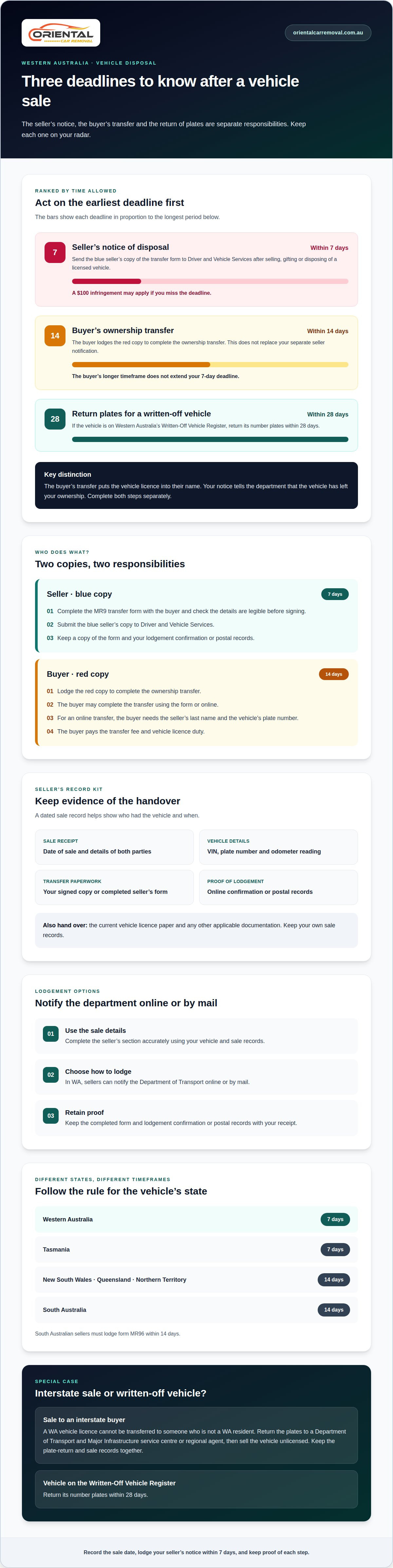
How long to lodge a Notice of Disposal in Western Australia?
Submit the seller’s copy within 7 days of selling, gifting or disposing of a vehicle. In Western Australia, you can notify the Department of Transport online or by mail.
- Start with the sale date. Count from the day you sell, gift or dispose of the vehicle. The seller’s blue copy must reach Driver and Vehicle Services within 7 days. Lodge your notice of disposal for a WA vehicle promptly, leaving time to correct any errors and retain evidence. Don’t wait for the buyer to finish their separate transfer.
- Choose online or mail lodgement. Western Australian sellers can notify the Department of Transport online or by mail. Follow the relevant submission process and provide the sale and vehicle details accurately. Keep a copy of the form and your lodgement record. If you mail the seller’s copy, retain evidence of posting with your sale paperwork.
- Use form MR9 for a sale that uses it. Complete the seller’s section and give the buyer the red copy. Submit the blue copy as your notification. Check that the buyer’s details, vehicle plate number and sale information are clear before sending it. This notice of disposal for a WA vehicle records the seller’s notification, not the buyer’s transfer.
- Know what an in-person visit is for. A Department of Transport service centre or regional agent is relevant if you need to return number plates, such as for an interstate sale. The listed notification methods are online and mail. Keep plate-return paperwork separate from your seller notice, because returning plates and notifying the department serve different purposes.
- Understand the fee distinction. Western Australia does not charge a vehicle transfer fee when selling a car. The buyer is responsible for the transfer fee and vehicle licence duty when completing the transfer. Your seller notification records that the vehicle has left your ownership; don’t confuse it with the buyer’s transfer transaction.
- Submit online through the Department’s vehicle services. The seller can notify the Department of Transport online. DoTDirect is required for an online vehicle licence transfer, which is the buyer’s transfer process, not the seller’s disposal notice. Keep these tasks separate and save the confirmation generated for your own submission.
- Keep proof with your sale records. Store the lodged form or online confirmation alongside the dated receipt and vehicle details. If you submit by mail, keep the posting record too. These records help you confirm when you notified the department if the vehicle’s ownership record does not update as expected.
Written-off and wrecked vehicle disposal
- Record the vehicle’s status before arranging disposal. If it appears on Western Australia’s Written-Off Vehicle Register, note that status in your records. A wrecked vehicle can still involve separate disposal, plate and licence tasks. Keep the sale or handover date, the vehicle details and any insurer correspondence together. These records help you track each step without confusing the vehicle’s physical removal with its registration paperwork.
- Lodge your seller notification after disposal. Selling or disposing of a wrecked vehicle does not remove your seller-notification responsibility. Submit the blue seller’s copy within 7 days of disposal. Keep the lodgement record with your receipt, even if the vehicle is no longer driveable. The notification records that the vehicle has left your ownership; plate return is a separate action.
- Return plates for a vehicle on the register. For a vehicle on Western Australia’s Written-Off Vehicle Register, return its number plates within 28 days. Arrange the return through the Department of Transport and Major Infrastructure, then keep the receipt or other record of the return. Don’t assume a wrecker’s collection or the vehicle’s damaged condition completes this step for you.
- Keep accident evidence if you’re seeking a licence refund. A refund of unused vehicle licence fees can be backdated to the accident date if you provide a crash report or an insurer’s letter confirming the accident. Keep that document with the vehicle licence details and plate-return receipt. Without the supporting accident documentation, the refund’s effective date is the date the plates are returned.
- Separate the refund process from the ownership paperwork. The plate-return date can affect the effective date used for a refund of the remaining licence period. It does not replace the seller’s notification. File the notice, the plate receipt and any crash report or insurer letter together, so each record supports its own part of the process.
- Make the handover details clear. Record who received the wrecked vehicle, when it left your possession and its identifying details. A dated receipt naming both parties and recording the VIN and odometer reading can help establish ownership and timing. If the odometer cannot be read, don’t guess; retain the other accurate details and paperwork.
- Choose a disposal option that suits the vehicle. If a damaged car, 4WD or truck is no longer wanted, a wrecker may be a practical route for disposal. Keep the collection or sale receipt, then complete your own notification and plate steps. The vehicle’s condition does not merge those administrative tasks into one.
Oriental Car Removal: Cash for Cars
Oriental Car Removal is a practical option if you’re ready to dispose of an unwanted, damaged or written-off vehicle. It buys cars, trucks, 4WDs and vans, and provides free vehicle removal. The team handles the removal and disposal paperwork, helping simplify the handover.
Keep your WA obligations separate: lodge your seller notification and, if the vehicle is on the Written-Off Vehicle Register, return its plates within the required timeframe. Keep your sale receipt and any plate-return record with your paperwork.
If your vehicle is no longer worth keeping, contact Oriental Car Removal or visit its website to discuss the next step.
Close the paperwork and move forward
Once the vehicle has changed hands, finish the remaining administration. Treat lodging a notice of disposal for your WA vehicle as part of closing the sale, not an afterthought. Keep your records together to avoid loose ends in the ownership paperwork.
If you’re also ready to dispose of another unwanted vehicle, Oriental Car Removal can help with the next step. Choose the option that suits your vehicle and arrange its removal when you’re ready.
Complete the handover, keep your paperwork organised and move ahead with confidence.
Frequently Asked Questions
Do I still need to lodge it if I sold the car to a wrecker?
Yes. Selling to a wrecker doesn’t remove your responsibility to notify the department that you’ve disposed of the vehicle. Keep the handover receipt, including the date and vehicle details, with your submitted notice. Contact your insurer about your policy too, because lodging the notice doesn’t automatically cancel your insurance. The vehicle’s destination doesn’t replace these separate administrative steps.
Is a Notice of Disposal the same as a Bill of Sale?
No. A Notice of Disposal tells the department that you’ve sold or disposed of a vehicle. A bill of sale or receipt records the agreement between you and the buyer, such as the parties, sale date and vehicle identifiers. Keep both records where available. For example, the department notice records the disposal, while your receipt can help show when the handover happened.
How do I lodge a notice of disposal for a vehicle in WA?
Submit the seller’s copy of the transfer paperwork to the Department of Transport online or by mail. For a sale using MR9, the seller submits the blue copy and gives the buyer the red copy. Check that the sale date and vehicle details are readable before lodging. Save your confirmation or a copy of the paperwork with the sale receipt for your records.
How long do I have to notify WA Transport of a vehicle sale or disposal?
You have 7 days after selling, gifting or disposing of the vehicle to send the seller’s copy to Driver and Vehicle Services. Treat the handover date as the start of your deadline, even if the buyer plans to complete their transfer later. For example, after a weekend sale, organise your notice promptly rather than waiting for the buyer’s paperwork or a reminder.
What details and documents are needed to lodge a WA notice of disposal?
Have the vehicle’s plate number and sale details ready, and use the seller’s copy of the transfer paperwork. For your records, retain a receipt naming both parties and noting the VIN and odometer reading. A vehicle transfer may require other identifying details, such as the make, model and engine number. Don’t guess; use the vehicle documents and your sale records.
What should the seller and buyer do after a vehicle sale in Western Australia?
The seller lodges the seller’s copy, while the buyer completes the ownership transfer using their copy. Keep the handover date and signed paperwork accessible in case either party needs to resolve a record mismatch. The buyer’s transfer fee and vehicle licence duty are separate from the seller’s notification. If the sale includes optional plates, the buyer must transfer them into their name.
How do I notify WA of a vehicle disposal if I sold it privately, traded it in, or scrapped it?
Use the same seller-notification process for a private sale, trade-in or scrap disposal: submit the seller’s copy and keep evidence of the handover. Record who received the vehicle and the disposal date, then retain a receipt or other sale record. If the vehicle is written off and appears on WA’s Written-Off Vehicle Register, treat returning the plates as a separate requirement.
What happens if I do not lodge a WA notice of disposal on time?
Missing the 7-day seller-notification deadline may result in a $100 infringement. Lodge the paperwork as soon as you realise it’s overdue, and keep your sale receipt and submission record together. These records can help establish the disposal date and show the steps you took. Don’t assume the buyer’s transfer, a trade-in or a wrecker’s collection has completed your notification.