Eco Friendly Car Wreckers: What Happens to an End of Life Car

Eco Friendly Car Wreckers: What Happens to an End of Life Car

An unwanted car doesn’t have to become landfill. Eco friendly car wreckers in Success dismantle end-of-life vehicles, recover reusable parts and recyclable materials, and handle hazardous fluids through controlled processes. That gives an old car a more responsible next step than leaving it unused or disposing of it improperly.

It’s understandable to wonder what happens after a wrecker collects a vehicle, especially if it no longer runs or needs costly repairs. Responsible dismantling separates reusable components from recyclable materials and manages fluids, fuel and batteries carefully.

This guide explains how vehicle recycling works, how wreckers handle hazardous materials and reduce landfill waste, and what to consider when selling an unwanted car. It also covers how a vehicle’s condition and collection arrangements affect the process, helping you make an informed decision.

Key Takeaways

  • Auto recycling separates reusable components and recyclable materials from an end-of-life vehicle, while fluids and other hazardous items need controlled handling.
  • Careful dismantling helps recover valuable materials and reduce the amount of vehicle waste sent to landfill.
  • A vehicle’s condition, salvageable components and removal arrangements can shape the process of selling it to a wrecker.
  • Understand the removal and payment arrangements before agreeing to sell, so you know what to expect when your unwanted vehicle is collected.
  • If you have an unwanted car, truck, 4WD or van in Perth, Oriental Car Removal offers cash for these vehicles and free car removal.

What is Auto Recycling?

Auto recycling involves dismantling an end-of-life vehicle to recover usable components and materials. In Western Australia, this can keep vehicle waste out of landfill and return metals to manufacturing.

Reusable Vehicle Components

Reusable vehicle components are parts removed from a car and assessed for reuse or refurbishment. Wreckers inspect items such as engines, transmissions, doors and windows, separating suitable parts from damaged or worn components. Reusing working parts can reduce demand for newly manufactured materials and help conserve resources.

After removing reusable parts, recyclers sort the remaining vehicle materials. Steel and aluminium can enter recycling streams, while fluids need controlled handling to prevent leaks. For example, batteries can be processed to recover lead and other reusable materials. Separating these materials helps recover value from different parts of the vehicle.

End-of-Life Recycling in Western Australia

End-of-life vehicle recycling in Western Australia means dismantling an unwanted car and routing reusable components and materials for recovery. Tens of thousands of vehicles reach the end of their life across the state each year. For owners, keeping the paperwork and ownership details together helps make the transfer and disposal process clearer.

Keep the vehicle’s registration details and evidence that you own it or have authority to dispose of it. Registration cancellation and number plate return are separate from dismantling, so follow the current instructions from the WA Department of Transport and retain transaction records. The documents and steps depend on the vehicle and the owner’s circumstances.

Eco-friendly car wreckers in Success dismantle vehicles carefully, recover reusable parts and recyclable metals, and manage fluids through controlled processes. To identify a responsible option, focus on how it handles each stage rather than relying on the word “green” alone.

Environmental Benefits of Vehicle Recycling

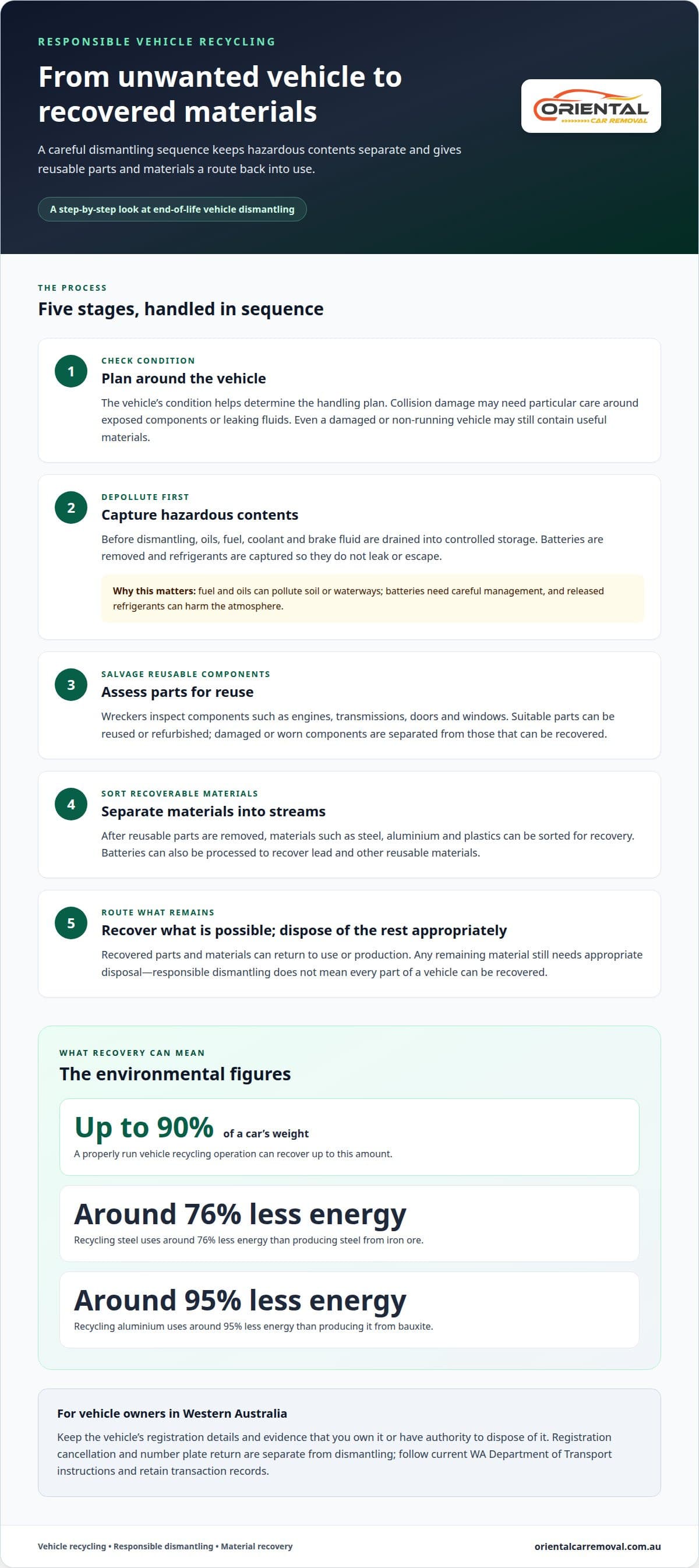
Sustainable dismantling reduces waste and can lower the need to mine and process virgin materials. Recycling steel uses around 76% less energy than producing steel from iron ore, while recycling aluminium uses around 95% less energy than producing it from bauxite. Recovered metals can therefore return to production with less energy-intensive processing.

A properly run vehicle recycling operation can recover up to 90% of a car’s weight. The remaining material still needs appropriate disposal. A responsible process also keeps oils, fuels and heavy metals out of the environment by directing them to controlled processing systems. For owners of 4WDs, 4WD wreckers are one relevant part of the vehicle recycling chain.

Choosing responsible disposal matters because abandoned or improperly handled vehicles can leave materials and fluids unmanaged. In Western Australia, recycling supports material recovery from end-of-life vehicles and reduces the amount of vehicle waste sent to landfill. For homeowners aiming to adopt broader sustainable practices across their property, SolarGrid Perth supplies and installs residential solar systems and home battery storage.

Safe dismantling and disposal of end-of-life vehicles

Safe vehicle dismantling separates reusable components, recyclable materials and hazardous contents, with appropriate handling for each.

Vehicle Depollution and Fluid Handling

Vehicle depollution removes hazardous materials before dismantling, helping prevent leaks and environmental contamination. Dismantlers drain oils, fuel, coolant and brake fluid into controlled storage rather than leaving them in the vehicle. They also remove batteries and capture refrigerants, which can escape if air-conditioning systems are opened carelessly. Keeping these materials separate allows them to be managed through appropriate processing or disposal channels.

After depollution, dismantlers work through the vehicle in a planned sequence. They identify components for salvage, then separate metals and other recyclable materials. A damaged vehicle may still contain reusable doors, windows or transmission components, while its fluids and battery need separate handling. This order reduces the risk of spills and keeps recoverable items separate from hazardous contents.

Fuel and oils can pollute soil or waterways if they leak. Batteries also contain materials that need careful management. Refrigerants must be captured because releasing these gases can harm the atmosphere. Responsible handling means collecting these substances instead of pouring them away, leaving them in the vehicle or allowing them to escape during dismantling.

Responsible Disposal of Old Vehicles

Responsible disposal sends an unwanted vehicle for dismantling and material recovery instead of abandonment or improper disposal. An old car can contain both salvageable components and hazardous contents. Even a damaged or non-running vehicle may have useful materials, so its condition alone doesn’t determine whether recovery is possible.

Wrecking can also recover economic value from a vehicle that’s no longer suitable for regular use. Reusable parts can return to use, while recovered metals can become inputs for new products. Owners can sell an unwanted vehicle directly to a wrecker without spending money on advertising or repairs. The vehicle’s condition and salvageable components determine what can be recovered.

For a vehicle beyond repair, responsible removal avoids leaving it to deteriorate on private land or in an unmanaged location. A wrecker can collect it for dismantling, separating parts, metals and hazardous contents. This connects disposal with recovery rather than treating the whole car as rubbish.

Before a vehicle is dismantled, its condition helps determine the handling plan. A car with collision damage may need particular care around exposed components or leaking fluids. An intact scrap vehicle presents different dismantling tasks, but still requires depollution before materials are separated. Explore responsible vehicle removal when an unwanted car needs a clear next step.

Reducing landfill waste

Vehicle recycling reduces landfill waste by separating materials that can return to use from those that need disposal. Steel, aluminium and plastics can be sorted into distinct recovery streams. This matters because some materials used to build cars can take decades or even centuries to break down naturally.

The process starts with dismantling, not crushing the whole vehicle as mixed waste. Reusable components are removed first, then metal and plastic materials are separated for recycling. This helps keep recoverable material out of landfill. Even a damaged car that can no longer be driven may contain materials suitable for recovery.

Sorting matters because different materials need different next steps. Metal can be processed as recycled feedstock, while vehicle plastics need to be separated from mixed waste before recovery. Fluids and other hazardous contents also require controlled handling so they don’t contaminate materials intended for recycling. Keeping each stream distinct makes it easier to direct it to appropriate processing.

Recycling also reduces demand for virgin materials. When recovered metals become manufacturing inputs, producers need less newly mined material. This can reduce pressure on mining and the energy used to extract and process raw resources. The benefit depends on successful recovery: material left mixed with waste cannot readily serve as manufacturing feedstock.

There’s also a supply-chain benefit. Producing new steel and aluminium requires mining, processing and transport, while recycling recovered metals uses less energy and creates fewer greenhouse gases than producing new metals. Recycling doesn’t remove every environmental impact, but it can reduce the need for energy-intensive stages in the materials supply chain.

A vehicle’s condition doesn’t determine whether recycling can help. A damaged vehicle may still have recoverable metal or plastic, even if some parts aren’t suitable for reuse. Proper dismantling separates those materials from waste and hazardous contents, supporting safer handling and reducing the amount sent to landfill.

Recycling works best when a vehicle reaches a facility that can dismantle it and sort its materials. Abandoning an old car leaves its components and contents outside the recovery process. Responsible dismantling gives salvageable materials a route back into manufacturing and keeps more vehicle waste out of landfill.

Owners can also look for reuse opportunities before assuming a replacement part must be new. The page recommends checking whether a Perth car wrecker sells recycled parts, which can reduce the need to buy new parts. This connects dismantling with another form of recovery: components that remain usable can be directed back into use rather than treated as waste. It complements material recycling, where metals and plastics are sorted for processing.

Looking for recycled parts keeps the focus on a vehicle as a source of useful components as well as raw materials. Choosing recycled parts can reduce the need for new replacements. It doesn’t replace careful dismantling or sorting, but extends recovery beyond raw materials and helps keep usable items in circulation.
Eco Friendly Car Wreckers: What Happens to an End of Life Car

Safe disposal of hazardous automotive materials

An end-of-life vehicle can contain fluids and components that need separate handling before disposal. Oils, fuel, coolant, brake fluid, batteries and refrigerants each require a suitable route. Careful separation helps prevent leaks, pollution and contamination of materials intended for recycling. Owners reduce risk by arranging responsible disposal rather than leaving a damaged car or attempting to drain hazardous contents themselves.

During depollution, dismantlers remove fluids before taking apart major components. They drain oils, fuel, coolant and brake fluid into suitable containers for controlled processing or disposal. Keeping each fluid separate matters because mixing different wastes can complicate later handling. Collision damage or visible leaks also affect how dismantlers approach a vehicle safely.

Refrigerants need particular care. Dismantlers capture them from air-conditioning systems rather than releasing them into the air. Batteries are removed separately and can be recycled to recover lead and other reusable materials. These steps keep hazardous contents out of general waste and allow each item to follow an appropriate processing route.

Not every component can be reused or recycled. After salvageable parts and recoverable materials are separated, non-reusable materials still need responsible disposal through appropriate channels. Dismantlers sort the vehicle instead of treating it as one mass of rubbish. This helps distinguish recyclable metals from contaminated or unusable material and reduces the chance of hazardous waste entering the wrong stream.

Owners can support safer disposal by choosing a vehicle recovery route that includes dismantling, fluid handling and material separation. Don’t pour automotive fluids onto the ground, into a drain or into household rubbish. A vehicle left to deteriorate can leak oil or fuel, while a damaged battery may also need careful handling. Professional removal gives the vehicle a route into controlled processing.

For example, a battery can be directed to recycling, used oil to controlled processing, and refrigerant captured before dismantling continues. A reusable component can be salvaged, while an unserviceable part follows an appropriate disposal route. Each decision depends on the material’s condition and whether it can be recovered safely.

Responsible disposal protects people and the environment by managing hazardous contents from collection through dismantling. It also supports recycling by preventing fluids from contaminating metals and other materials. If you have a scrap or damaged vehicle, arrange responsible recovery rather than attempting to drain hazardous fluids at home.

Selling unwanted cars to wreckers

Selling an unwanted car to a wrecker gives it a path into dismantling, salvage and material recovery. It doesn’t need to be roadworthy: a damaged car may still contain usable parts, metals or plastics. Describe its condition accurately so collection and handling can be planned for its actual state.

Oriental Car Removal provides free car removal in Perth, including Success. Free removal can simplify things when a car won’t start, has collision damage or can’t be driven safely.

To arrange eco-friendly car wrecking in Success, share the vehicle’s location, make and model, and a clear description of its condition. Mention issues such as a missing engine, flat tyres, collision damage or visible fluid leaks. These details help plan collection. After arrangements are made, the vehicle is collected for dismantling and material recovery.

Before handing over a car, remove personal belongings from the cabin, boot and glovebox. Gather available registration and ownership details to support a clear handover. If the vehicle has been in an accident, mention any damage that could affect access or loading. These details help avoid delays and surprises during collection.

A vehicle’s value depends on factors such as its condition, model and recoverable components. An intact engine or usable panels may have salvage value, while a severely damaged vehicle may mainly contribute recyclable metals. Plastics can also be separated where recovery is suitable. A wrecker assesses the vehicle as a whole rather than assuming every old car has the same value.

Responsible wrecking also depends on what happens after collection. The vehicle should be dismantled so usable auto parts can be identified, materials sorted and hazardous contents managed separately. Environmental practices and applicable regulations matter because careless handling can cause pollution or send recoverable material to landfill. A clear explanation of the recycling process helps you understand what happens to the car next.

Selling directly to a wrecker can spare owners the effort of advertising a damaged or unwanted vehicle and arranging repairs before a sale. Describe the car’s condition clearly and agree on collection and payment arrangements before transfer. That gives everyone a shared understanding of the vehicle and next steps.

In Perth, using local car wreckers supports local businesses and creates recycling jobs. Compare quotes, ask about fees, check reviews, and check environmental policies, practices and certifications. For small business operators across the automotive and trade sectors looking to maintain a reliable online presence, PurpleCow Digital provides dedicated website management and support services. Many car wreckers offer vehicle pick-up services.

Oriental Car Removal

Oriental Car Removal helps Perth owners move unwanted vehicles on through removal and disposal. If your car is no longer roadworthy or worth keeping, its Cash for Cars and Free Car Removal services offer a straightforward next step. The business also handles unwanted trucks, 4WDs and vans, so you can discuss the vehicle type and condition as part of arranging removal.

Once collected, the vehicle can proceed to disposal rather than remain unused on your property. Share its location and condition when arranging the next step, especially if it’s damaged or doesn’t run. This helps clarify the collection arrangements and what happens next.

For an unwanted vehicle that’s ready to go, contact Oriental Car Removal to discuss removal.

Choose a practical next step for your vehicle

Choosing eco-friendly car wreckers in Success is about more than moving an old vehicle. Decide whether it’s ready for removal, then share a clear description of its condition and location. This helps make the handover straightforward.

Oriental Car Removal offers Cash for Cars, Free Car Removal and Cash for Trucks. If you’re ready to move on an unwanted vehicle, discuss its condition and the next step with the team.

Before getting in touch, note the vehicle’s make, model and location. Mention known damage, missing parts or whether it starts. These details make the collection discussion more useful from the outset.

An old or damaged vehicle doesn’t need to sit unused while you decide what to do. Choose a practical route that suits your situation and move forward when you’re ready.

A clear next step can make letting go of an unwanted vehicle much easier.

Frequently Asked Questions

Got an Old Car Sitting Around?

If your old car is taking up space, arrange removal instead of leaving it unused. Note its location, make, model and condition, including whether it starts or has visible damage. Remove personal belongings before collection and have ownership details ready for the handover. Even a car that won’t run may have recoverable components or materials, so roadworthiness isn’t the only factor.

How do eco-friendly car wreckers dispose of oils, batteries, tyres, and other hazardous materials?

Responsible wreckers separate hazardous items and direct them to appropriate handling or processing streams. Oils and other vehicle fluids are drained into controlled storage, while batteries are removed separately for recovery of lead and reusable materials. Tyres should also be separated from mixed vehicle waste. Refrigerants are captured rather than released during dismantling. Keeping these materials apart helps prevent leaks and contamination, though each item may follow a different disposal route.

What parts and materials can be reused or recycled when wrecking a car in Success?

Eco-friendly car wreckers in Success may recover working components such as engines, transmissions, doors and windows, depending on their condition. Steel and aluminium can be separated for recycling, while batteries can yield lead and other reusable materials. Plastics may also be sorted for suitable processing. A damaged car can still contain recoverable materials, but each component’s condition determines whether it can be reused, refurbished or recycled.

How can I compare car wrecker quotes, recycling practices, and licences in Success?

Compare quotes using the same details about each vehicle’s make, model, condition and location, then review the collection and paperwork arrangements. For recycling practices, look for clear explanations of fluid handling, parts recovery and material separation. Licensing status is another useful comparison point. Oriental Car Removal is a fully licensed and insured WA-based company, and its vehicle recycling process includes fluid removal and metal separation.

Car Recycling: Which Parts, Metals and Fluids Are Recovered

Car Recycling: Which Parts, Metals and Fluids Are Recovered

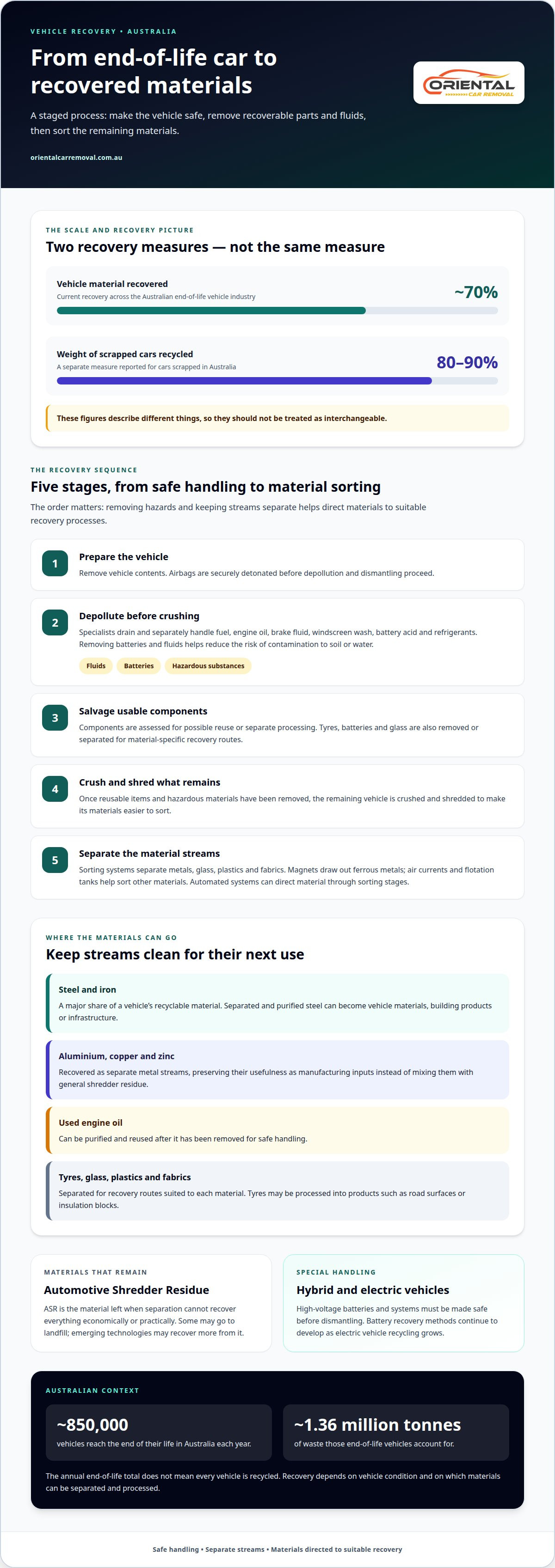
A car’s last trip can keep valuable materials in use. Car recycling means removing reusable components and hazardous fluids, then separating metals and other materials for recovery. In Australia, the end-of-life vehicle industry currently recovers about 70% of vehicle material, and car recycling success depends on handling each part safely and directing it to the right recovery process.

It’s easy to think a written-off or unwanted car is simply crushed and discarded. In practice, recycling can recover parts for reuse, reclaim metals such as steel and aluminium, and remove fluids that could otherwise leak into the environment. This guide explains how the process works, which parts, metals and fluids are recovered, and how recycling can reduce waste and demand for newly mined materials. You’ll also learn what happens to materials that are harder to recycle, and what responsible vehicle recovery can achieve.

Key Takeaways

  • See why removing harmful substances before crushing helps reduce the risk of pollution.
  • Learn which vehicle materials can be separated for recovery, and what may be harder to recycle.
  • Understand how usable components are assessed for possible reuse before the remaining vehicle is processed.
  • Find out how recovering scrap metals can conserve resources and reduce the need for newly mined materials.
  • Explore how the recycling process handles oils and other vehicle fluids, including which materials may be reclaimed.

Environmental benefits of vehicle recycling

Car recycling keeps usable materials out of landfill and reduces the risks created by abandoned vehicles. In Australia, about 850,000 vehicles reach the end of their life each year, accounting for approximately 1.36 million tonnes of waste. Recovering metals, components and other materials can reduce demand for newly mined resources and limit waste that needs disposal.

The process involves removing reusable components and hazardous substances, then separating materials for recovery. Steel and aluminium can return to manufacturing, while tyres may be processed into products such as road surfaces or insulation blocks. Removing batteries and fluids before crushing helps prevent harmful substances from contaminating soil or water. Materials that cannot be recovered may still require disposal.

Australian policy also signals a broader focus on waste recovery. The 2019 Australian Government Waste Action Plan set a target to recover 80% of all waste by 2030, according to the Australian Government Department of Climate Change, Energy, the Environment and Water. A proposed Australian end-of-life vehicle scheme covers passenger vehicles and light commercial vehicles up to 3.5 tonnes. This proposal reflects attention to vehicle waste, but it should not be mistaken for a recycling rate or a rule requiring every vehicle to be recycled.

Hybrid and electric vehicles need a different safety approach during decommissioning. Their high-voltage battery and other high-voltage systems must be made safe before dismantling. Electric vehicle recycling is relatively new to the scrap industry, and battery recovery methods continue to develop. As more electric vehicles reach the end of their useful lives, safe handling and effective battery recovery will become increasingly important to the sector.

To choose a car recycler or auto wrecker in Australia, look for a licensed, transparent operator that uses safe, environmentally conscious methods. Clear information about fluid removal, battery handling and material recovery helps you understand how the vehicle will be processed.

Car recycling in Australia involves depolluting the vehicle, salvaging usable components, crushing what remains and separating materials for recovery. Around 80-90% of the weight of cars scrapped in Australia is recycled, while the end-of-life vehicle industry currently recovers about 70% of vehicle material. These figures describe different measures, so they should not be treated as interchangeable.

About 850,000 vehicles reach the end of their life in Australia each year, but that figure does not mean every one is recycled. The share recovered depends on the vehicle’s condition and the materials that can be separated and processed. For readers, the environmental benefit comes from keeping recoverable metals and parts in use, while safely managing materials that could cause pollution.

Materials recovered from end-of-life vehicles

Recovery starts by making the vehicle safe, then separating components and materials into usable streams. The order matters because fluids, mixed materials and contamination can affect what is recovered.

Dismantling and shredding vehicles

Dismantling removes contents, reusable components and hazardous materials before the remaining vehicle is crushed and shredded. This staged process keeps recoverable items separate and makes the remaining material easier to sort. Before depollution, vehicle contents are removed and airbags are securely detonated. Specialists then drain fluids and remove components for reuse or separate processing.

Sorting and separating recovered materials

Sorting separates shredded material into streams such as metals, glass, plastics and fabrics. Magnets draw out ferrous metals, while air currents and flotation tanks help separate other materials. Automated systems can direct material through sorting stages. Cleaner, distinct streams are easier to send to suitable recycling processes, while mixed material can be harder to recover.

Steel and iron make up a major share of a vehicle’s recyclable material. Once separated and purified, recovered steel can become vehicle materials, building products or infrastructure. Aluminium, copper and zinc can also be recovered as separate metal streams. Keeping these metals apart preserves their usefulness as manufacturing inputs instead of leaving them mixed with general shredder residue. A key measure of car recycling success is how well each stream is kept clean for its next use.

Depollution happens before crushing. Specialists remove fuel, engine oil, brake fluid, windscreen wash, battery acid and refrigerants for safe handling and storage. These materials need separate treatment because leaks can contaminate land or water. Used engine oil can be purified and reused. Tyres, batteries and glass are also removed or separated, with each following a recovery route suited to its material.

After shredding, the remaining mix can include plastics, glass, fabrics and small metal fragments. Magnets, air currents and flotation tanks help recover useful portions. Automotive Shredder Residue, or ASR, is material left when separation cannot recover everything economically or practically. Some residue may go to landfill, while emerging technologies may recover more from it. This sorting supports car recycling success by directing recovered materials to a suitable next stage.

The process works best when each material is directed to the right next stage. An unwanted vehicle can contain recoverable metal alongside fluids and residue that need separate handling. For a vehicle ready to leave the road, scrap car removal can be a practical starting point for its recovery journey.

More than 25 million tons of material are recycled from old vehicles each year. More than 14 million tons of recycled steel are derived from junk vehicles each year. Recovered car steel and aluminium can be reused in new vehicles and construction materials.

Car battery recycling can recover near 100% of materials for making new batteries. Car recycling specialists drain vehicle fluids and disassemble cars into recyclable sections before purifying metals for reuse. Automotive Shredder Residue contains materials difficult or expensive to recycle and may go to landfill or be processed with emerging technologies.

Dismantling and resale of reusable parts

Before a vehicle is crushed, dismantlers assess whether its components can be reused. This keeps serviceable parts in circulation and separates them from material destined for metal recycling. A damaged vehicle may still contain a working transmission, intact wheels or usable electronic components. The condition of each item matters more than the vehicle’s overall appearance.

Reusable parts commonly include engines, transmissions, tyres and catalytic converters. Dismantlers remove and clean these components, then test their function before resale. A part that works correctly and shows limited wear may suit another vehicle. An item that is cracked, badly corroded or damaged in a collision may instead be directed to material recovery.

Testing helps distinguish parts suitable for reuse from those that need further processing. For example, an engine can be inspected for visible damage and operational condition, while a transmission needs assessment as a separate component. Tyres are judged by their condition, and catalytic converters are removed for their recoverable materials. The inspection determines the next step for each part.

Compatibility also matters to the person buying a reused component. Vehicle make, model, year and part specifications can affect whether a component fits and functions as intended. Recyclers identify and sort parts so buyers can match them to their vehicles. Reuse can extend a component’s service life and avoid the energy and materials involved in producing a replacement from new resources.

Recycled auto parts can cost less than comparable new parts, but the difference varies with the component’s condition, demand and availability. A clean, tested component in strong demand may retain more value than a damaged or uncommon item. Buyers should also consider the part’s age, wear and suitability for the intended vehicle.

Scrap car prices in Australia depend on the vehicle’s condition, weight, recoverable materials and reusable components. Demand for those materials and the work needed to recover them also shape its value. A complete vehicle with components suitable for reuse can have a different recovery value from one with extensive damage or missing parts.

Salvaging parts before shredding also reduces the chance that usable components will be damaged in later processing. Once dismantlers remove selected items, the remaining shell can be prepared for metal recovery. Components that cannot be reused still contribute materials such as steel, aluminium or copper. The process therefore separates value by use: functioning parts may be resold, while unsuitable parts enter material recycling.

For vehicle owners, this process explains why a car’s condition and completeness matter during assessment. Age alone does not determine whether its parts can be reused. The most useful indicators are the condition of specific components and whether they can be identified, tested and matched to another vehicle.

Car Recycling: Which Parts, Metals and Fluids Are Recovered

Environmental benefits of scrap metal recycling

Recovering metal from end-of-life vehicles reduces the need to extract fresh ore. Steel, copper and aluminium can be recycled repeatedly without losing strength, making scrap a useful manufacturing input. In Australia, recovered metal is exported, while much advanced reprocessing takes place overseas. The environmental value depends on effective recovery and what happens in the next stages of processing.

Vehicle scrap is not just metal. Shredding and sorting can separate ferrous metals, non-ferrous metals, glass, plastics and rubber into different streams. Steel and iron are ferrous metals because they contain iron, and magnets help recover them from mixed fragments. Copper and aluminium need separate sorting, while glass and plastics require their own processing routes.

Recovered steel can return to vehicle manufacturing or become building materials and infrastructure. Aluminium can also be reused in manufacturing, while copper is valuable in electrical applications. Separating these metals matters because mixed scrap is harder to process into consistent material. Clean, distinct streams give manufacturers suitable feedstock and help keep useful resources in circulation.

Ferrous scrap from vehicles adds to the metal supply available for processing. Recyclers separate steel and iron from other materials, then send the recovered stream for further treatment. This supports manufacturing that uses recycled feedstock instead of relying entirely on newly extracted ore. The amount recovered from each vehicle depends on its material mix and how effectively the scrap is separated.

Recycling metals uses far less energy than producing them from newly mined materials. This advantage comes from avoiding some energy-intensive stages, including mining, transporting ore and processing it into usable metal. Recovered steel, for example, can be processed as scrap instead of starting with newly extracted iron ore. Energy demand still varies according to the metal and recycling process.

Non-metal recovery matters too. Glass can be separated for specialist recycling, while vehicle plastics may be sorted by material type. Tyres contain rubber that can be processed into products such as road surfaces or insulation blocks. These routes reduce the volume of vehicle material sent for disposal, although mixed shredder residue can still contain materials that are difficult or uneconomic to recover.

For Australian vehicle owners, metal recovery is part of a wider processing chain. A locally dismantled vehicle may produce scrap that is transported for further treatment before entering manufacturing. Transport and processing are part of that chain, alongside the resource savings from recovering metal. Effective separation helps direct each stream to a suitable next use and limits useful material left in mixed residue.

Hazardous fluids and oils reclaimed

Fluids are removed before an end-of-life vehicle is crushed because leaks can contaminate surrounding land and water. Fuel, engine oil, brake fluid and windscreen wash each need to be drained and kept separate. This depollution stage protects other vehicle materials from fluid contamination and prepares the shell for further processing.

Engine oil is one fluid with a potential recovery route. Dirty engine oil can be purified and reused rather than discarded with the vehicle. Keeping it separate from fuel, water and other fluids helps maintain its suitability for treatment. The oil’s condition and contamination affect the processing needed before reuse.

Fuel also needs careful removal. A damaged tank or vehicle can leave fuel where it shouldn’t be, creating a spill risk during dismantling and transport. Removing fuel before crushing helps prevent leaks and keeps it out of metal, plastics and other material streams. Fuel is stored separately for suitable handling rather than mixed with recoverable scrap.

Brake fluid and windscreen wash are removed as part of the same depollution work. Although they serve different purposes inside a vehicle, both can spread if containers or lines are damaged during dismantling. Separate collection prevents these fluids from soaking into the vehicle shell or mixing with oil. It also keeps liquid waste distinct from parts and scrap metal.

Battery acid needs separate attention because car batteries contain lead and sulphuric acid. If a battery goes to landfill or is damaged during processing, these substances can pollute land. Removing it before crushing helps control that risk and allows it to follow a battery recovery route. Hybrid and electric vehicles add another consideration: their high-voltage batteries and systems must be made safe before dismantling.

Refrigerants are also removed before the vehicle shell is processed. They are held in safe storage rather than released during dismantling. This matters because a damaged air-conditioning system can release refrigerant as the vehicle is taken apart. Separating it early keeps its removal distinct from crushing and metal recovery.

Effective fluid recovery depends on sequence and separation. First, specialists identify and drain the vehicle’s fuel, oils and other liquids. They keep each material separate, then direct it to appropriate storage, treatment or reuse. A spill or mixed collection can complicate processing and contaminate other recoverable materials, such as steel or plastics.

For an unwanted vehicle, proper depollution is a key part of responsible scrap car removal. It helps ensure fluids are managed before the vehicle moves on to crushing and material recovery.

Oriental Car Removal

Oriental Car Removal helps owners move unwanted vehicles on when keeping or repairing them no longer makes sense. It buys cars, trucks, 4WDs and vans, and offers Cash for Cars, Cash for Trucks, Cash for 4WDs and Vans, and Free Car Removal. The team handles towing, paperwork and disposal, helping simplify the handover before the vehicle enters its next stage.

This can be a practical option for an unroadworthy, damaged or end-of-life vehicle that you’re ready to part with. You don’t need to manage the removal yourself. Contact Oriental Car Removal to discuss your unwanted vehicle and the next step.

Take the next step with confidence

Choosing what happens to an unwanted vehicle is a practical decision with an environmental impact. If you’ve finished using yours, decide whether you’re ready to arrange its removal or need more time. A clear decision helps you move on without leaving an unused vehicle occupying space or delaying its next stage.

Car recycling success depends on each vehicle entering a suitable recovery process. Your next step can be straightforward: contact Oriental Car Removal to discuss your vehicle and the available way forward. You can raise whether it’s a car or truck and explain its current condition, so the conversation can focus on your situation.

There’s no need to overcomplicate the decision. Choose a next step that suits your plans, then put the vehicle behind you with confidence.

Frequently Asked Questions

What Is Car Recycling?

Car recycling is the recovery of usable components and materials from a vehicle that’s no longer wanted or roadworthy. For example, a dismantler may remove a working engine or transmission before sending the remaining shell for metal recovery. Fluids and batteries are handled separately. The aim is to keep suitable parts and materials in use rather than treating the entire vehicle as rubbish.

What percentage of a car can be recycled or recovered?

Around 80-90% of the weight of cars scrapped in Australia is recycled. This figure describes vehicle weight, not the proportion of every individual car that will be recovered. The outcome depends on what can be separated and processed, including metals, tyres, glass and reusable components. Materials that are difficult to recover may remain as shredder residue and require disposal or further processing.

How much can you get for a scrap car in Australia?

There’s no single amount for every scrap car. Its value depends on factors such as the vehicle’s weight, condition, recoverable metals and components that can be salvaged. A complete vehicle with reusable parts may be assessed differently from one that’s badly damaged or missing components. Oriental Car Removal offers cash for unwanted vehicles; the amount depends on the vehicle being assessed.

How do I recycle or dispose of an old car in Australia?

Start by deciding whether the vehicle is ready to leave your ownership, then arrange removal through a vehicle recycling service. Remove personal belongings and any items you need to keep before collection. The vehicle can then be assessed, depolluted and processed for reusable components and materials. In Perth, Oriental Car Removal provides free vehicle removal for owners ready to move on from an unwanted car.

What environmental benefits and risks are associated with car recycling?

Recycling can conserve resources by returning metals to manufacturing and reducing demand for newly mined ore. It also keeps some vehicle waste out of landfill. Risks arise if oil, fuel, battery acid or refrigerants leak during handling, or if tyres are dumped or burned. Proper depollution and separation help control these hazards, while unrecoverable shredder residue may still need disposal.

Ford wreckers in Rockingham: pickup payment and paperwork

Ford wreckers in Rockingham: pickup payment and paperwork

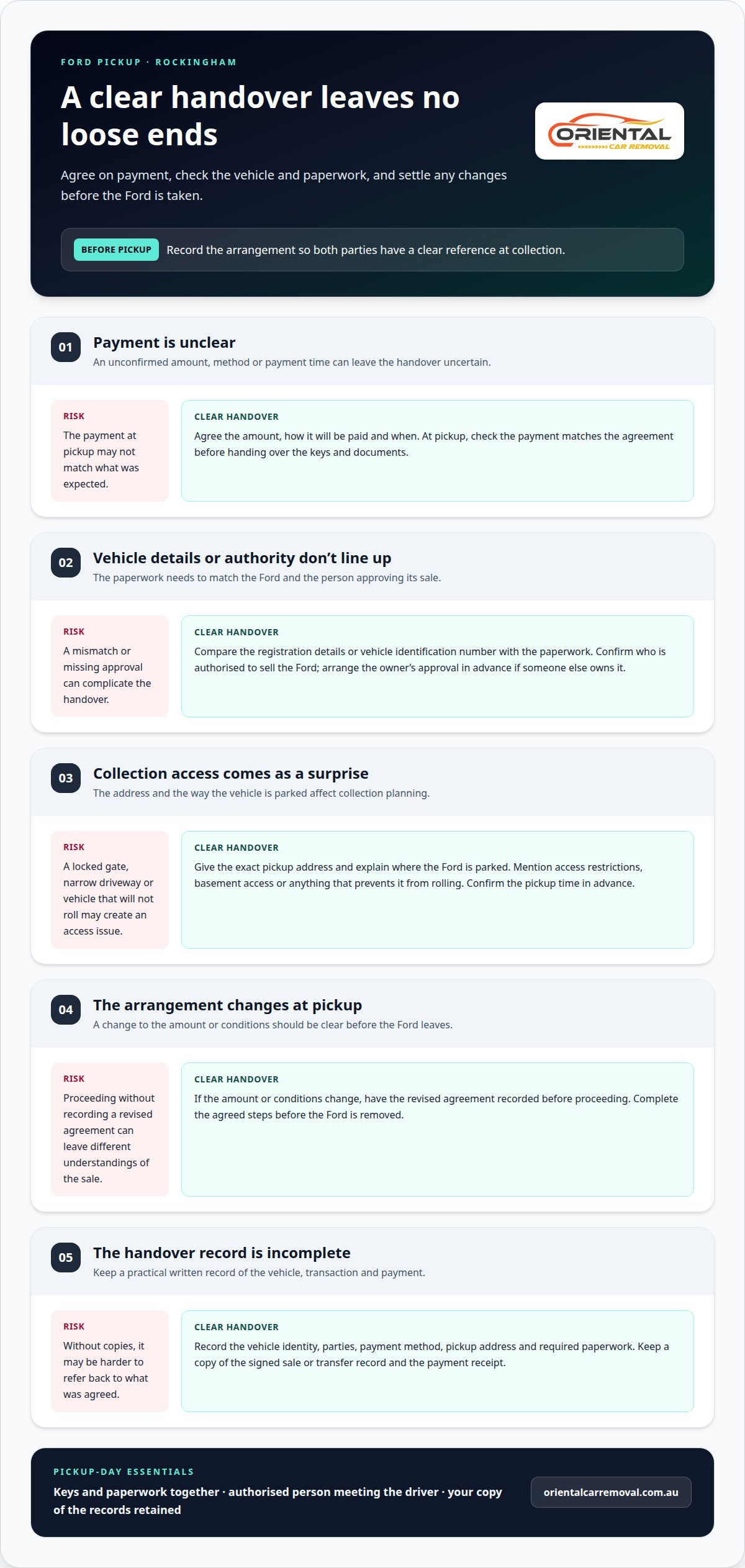
The pickup should leave no loose ends: agree on payment, confirm how it will be made, and complete the vehicle paperwork before the Ford is taken. Ford wreckers in Rockingham can handle vehicles for dismantling, but the collection details depend on the vehicle and the arrangement you make.

It’s sensible to know what happens to the vehicle and what you’ll need to provide before collection day. This guide explains how wrecking and dismantling work in East Rockingham, what licensing means in this context, and how to keep payment and paperwork clear at pickup.

If you’re deciding whether to sell a damaged, unwanted or end-of-life Ford, start with the practical details. Know what to discuss before collection, which vehicle information to have ready and how to avoid confusion during handover.

Key Takeaways

  • Agree on the payment method and amount before pickup, then make sure the paperwork matches the vehicle and handover.
  • Consider the Ford’s condition, access for collection and dismantling needs when arranging a wrecking service in East Rockingham.
  • Understand what licensing covers and why it matters when a vehicle is accepted for wrecking.
  • Have the vehicle details and ownership paperwork ready to help the pickup process run smoothly.
  • Use the location and contact details section to plan your next step for a Ford in the Rockingham area.

Payment and paperwork at pickup

For a damaged Ford in Western Australia, agree on the sale and handover details before collection. Record the vehicle’s identity, agreed payment method, pickup address and paperwork required. This gives both parties a clear reference when the vehicle is collected.

Before the Ford leaves, compare the written details with the vehicle being collected. Check its registration details or vehicle identification number against the paperwork, and confirm who is authorised to sell it. If someone else owns the vehicle, arrange their approval in advance. Keep a copy of the signed sale or transfer record and payment receipt.

Agree on the payment process before the tow truck arrives. Confirm the amount, how it will be paid and when. At pickup, check that payment matches the agreement before handing over the keys and documents. If the amount or conditions change, have the revised agreement recorded before proceeding.

For a pickup in Rockingham, give the wrecker the exact address and explain where the Ford is parked. Mention any locked gate, narrow driveway, basement access or issue that prevents the vehicle from rolling. These details help plan collection and avoid surprises when the truck arrives. Keep the keys and paperwork together, and make sure the person meeting the driver is authorised to approve the handover.

To ask about a Ford part from a Rockingham wrecker, provide the model, year, variant and part name. A photo, vehicle identification number or part number can help identify the correct item. Describe any known damage and ask about the part’s condition, compatibility, collection arrangements and return terms before buying.

Used Ford parts may show wear, have hidden damage or fail to match a different model variant. Check connector shapes, mounting points and part numbers against your vehicle’s requirements. Ask for clear photos of the specific part, not just a general image, and confirm any testing details and return terms in writing before payment. Similar-looking parts may still fail to fit or work correctly.

Keep the paperwork practical: identify the Ford, name the parties, record the agreed transaction and retain proof of payment. For a vehicle that is actually a 4WD, the separate 4WD wrecking service details cover that vehicle category. At pickup, complete the agreed steps before the Ford is removed, and keep your copy of the records.

Car wrecking services in East Rockingham

Ford wrecking around Rockingham may involve collection, assessment and dismantling, depending on the vehicle’s condition and what happens after the sale. Collection times vary, so agree on a pickup time in advance rather than assuming every wrecker follows the same schedule.

Comparing nearby Ford wreckers

When comparing Rockingham wreckers with operators in nearby Perth suburbs, look at the whole pickup arrangement, not just the suburb name. Ask whether the vehicle can be collected from your address, what access the tow truck needs and how the Ford’s condition affects collection. A car in a tight driveway may need different planning from one parked in an open area.

Location affects the practical arrangements. A wrecker based in another Perth suburb may collect in Rockingham, but the route and timing need to work for the pickup. Compare the proposed collection window, vehicle assessment and paperwork process. Give each operator the same vehicle details so you can compare the arrangements fairly.

Wrecker contacts and locations

Before arranging collection, identify the suburb, street access and exact location of the Ford. Say whether it’s at a home, workshop, roadside or storage site. A vehicle behind a locked gate, for example, needs different access arrangements from one in an open driveway. Provide a working contact number for the person meeting the driver.

Use the operator’s published contact channel to discuss collection and ask for the pickup instructions in writing. Confirm the suburb served, the address, the vehicle’s condition and the agreed timing in the same conversation. If the car is in East Rockingham but the owner is elsewhere, nominate who will meet the driver and handle the handover.

Rockingham’s proximity to Kwinana and Baldivis makes precise location details useful when arranging collection. Don’t say only “near Rockingham”: provide the street address and any entry instructions. If the Ford is not at its registered address, mention this early so the operator can plan access and avoid a missed pickup.

For a useful comparison, have the Ford’s model, year, condition and location ready before contacting a wrecker. Say whether it starts, rolls and steers, and describe visible damage, such as a crushed front end or missing wheels. Specific details help establish the collection requirements more clearly than a broad description like “old car”.

Check that the contact details you use belong to the operator you intend to deal with, then keep a record of the agreed pickup plan. For an unwanted Ford, compare the collection details with the vehicle’s condition and access, then review the car removal options available for your situation.

Licensed car wrecking

If a Rockingham Ford wrecker says it’s “licensed,” ask which activity the licence or approval covers. The term alone doesn’t explain whether it relates to the business, the site, vehicle handling or another activity. Ask for the relevant licence details and scope before arranging the handover.

A licence does not necessarily mean every part of a transaction is covered. Ask separately about accepting, transporting and dismantling the vehicle. The operator should identify the business or site named on the document and explain how it relates to the service you’re arranging. Keep the explanation with your sale records.

Use this practical checklist when discussing a Ford wrecking arrangement:

  • Ask for the licence or approval name and the activity it covers.
  • Compare the named business or site with the details on your written agreement.
  • Ask who will collect the Ford and who will receive it at the destination.
  • Record the vehicle details, handover terms and payment arrangement.
  • Keep copies of relevant documents and messages after pickup.

These steps help distinguish a specific document from a general claim. If an operator says a site is approved, ask which site and whether that’s where the Ford will be taken. If collection and dismantling involve different parties, clarify who is responsible at each stage and record their names so the handover is clear.

Check the paperwork against the vehicle. Match the Ford’s registration details or vehicle identification number with the sale record, and confirm the seller’s name is accurate. If a family member or business representative is arranging collection, record their authority to act for the owner. This helps resolve later questions about the vehicle’s identity or ownership.

Licensing questions can also show how clearly an operator explains the process. A useful answer identifies the relevant document, explains its purpose and connects it to your vehicle’s pickup. A vague assurance doesn’t tell you what activity is covered. Ask for details in writing before the Ford leaves your possession.

For a damaged Ford, keep the sale record, payment evidence and any licence details together. Note the collection date and who took custody of the vehicle. If the paperwork names a business or site, check that it matches the details provided when booking. This gives you a clear record of who accepted the vehicle and under what arrangement.

Ford wreckers in Rockingham: pickup payment and paperwork

Vehicle dismantling

Ford wreckers may buy unwanted vehicles for dismantling, including damaged or non-running cars. The sale covers the vehicle as agreed; dismantling happens after collection. A Ford with collision damage, a failed engine or missing panels may still be assessed as a whole vehicle.

Dismantling starts with identifying the vehicle and assessing its condition. The model, year and variant help distinguish parts that may look alike but have different fitment. A door, headlight or engine component, for example, can vary between Ford models. Provide accurate vehicle details, especially if the car has been modified.

After assessment, the vehicle is separated into components and materials. These may include the engine, transmission, body panels, wheels and interior fittings. Each component’s condition affects whether it can be reused or whether the vehicle is processed as scrap. Don’t assume a particular part will be recovered or sold separately.

A wrecker’s dismantling process may include these practical stages:

  1. Identify the Ford. Record the model and variant, then match the details to the vehicle.
  2. Assess its condition. Note collision damage, missing parts and whether it starts or rolls.
  3. Separate components. Parts and materials are sorted according to their condition and intended handling.
  4. Process the remaining vehicle. The shell and other materials move through the operator’s disposal process.

Describe the damage with specific examples rather than simply saying “damaged”. A Ford Focus with a crushed front end presents different details from a Ranger with a failed engine. Mention whether airbags have deployed, glass is broken or wheels are missing. These observations help the operator understand the vehicle’s condition before collection.

You don’t need to dismantle a Ford before arranging a sale. Keep the vehicle intact until the agreed pickup and leave dismantling to the wrecking process. Removing the battery, wheels or other parts can change its condition and assessment. If anything has already been removed, list it clearly before agreeing to the sale.

Ask what will happen to the vehicle after handover, and keep the answer with your sale records. Distinguish between selling a whole vehicle and looking for individual Ford parts. A wrecker may buy an unwanted car for dismantling without having the specific component you need. Be clear whether you’re selling a complete vehicle or seeking a part such as a mirror or alternator.

Before collection, confirm that the Ford described in the agreement matches the vehicle on site. Record any major changes, such as a removed engine or damaged wheels. Clear details help align the assessment, handover and dismantling plan without requiring you to take the vehicle apart.

Ford wreckers in Rockingham WA contact details and locations

For a Ford pickup in Rockingham, use the operator’s official contact channel and give the exact collection address. Distinguish East Rockingham from nearby suburbs such as Waikiki, Safety Bay, Baldivis and Kwinana. A suburb name alone may not identify a driveway, workshop or roadside location clearly enough to plan collection.

Prepare the vehicle details before calling or submitting an enquiry. Include the Ford’s model, year, variant and condition, and whether it starts, rolls and steers. Then provide the pickup suburb, street address and access notes. Mention a locked gate, steep driveway or car parked behind another vehicle.

Ask about the details that shape the pickup plan, then record the answers with your booking information. Confirm the address, agreed date and time, who will meet the driver and which documents to have ready. If the Ford is at a repairer or storage site, make sure the person there knows about the handover.

Use a location checklist before confirming:

  • Write the full street address and suburb, not just “Rockingham”.
  • Describe driveway access, gates, parking limits or other obstacles.
  • State whether the Ford is at home, a workshop or another site.
  • Provide the name and contact number of the person meeting the driver.
  • Keep the agreed pickup details with your vehicle paperwork.

Accurate details matter when the Ford won’t run. A car that can’t steer may need different loading arrangements from one that starts and moves. Tell the operator about missing wheels, collision damage or blocked access before arranging collection. This helps avoid a mismatch between the vehicle described and the one at the pickup address.

Check that your confirmation refers to the correct suburb and vehicle. If the Ford is in East Rockingham but the owner lives elsewhere, state both locations clearly. If the pickup address changes, update the arrangement before collection. Keep any written confirmation accessible, especially when another person will meet the driver or provide the vehicle documents.

Use the official contact channel to discuss a Rockingham vehicle pickup and provide the location details directly. Clear information about the suburb, access and vehicle gives Oriental Car Removal a practical basis for arranging collection. Keep the agreed details together so the person at the address can follow the same plan.

Oriental Car Removal: Cash for Cars

Oriental Car Removal offers Cash for Cars to owners ready to sell an unwanted Ford rather than arrange dismantling themselves. Free Car Removal includes complimentary towing for damaged or non-running vehicles. Share the Ford’s model, condition and pickup location when arranging the sale, so the vehicle and collection details are clear from the start.

This option suits Rockingham owners who want to hand over a complete unwanted car and arrange its removal. Oriental Car Removal also offers Cash for Trucks and Cash for 4WDs and Vans, for those vehicle types. For a Ford car, keep the focus on its condition, location and agreed pickup paperwork.

Contact Oriental Car Removal to discuss selling your Ford and arranging collection.

Make the next step straightforward

Choosing Ford wreckers in Rockingham also means deciding how much of the handover you want handled for you. If you’re ready to sell, prepare the vehicle details and discuss collection. That gives you a practical starting point whether the Ford is damaged, unwanted or no longer running.

Oriental Car Removal offers Cash for Cars and Free Car Removal, and buys trucks through its Cash for Trucks service. Share the vehicle type and pickup location when you get in touch, so the next step can focus on your situation.

Make the handover arrangements clear, then move forward when you’re ready.

A clear plan can make it easier to let go of an unwanted Ford.