
Eco Friendly Car Wreckers: What Happens to an End of Life Car

Eco Friendly Car Wreckers: What Happens to an End of Life Car

An unwanted car doesn’t have to become landfill. Eco friendly car wreckers in Success dismantle end-of-life vehicles, recover reusable parts and recyclable materials, and handle hazardous fluids through controlled processes. That gives an old car a more responsible next step than leaving it unused or disposing of it improperly.

It’s understandable to wonder what happens after a wrecker collects a vehicle, especially if it no longer runs or needs costly repairs. Responsible dismantling separates reusable components from recyclable materials and manages fluids, fuel and batteries carefully.

This guide explains how vehicle recycling works, how wreckers handle hazardous materials and reduce landfill waste, and what to consider when selling an unwanted car. It also covers how a vehicle’s condition and collection arrangements affect the process, helping you make an informed decision.

Key Takeaways

  • Auto recycling separates reusable components and recyclable materials from an end-of-life vehicle, while fluids and other hazardous items need controlled handling.
  • Careful dismantling helps recover valuable materials and reduce the amount of vehicle waste sent to landfill.
  • A vehicle’s condition, salvageable components and removal arrangements can shape the process of selling it to a wrecker.
  • Understand the removal and payment arrangements before agreeing to sell, so you know what to expect when your unwanted vehicle is collected.
  • If you have an unwanted car, truck, 4WD or van in Perth, Oriental Car Removal offers cash for these vehicles and free car removal.

What is Auto Recycling?

Auto recycling involves dismantling an end-of-life vehicle to recover usable components and materials. In Western Australia, this can keep vehicle waste out of landfill and return metals to manufacturing.

Reusable Vehicle Components

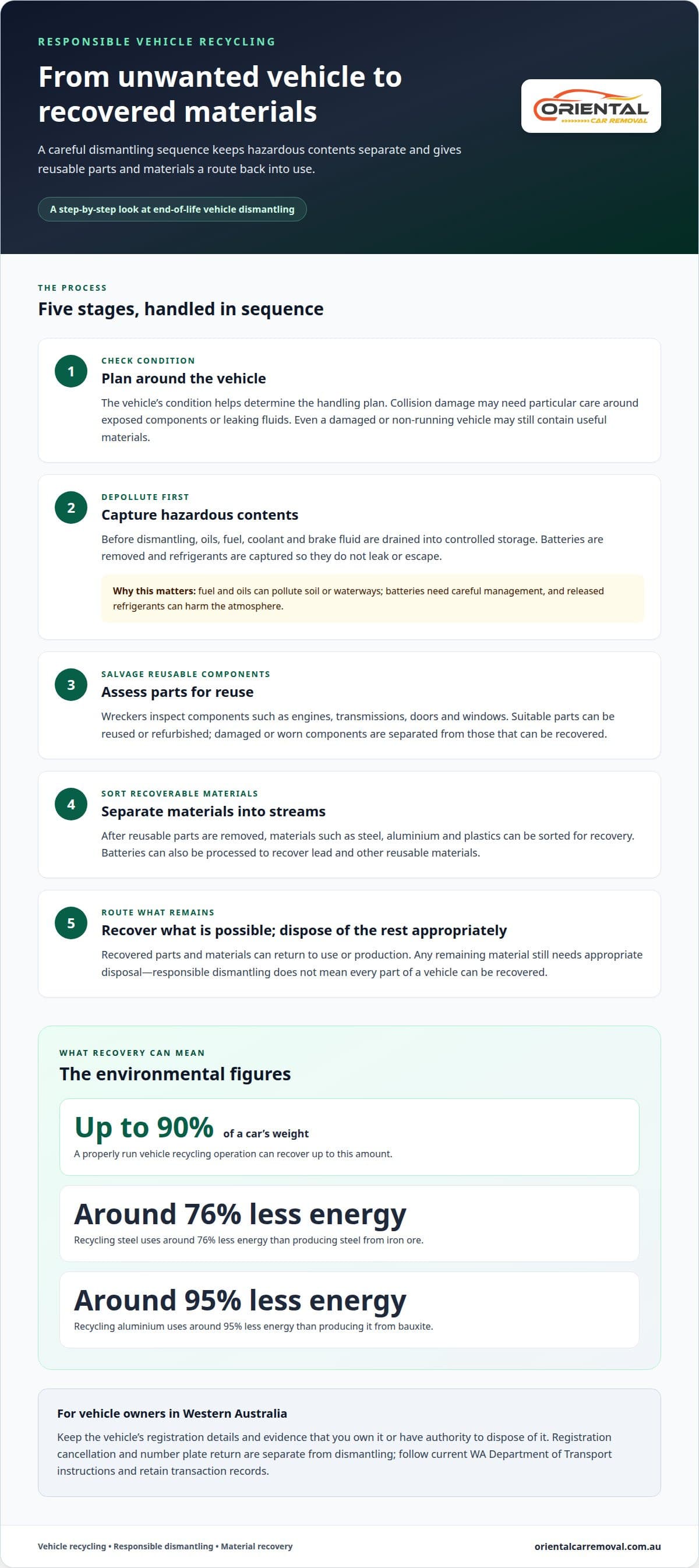
Reusable vehicle components are parts removed from a car and assessed for reuse or refurbishment. Wreckers inspect items such as engines, transmissions, doors and windows, separating suitable parts from damaged or worn components. Reusing working parts can reduce demand for newly manufactured materials and help conserve resources.

After removing reusable parts, recyclers sort the remaining vehicle materials. Steel and aluminium can enter recycling streams, while fluids need controlled handling to prevent leaks. For example, batteries can be processed to recover lead and other reusable materials. Separating these materials helps recover value from different parts of the vehicle.

End-of-Life Recycling in Western Australia

End-of-life vehicle recycling in Western Australia means dismantling an unwanted car and routing reusable components and materials for recovery. Tens of thousands of vehicles reach the end of their life across the state each year. For owners, keeping the paperwork and ownership details together helps make the transfer and disposal process clearer.

Keep the vehicle’s registration details and evidence that you own it or have authority to dispose of it. Registration cancellation and number plate return are separate from dismantling, so follow the current instructions from the WA Department of Transport and retain transaction records. The documents and steps depend on the vehicle and the owner’s circumstances.

Eco-friendly car wreckers in Success dismantle vehicles carefully, recover reusable parts and recyclable metals, and manage fluids through controlled processes. To identify a responsible option, focus on how it handles each stage rather than relying on the word “green” alone.

Environmental Benefits of Vehicle Recycling

Sustainable dismantling reduces waste and can lower the need to mine and process virgin materials. Recycling steel uses around 76% less energy than producing steel from iron ore, while recycling aluminium uses around 95% less energy than producing it from bauxite. Recovered metals can therefore return to production with less energy-intensive processing.

A properly run vehicle recycling operation can recover up to 90% of a car’s weight. The remaining material still needs appropriate disposal. A responsible process also keeps oils, fuels and heavy metals out of the environment by directing them to controlled processing systems. For owners of 4WDs, 4WD wreckers are one relevant part of the vehicle recycling chain.

Choosing responsible disposal matters because abandoned or improperly handled vehicles can leave materials and fluids unmanaged. In Western Australia, recycling supports material recovery from end-of-life vehicles and reduces the amount of vehicle waste sent to landfill.

Safe dismantling and disposal of end-of-life vehicles

Safe vehicle dismantling separates reusable components, recyclable materials and hazardous contents, with appropriate handling for each.

Vehicle Depollution and Fluid Handling

Vehicle depollution removes hazardous materials before dismantling, helping prevent leaks and environmental contamination. Dismantlers drain oils, fuel, coolant and brake fluid into controlled storage rather than leaving them in the vehicle. They also remove batteries and capture refrigerants, which can escape if air-conditioning systems are opened carelessly. Keeping these materials separate allows them to be managed through appropriate processing or disposal channels.

After depollution, dismantlers work through the vehicle in a planned sequence. They identify components for salvage, then separate metals and other recyclable materials. A damaged vehicle may still contain reusable doors, windows or transmission components, while its fluids and battery need separate handling. This order reduces the risk of spills and keeps recoverable items separate from hazardous contents.

Fuel and oils can pollute soil or waterways if they leak. Batteries also contain materials that need careful management. Refrigerants must be captured because releasing these gases can harm the atmosphere. Responsible handling means collecting these substances instead of pouring them away, leaving them in the vehicle or allowing them to escape during dismantling.

Responsible Disposal of Old Vehicles

Responsible disposal sends an unwanted vehicle for dismantling and material recovery instead of abandonment or improper disposal. An old car can contain both salvageable components and hazardous contents. Even a damaged or non-running vehicle may have useful materials, so its condition alone doesn’t determine whether recovery is possible.

Wrecking can also recover economic value from a vehicle that’s no longer suitable for regular use. Reusable parts can return to use, while recovered metals can become inputs for new products. Owners can sell an unwanted vehicle directly to a wrecker without spending money on advertising or repairs. The vehicle’s condition and salvageable components determine what can be recovered.

For a vehicle beyond repair, responsible removal avoids leaving it to deteriorate on private land or in an unmanaged location. A wrecker can collect it for dismantling, separating parts, metals and hazardous contents. This connects disposal with recovery rather than treating the whole car as rubbish.

Before a vehicle is dismantled, its condition helps determine the handling plan. A car with collision damage may need particular care around exposed components or leaking fluids. An intact scrap vehicle presents different dismantling tasks, but still requires depollution before materials are separated. Explore responsible vehicle removal when an unwanted car needs a clear next step.

Reducing landfill waste

Vehicle recycling reduces landfill waste by separating materials that can return to use from those that need disposal. Steel, aluminium and plastics can be sorted into distinct recovery streams. This matters because some materials used to build cars can take decades or even centuries to break down naturally.

The process starts with dismantling, not crushing the whole vehicle as mixed waste. Reusable components are removed first, then metal and plastic materials are separated for recycling. This helps keep recoverable material out of landfill. Even a damaged car that can no longer be driven may contain materials suitable for recovery.

Sorting matters because different materials need different next steps. Metal can be processed as recycled feedstock, while vehicle plastics need to be separated from mixed waste before recovery. Fluids and other hazardous contents also require controlled handling so they don’t contaminate materials intended for recycling. Keeping each stream distinct makes it easier to direct it to appropriate processing.

Recycling also reduces demand for virgin materials. When recovered metals become manufacturing inputs, producers need less newly mined material. This can reduce pressure on mining and the energy used to extract and process raw resources. The benefit depends on successful recovery: material left mixed with waste cannot readily serve as manufacturing feedstock.

There’s also a supply-chain benefit. Producing new steel and aluminium requires mining, processing and transport, while recycling recovered metals uses less energy and creates fewer greenhouse gases than producing new metals. Recycling doesn’t remove every environmental impact, but it can reduce the need for energy-intensive stages in the materials supply chain.

A vehicle’s condition doesn’t determine whether recycling can help. A damaged vehicle may still have recoverable metal or plastic, even if some parts aren’t suitable for reuse. Proper dismantling separates those materials from waste and hazardous contents, supporting safer handling and reducing the amount sent to landfill.

Recycling works best when a vehicle reaches a facility that can dismantle it and sort its materials. Abandoning an old car leaves its components and contents outside the recovery process. Responsible dismantling gives salvageable materials a route back into manufacturing and keeps more vehicle waste out of landfill.

Owners can also look for reuse opportunities before assuming a replacement part must be new. The page recommends checking whether a Perth car wrecker sells recycled parts, which can reduce the need to buy new parts. This connects dismantling with another form of recovery: components that remain usable can be directed back into use rather than treated as waste. It complements material recycling, where metals and plastics are sorted for processing.

Looking for recycled parts keeps the focus on a vehicle as a source of useful components as well as raw materials. Choosing recycled parts can reduce the need for new replacements. It doesn’t replace careful dismantling or sorting, but extends recovery beyond raw materials and helps keep usable items in circulation.
Eco Friendly Car Wreckers: What Happens to an End of Life Car

Safe disposal of hazardous automotive materials

An end-of-life vehicle can contain fluids and components that need separate handling before disposal. Oils, fuel, coolant, brake fluid, batteries and refrigerants each require a suitable route. Careful separation helps prevent leaks, pollution and contamination of materials intended for recycling. Owners reduce risk by arranging responsible disposal rather than leaving a damaged car or attempting to drain hazardous contents themselves.

During depollution, dismantlers remove fluids before taking apart major components. They drain oils, fuel, coolant and brake fluid into suitable containers for controlled processing or disposal. Keeping each fluid separate matters because mixing different wastes can complicate later handling. Collision damage or visible leaks also affect how dismantlers approach a vehicle safely.

Refrigerants need particular care. Dismantlers capture them from air-conditioning systems rather than releasing them into the air. Batteries are removed separately and can be recycled to recover lead and other reusable materials. These steps keep hazardous contents out of general waste and allow each item to follow an appropriate processing route.

Not every component can be reused or recycled. After salvageable parts and recoverable materials are separated, non-reusable materials still need responsible disposal through appropriate channels. Dismantlers sort the vehicle instead of treating it as one mass of rubbish. This helps distinguish recyclable metals from contaminated or unusable material and reduces the chance of hazardous waste entering the wrong stream.

Owners can support safer disposal by choosing a vehicle recovery route that includes dismantling, fluid handling and material separation. Don’t pour automotive fluids onto the ground, into a drain or into household rubbish. A vehicle left to deteriorate can leak oil or fuel, while a damaged battery may also need careful handling. Professional removal gives the vehicle a route into controlled processing.

For example, a battery can be directed to recycling, used oil to controlled processing, and refrigerant captured before dismantling continues. A reusable component can be salvaged, while an unserviceable part follows an appropriate disposal route. Each decision depends on the material’s condition and whether it can be recovered safely.

Responsible disposal protects people and the environment by managing hazardous contents from collection through dismantling. It also supports recycling by preventing fluids from contaminating metals and other materials. If you have a scrap or damaged vehicle, arrange responsible recovery rather than attempting to drain hazardous fluids at home.

Selling unwanted cars to wreckers

Selling an unwanted car to a wrecker gives it a path into dismantling, salvage and material recovery. It doesn’t need to be roadworthy: a damaged car may still contain usable parts, metals or plastics. Describe its condition accurately so collection and handling can be planned for its actual state.

Oriental Car Removal provides free car removal in Perth, including Success. Free removal can simplify things when a car won’t start, has collision damage or can’t be driven safely.

To arrange eco-friendly car wrecking in Success, share the vehicle’s location, make and model, and a clear description of its condition. Mention issues such as a missing engine, flat tyres, collision damage or visible fluid leaks. These details help plan collection. After arrangements are made, the vehicle is collected for dismantling and material recovery.

Before handing over a car, remove personal belongings from the cabin, boot and glovebox. Gather available registration and ownership details to support a clear handover. If the vehicle has been in an accident, mention any damage that could affect access or loading. These details help avoid delays and surprises during collection.

A vehicle’s value depends on factors such as its condition, model and recoverable components. An intact engine or usable panels may have salvage value, while a severely damaged vehicle may mainly contribute recyclable metals. Plastics can also be separated where recovery is suitable. A wrecker assesses the vehicle as a whole rather than assuming every old car has the same value.

Responsible wrecking also depends on what happens after collection. The vehicle should be dismantled so usable auto parts can be identified, materials sorted and hazardous contents managed separately. Environmental practices and applicable regulations matter because careless handling can cause pollution or send recoverable material to landfill. A clear explanation of the recycling process helps you understand what happens to the car next.

Selling directly to a wrecker can spare owners the effort of advertising a damaged or unwanted vehicle and arranging repairs before a sale. Describe the car’s condition clearly and agree on collection and payment arrangements before transfer. That gives everyone a shared understanding of the vehicle and next steps.

In Perth, using local car wreckers supports local businesses and creates recycling jobs. Compare quotes, ask about fees, check reviews, and check environmental policies, practices and certifications. Many car wreckers offer vehicle pick-up services.

Oriental Car Removal

Oriental Car Removal helps Perth owners move unwanted vehicles on through removal and disposal. If your car is no longer roadworthy or worth keeping, its Cash for Cars and Free Car Removal services offer a straightforward next step. The business also handles unwanted trucks, 4WDs and vans, so you can discuss the vehicle type and condition as part of arranging removal.

Once collected, the vehicle can proceed to disposal rather than remain unused on your property. Share its location and condition when arranging the next step, especially if it’s damaged or doesn’t run. This helps clarify the collection arrangements and what happens next.

For an unwanted vehicle that’s ready to go, contact Oriental Car Removal to discuss removal.

Choose a practical next step for your vehicle

Choosing eco-friendly car wreckers in Success is about more than moving an old vehicle. Decide whether it’s ready for removal, then share a clear description of its condition and location. This helps make the handover straightforward.

Oriental Car Removal offers Cash for Cars, Free Car Removal and Cash for Trucks. If you’re ready to move on an unwanted vehicle, discuss its condition and the next step with the team.

Before getting in touch, note the vehicle’s make, model and location. Mention known damage, missing parts or whether it starts. These details make the collection discussion more useful from the outset.

An old or damaged vehicle doesn’t need to sit unused while you decide what to do. Choose a practical route that suits your situation and move forward when you’re ready.

A clear next step can make letting go of an unwanted vehicle much easier.

Frequently Asked Questions

Got an Old Car Sitting Around?

If your old car is taking up space, arrange removal instead of leaving it unused. Note its location, make, model and condition, including whether it starts or has visible damage. Remove personal belongings before collection and have ownership details ready for the handover. Even a car that won’t run may have recoverable components or materials, so roadworthiness isn’t the only factor.

How do eco-friendly car wreckers dispose of oils, batteries, tyres, and other hazardous materials?

Responsible wreckers separate hazardous items and direct them to appropriate handling or processing streams. Oils and other vehicle fluids are drained into controlled storage, while batteries are removed separately for recovery of lead and reusable materials. Tyres should also be separated from mixed vehicle waste. Refrigerants are captured rather than released during dismantling. Keeping these materials apart helps prevent leaks and contamination, though each item may follow a different disposal route.

What parts and materials can be reused or recycled when wrecking a car in Success?

Eco-friendly car wreckers in Success may recover working components such as engines, transmissions, doors and windows, depending on their condition. Steel and aluminium can be separated for recycling, while batteries can yield lead and other reusable materials. Plastics may also be sorted for suitable processing. A damaged car can still contain recoverable materials, but each component’s condition determines whether it can be reused, refurbished or recycled.

How can I compare car wrecker quotes, recycling practices, and licences in Success?

Compare quotes using the same details about each vehicle’s make, model, condition and location, then review the collection and paperwork arrangements. For recycling practices, look for clear explanations of fluid handling, parts recovery and material separation. Licensing status is another useful comparison point. Oriental Car Removal is a fully licensed and insured WA-based company, and its vehicle recycling process includes fluid removal and metal separation.

Car Recycling in Australia: How Old Cars Become Materials

Car Recycling in Australia: How Old Cars Become Materials

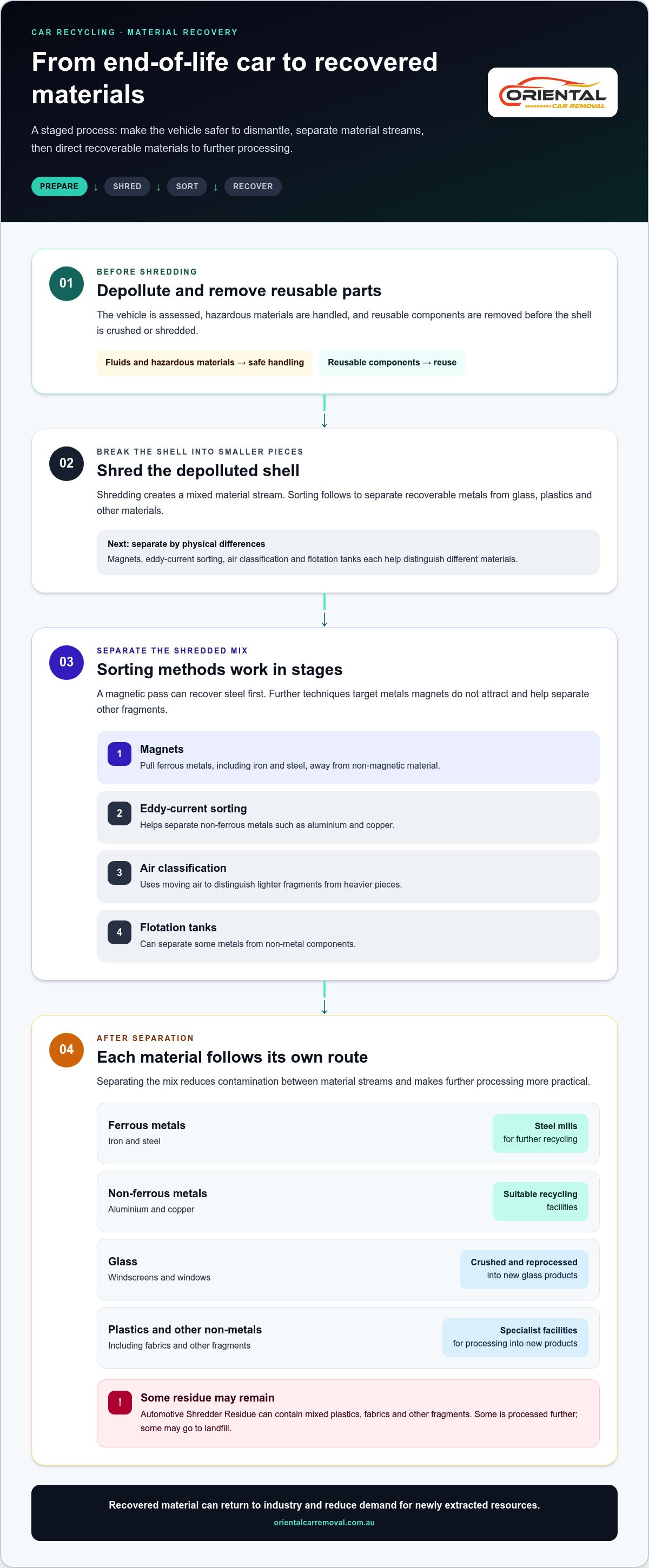
An old car doesn’t go straight from the driveway to the scrap pile. In the car recycling process in Australia, a damaged or non-running vehicle is assessed, depolluted and stripped of reusable parts before its shell is crushed or shredded. Magnets and other sorting methods then separate metals from non-metal materials for further processing.

It’s natural to wonder what happens to the fuel, oil, battery and other materials inside a vehicle after collection. This guide explains how recyclers handle them, which parts may be reused, and how steel, aluminium and other materials are sorted and recovered.

You’ll also learn why depollution comes before crushing, what happens to materials that can’t be recycled, and how recycling can reduce waste and demand for raw materials. Each stage has a purpose, from making the vehicle safer to dismantle to directing recovered materials towards their next use.

Key Takeaways

  • Damaged and non-running vehicles can still enter the recycling process; condition, age and market value help determine how they’re assessed.
  • Depollution comes before crushing: fluids, batteries and other hazardous materials are removed for safe handling.
  • After shredding, magnets and other sorting methods separate metals from plastics, glass and other materials.
  • Recovered steel, aluminium and copper can be sent for further recycling, while some leftover material may require disposal.
  • The International Organization for Standardization identifies ISO 14001 as an environmental management system certification relevant to car recyclers.

Car recycling options for damaged and non-running vehicles

Damaged, unregistered and non-running vehicles can still be assessed for recycling. Australian disposal rules vary by state and territory, while the National Policy on the Disposal of End-of-Life Vehicles provides national guidelines for safe, responsible disposal.

Collecting and transporting vehicles

Collection is the step where an end-of-life vehicle is moved from its current location to a recycling facility. It matters because a car that won’t start, has accident damage or cannot be driven needs suitable transport rather than a road journey.

Before collection, describe the vehicle’s condition and location accurately, including whether it rolls and whether access is clear. This helps plan loading and transport. Cars, vans, trucks and commercial vehicles can be considered for recycling in any condition, so major damage or a failed engine doesn’t automatically rule them out.

At the facility, vehicles are logged and assessed for hazardous materials and reusable components. For a business fleet, record each vehicle’s identifying details and collection status. A separate record for every vehicle helps match transport, assessment and disposal paperwork across the fleet.

Assessing end-of-life vehicles

Assessment reviews a vehicle’s condition, age and market value to establish its recycling value. These factors matter because a damaged vehicle can still contain components or metals worth recovering.

Assessors review the vehicle as a whole, then identify reusable components and recoverable materials. For example, an accident-damaged vehicle may have a badly affected body but retain components suitable for reuse. A vehicle with extensive damage and fewer usable components may be valued mainly for its recyclable materials.

Some recycling services base payment on vehicle weight, while others consider condition, age and market value. That’s why two vehicles of similar size can receive different assessments. For fleet disposal, assess vehicles individually rather than treating them as identical, especially when their condition and models differ.

Preparing vehicles and paperwork for disposal

Preparation means gathering ownership records, clearing the vehicle and organising disposal documents before collection. Missing paperwork or personal belongings can complicate the handover.

Gather registration and ownership documents, along with records relating to any outstanding loan or lease. For fleet vehicles, organise paperwork by vehicle so each disposal can be matched to its records. Remove personal belongings, registration documents and insurance documents before collection.

Check for outstanding vehicle fees, such as parking tickets or tolls, and settle them where required. Notify the relevant transport authority about the disposal to avoid registration complications. Keep a record of the handover and vehicle details for your files. These steps create a clear trail from collection to disposal.

Rules for dismantling and recycling

Vehicle dismantling and recycling are shaped by state and territory rules, alongside national disposal guidance. Requirements can differ depending on where the vehicle is stored, treated and disposed of.

The National Policy on the Disposal of End-of-Life Vehicles sets guidelines for safe and responsible disposal in Australia. Each state and territory has its own regulations for vehicle disposal and recycling, which may cover waste storage, treatment and disposal. Don’t assume one state’s process applies everywhere.

Responsible handling also includes checking how a recycler manages environmental impacts. The International Organization for Standardization identifies ISO 14001 as an environmental management system certification relevant to car recyclers. It relates to environmental management, rather than replacing the applicable state or territory rules. Together, these considerations help frame a sound disposal process.

Separating shredded materials with magnets and other sorting methods

After reusable components are removed and the shell is depolluted, shredding breaks it into smaller pieces. Sorting then separates recoverable metals from glass, plastics and other materials.

Sorting shredded materials

Sorting separates the shredded mix by using physical differences between materials. This matters because steel, aluminium, copper and non-metal materials need different recovery and processing routes.

Magnets pull ferrous metals, including iron and steel, away from non-magnetic material. Eddy-current sorting helps separate non-ferrous metals such as aluminium and copper. Air classification uses moving air to distinguish lighter fragments from heavier pieces, while flotation tanks can separate some metals from non-metal components.

These methods work in stages. A magnetic pass can recover steel first, followed by techniques that target metals magnets don’t attract. The remaining mix may contain glass, plastics and fabrics. Separating it reduces contamination between material streams and makes further processing more practical.

Each recovered stream has a different next step. Ferrous metal can go to steel mills, while aluminium and copper are sent to suitable recycling facilities. Windscreens and windows can be crushed and reprocessed into new glass products. Plastics and other non-metal materials may go to specialist facilities for processing into new products.

Not all residue is easy or economical to recover. Automotive Shredder Residue can contain mixed plastics, fabrics and other fragments. Some residue is processed further, while some may go to landfill. Sorting helps recover usable materials before the remaining waste is handled.

Processing materials for reuse

Processing prepares recovered metal and non-metal materials for use in manufacturing. Recycling can return materials to industry and reduce demand for newly extracted resources.

Once separated, metal streams are prepared for their respective recycling facilities. Recovered steel can be used again, while aluminium and copper follow separate recovery routes. Glass and plastics also need suitable processing before they can become feedstock for new products.

Depollution supports material recovery by keeping hazardous substances out of the shredder and sorted streams. Fluids, batteries and other hazardous components are removed and handled separately before crushing. This helps prevent pollutants from entering the surrounding environment and keeps recoverable materials from becoming contaminated.

For example, drained oil should not mix with metal fragments intended for processing. A removed battery follows a separate recycling or disposal route, while cleaned steel can be directed towards metal recovery. Separating these items at the right stage makes later sorting clearer and reduces avoidable pollution.

Recovering metals also reduces reliance on virgin materials that require mining. Recycled metal can re-enter manufacturing, including vehicle production, while recovered glass and plastics may be processed into other products. Materials that are no longer suitable for recovery remain a disposal challenge, so careful separation matters from depollution through to final sorting.

Removal and handling of oils, fuels, batteries and coolants

Before a vehicle is crushed or dismantled, recyclers remove fluids and hazardous components. This depollution stage limits leaks and keeps substances such as oil, fuel and battery acid out of the processing area.

Oils, coolant, brake fluid and windscreen wash are drained and stored separately. Engine oil is collected for controlled disposal and further processing for reuse. Remaining petrol or diesel can be pumped from the tank and filtered to remove contaminants before further use. Keeping each fluid separate helps prevent spills and avoids mixing substances with different handling needs.

Batteries are removed for safe recycling or disposal, including recovery of lead from conventional car batteries. Airbags also need separate handling before dismantling because they contain explosive components. Refrigerants and battery acid are other hazardous materials that require careful removal and storage. Hybrid and electric vehicles need an additional stage: technicians safely disconnect and remove high-voltage batteries before dismantling continues.

Parts with reuse value are removed before the remaining vehicle shell is processed. Engines, transmissions, panels and lights may be cleaned and tested for resale or reuse. Functional components can serve another purpose and supply parts for consumer use instead of being treated as scrap metal. The vehicle’s condition and each component’s usability affect what can be recovered.

For car recyclers and vehicle recycling programs in each Australian state and territory, start with the relevant government environment or transport authority’s vehicle disposal guidance. State and territory rules differ, so use local guidance to understand disposal requirements and find suitable operators in your area.

In Australia, responsible vehicle disposal separates hazardous substances from reusable components and recyclable materials. Fluids are drained before crushing, batteries and airbags are handled separately, and salvageable parts are assessed for reuse. The order matters: removing contaminants first helps protect recovery and reduces the risk of pollution from leaks during processing.

As an owner, you don’t need to drain fluids or remove hazardous parts at home. Leave that work to the recycling process. Instead, remove personal belongings and paperwork, and give accurate details about the vehicle’s condition. A non-running car, damaged truck or unwanted van can still be collected for recycling, with suitable components recovered before its shell is processed.

These stages connect recycling with manufacturing. Reusable engines or panels may return to service, while recovered metals follow separate recycling routes. Materials that cannot be reused or recycled are handled as residual waste. The aim is to recover useful parts and materials while keeping hazardous fluids and components out of those streams.

Car Recycling in Australia: How Old Cars Become Materials

Environmental and economic benefits of car recycling

Recycling end-of-life vehicles recovers useful materials and reduces waste sent to landfill. In Australia, the benefit depends on what dismantlers recover and how they handle the remaining residue.

Environmental benefits and challenges

Vehicle recycling recovers usable materials from vehicles no longer suitable for the road. Responsible dismantling can reduce landfill waste and demand for natural resources.

End-of-life motor vehicles account for approximately 1.36 million tonnes of waste in Australia. The industry currently recovers approximately 70% of this waste. That recovery keeps valuable materials in use, but also leaves a substantial amount requiring further treatment or disposal.

Some materials are difficult or too expensive to separate after shredding. Automotive shredder residue can include mixed plastics and fabrics, and some of it goes to landfill. Thousands of tonnes of non-metal materials from end-of-life vehicles are sent to landfill in Australia annually. Better separation helps, but recycling does not eliminate every waste stream.

Resource and economic benefits

Resource benefits come from returning recovered materials to manufacturing rather than relying solely on newly extracted resources. Mining and processing virgin materials require energy and affect the environment.

Steel recovered from vehicles can be recycled repeatedly without losing strength. Aluminium and copper also have recovery routes, while reusable components can serve another purpose. These materials support manufacturing and consumer use, extending a vehicle’s value beyond its time on the road.

Recycling metal uses about 74% less energy than making metal. That energy saving supports more efficient production and reduces reliance on resource extraction. Recovered steel, for example, can feed into steel production rather than requiring all-new ore.

There are limits. Mixed materials can be costly to separate, and residue that cannot be recovered still needs responsible disposal. Environmental and economic value therefore depends on every stage: dismantling, sorting, material recovery and handling what remains. Effective recycling keeps more valuable resources circulating while recognising that some waste still reaches landfill.

Recycling ferrous and non-ferrous metals

After dismantling and sorting, metal streams are sent to suitable facilities for recovery. Ferrous metals contain iron, while non-ferrous metals include aluminium and copper. Separating them helps each material enter the right recycling process.

Reusable parts include engines, transmissions, lights and catalytic converters. Components in working condition may be cleaned, tested or refurbished for reuse. Steel, aluminium, copper, glass and plastics are processed as materials rather than resold as vehicle parts.

Steel is a major recovery stream. Around 80-90% of the weight of scrapped cars in Australia is recycled, and about 65% of a car’s weight is metal. Recovered steel can be recycled repeatedly without losing strength, making it valuable feedstock for steel mills and manufacturing.

Aluminium and copper follow separate routes because they are non-ferrous metals. Eddy-current sorting can separate them from shredded material, allowing each stream to go to an appropriate recycling facility. Australia exports recovered metal, particularly to Asia, connecting local vehicle recycling with wider manufacturing markets.

Glass and plastics also need separate processing. Windscreens and windows can be crushed and reprocessed into new glass products. Plastics and other non-metal materials can be sent to specialist facilities for processing. Mixed residue is harder to recover, so some material may still require disposal.

Scrap metal values can change as metal rates and market demand shift. The amount and type of material recovered, along with the vehicle’s make, model and condition, affect its potential value. This helps explain why two vehicles of similar size may yield different amounts of recoverable metal.

Recycling ferrous and non-ferrous metals reduces reliance on virgin materials that require mining. Producing steel from recycled metal uses less energy than mining and processing new ore. This can also reduce pollution associated with extracting and processing raw materials. However, the benefit depends on safe dismantling, effective separation and responsible handling of leftover material.

For an unwanted vehicle, arrange scrap car removal

Oriental Car Removal: Cash for Cars

Oriental Car Removal helps Perth owners move on from unwanted vehicles with Cash for Cars and Free Car Removal. It’s a practical next step when a car is damaged, no longer running or ready for recycling, and arranging collection is the main hurdle.

The service also covers Cash for Trucks and Cash for 4WDs and Vans. Oriental Car Removal handles towing and disposal at no charge to the owner, helping simplify the handover. Have your vehicle details and ownership paperwork ready so the disposal can be organised clearly.

If you’re ready to discuss an unwanted vehicle, contact Oriental Car Removal.

Make your next vehicle decision easier

Understanding the car recycling process in Australia can help you decide what to do with a vehicle that’s reached the end of its road life. Turn that decision into a clear handover plan: gather the ownership paperwork, remove personal belongings and arrange collection for a vehicle that can no longer serve you.

Oriental Car Removal offers Cash for Cars, Free Car Removal and Cash for Trucks. These services suit owners ready to move on from an unwanted car or truck without managing the removal themselves. Having the vehicle details and paperwork ready helps make the conversation straightforward.

A vehicle’s final journey can be the start of its materials being recovered for another use. When you’re ready, take the next step and arrange a simple handover with Oriental Car Removal.

You’re ready to move forward with a practical plan for your vehicle.

Frequently Asked Questions

The Process of Car Recycling: What Happens to Your Old Car?

Your old car is assessed, made safe for dismantling, then separated into reusable components and recyclable materials. For example, a working engine may be removed for reuse, while the remaining shell is processed for metal recovery. The exact route depends on the vehicle’s condition and which components remain usable. Materials that cannot be recovered are handled as residual waste.

What are the steps in the car recycling process in Australia?

Australia’s car recycling process generally moves through collection, facility assessment, depollution, parts recovery, shell processing and material sorting. A recycler first records the vehicle and examines its condition. Fluids and hazardous components are removed before dismantling or crushing. Reusable components are separated, then the shell is shredded and its materials sorted. The order matters: depollution must happen before crushing to limit leaks and contamination.

How are end-of-life vehicles collected and transported in Australia?

Vehicles are collected and transported to a recycling facility for logging and assessment. A car that won’t start or has accident damage can still be collected, but its condition affects how it can be loaded and moved. Tell the recycler whether it rolls, where it is parked and whether access is restricted. For fleet vehicles, keep a separate collection record for each one.

How are fluids, batteries, airbags and other hazardous materials removed safely?

Recyclers depollute a vehicle before crushing by draining fluids and removing hazardous components. Oil, fuel, coolant and brake fluid are kept separate for controlled handling, recycling or disposal. Batteries and airbags are removed separately, and hybrid or electric vehicles need high-voltage systems made safe before dismantling. Don’t attempt to drain fluids or remove airbags yourself; leaving these tasks to trained dismantlers helps prevent spills and injury.

Do vehicle owners need to cancel registration or return number plates when scrapping a car in Australia?

Notify the relevant transport authority when disposing of a vehicle, and follow your state or territory’s instructions for registration cancellation and number plates. The process differs across Australia, so don’t assume the same plate-return steps apply everywhere. Keep the handover details and vehicle identification information together when lodging disposal paperwork. This helps you maintain a clear record and avoid later registration complications.

How much can you get for a scrap car in Australia, and what affects the price?

A scrap car’s value depends on its condition, age, market value, weight and recoverable components. The make and model can also affect the value of reusable parts and metal. A complete vehicle with usable components may be assessed differently from a stripped or heavily damaged shell. The price depends on the case and is given after a quote request, based on the vehicle and its recoverable value.

How can I choose a licensed and reputable car recycler in Australia?

Choose a licensed operator and look for clear information about vehicle assessment, depollution and disposal records. Ask how the operator handles hazardous materials and what paperwork records the handover. ISO 14001 is an environmental management system certification relevant to car recyclers, according to the International Organization for Standardization. It can inform your assessment of environmental management, but it does not replace checking the applicable state or territory requirements.

What documents and proof of ownership are needed to recycle a car in Australia?

Have proof of ownership ready, along with the vehicle’s registration and title documents. If the vehicle is subject to an outstanding loan or lease, gather the related paperwork too. For a company fleet, organise documents by vehicle and keep each vehicle’s identification details with its disposal record. Remove registration and insurance documents from the car before collection, and retain your handover records for reference.